
Hazardous materials container
Managing hazardous substances safely – both indoors and outdoors
In industry, the skilled trades and public infrastructure, the requirements for the safe storage of hazardous substances are constantly increasing. New materials and growing volumes of energy are heightening the risks to people, the environment and operational safety.
Standard solutions are increasingly reaching their limits in this area.
Hazardous substances containers create a clearly defined, secure space for critical substances, physically separating them from the main operations and ensuring clearly structured processes – regardless of existing building structures.
Stricter regulations are changing the framework for hazardous material storage. Modular container solutions make it possible to reliably comply with legal requirements under the GefStoffV, WHG and TRGS – in a legally compliant manner and without the need for structural alterations to the existing building.
Safe storage and handling of water-polluting substances.
Solutions for the storage, transport and handling of hazardous substances – for maximum reliability and operational safety.
Security containers |
Fire-resistant containers |
|
|
Storage inside the building |
Storage of water-polluting and non-combustible substances (WGK 1–3) |
Storage of flammable and flammable liquids (WGK 1–3, H224–H226) |
|
Outdoor storage |
Storage of water-polluting and non-combustible substances (WGK 1–3) |
Storage of flammable and flammable liquids (WGK 1–3, H224–H226) |
|
Storage outside the building with a 10 m safety distance |
Storage of water-polluting and non-combustible substances (WGK 1–3) |
Storage of flammable and flammable liquids (WGK 1–3, H224–H226) |
CEMO Campus Expertise
Legal framework for the storage of hazardous substances
Storage of liquids hazardous to water
Companies do not always have the option of storing hazardous substances indoors. In many cases, to minimise potential risks, it is even advisable to opt for outdoor storage using specifically designed storage solutions.
A distinction is made between hazardous substance storage facilities without fire prevention (SRC hazardous substance containers and hazardous material depots) and those of fire-resistant construction (Type 90 fire-resistant containers). When storing flammable substances, care must be taken to ensure that the equipment is explosion-proof, as the area is deemed to be a potentially explosive atmosphere.
As a general rule, hazardous substances storage facilities must be fitted with a liquid-tight, approved bund.
The collection volume of a hazardous substances storage facility must be sufficient to hold 10 per cent of the total quantity stored; however, it must hold at least the contents of the largest single container.
Please note: Different regulations apply in water protection areas, insofar as storage is permitted there.
Safety distances for the storage of flammable liquids
In the case of hazardous substance storage facilities without fire prevention, a safety distance must be maintained when storing flammable liquids. According to TRGS 510, Section 12.4.1, paragraph 2, this distance depends on the quantity to be stored:
Distance |
Total storage volume (GLV) |
Substance |
| None |
GLV ≤ 200 kg GLV ≤ 1,000 kg |
H224, H225 H226 |
| 5 m | 200 kg ≤ GLV < 1,000 kg | H224, H225 |
| 10 m | 1,000 kg ≤ GLV | H224, H225, H226 |
| 10–30 m | GLV > 10 m³ | H224, H225, H226 |
Hazardous-substance containers: an overview of the product ranges

Type W
Storage of substances hazardous to water and non-combustible substances (WGK 1–3)
- Bund, walls and roof made of steel sheet
Example storage scenario:
Chemicals, water-polluting liquids
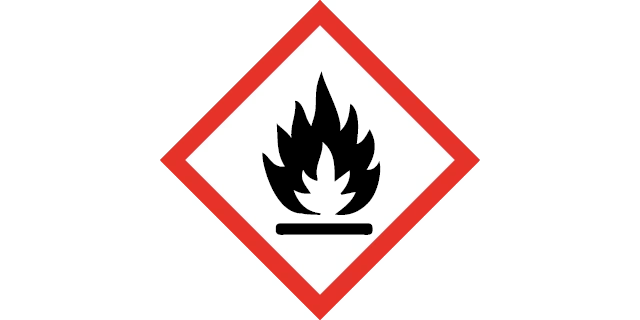
Type P
Passive storage of flammable and flammable liquids (WGK 1–3, H224–H226)
- Bund, walls and roof made of steel sheet
- Air change rate of at least 0.4
Example storage scenario:
Fuel, petrol, oils, solvents
Type A
Active storage of flammable and flammable liquids (WGK 1–3, H224–H226)
- Bund, walls and roof made of steel sheet
- Mechanical ventilation with at least a 5-fold air change rate
Example storage scenario:
Fuel, petrol, oils, solvents
Type TB
Storage of temperature-sensitive substances that pose a risk to water (WGK 1–3)
- Steel sheet bund
- Roof and side walls insulated with a high-quality, flame-retardant B1 core material
Example storage scenario:
Pesticides, cleaning agents, chemicals, enclosure for dosing systems
Type TA
Storage of temperature-sensitive, flammable substances (WGK 1–3, H224–H226)
- Sheet steel bund
- Roof and side walls insulated with a high-quality, non-combustible A1 core
material
Example storage scenario:
Sensitive paints and varnishes
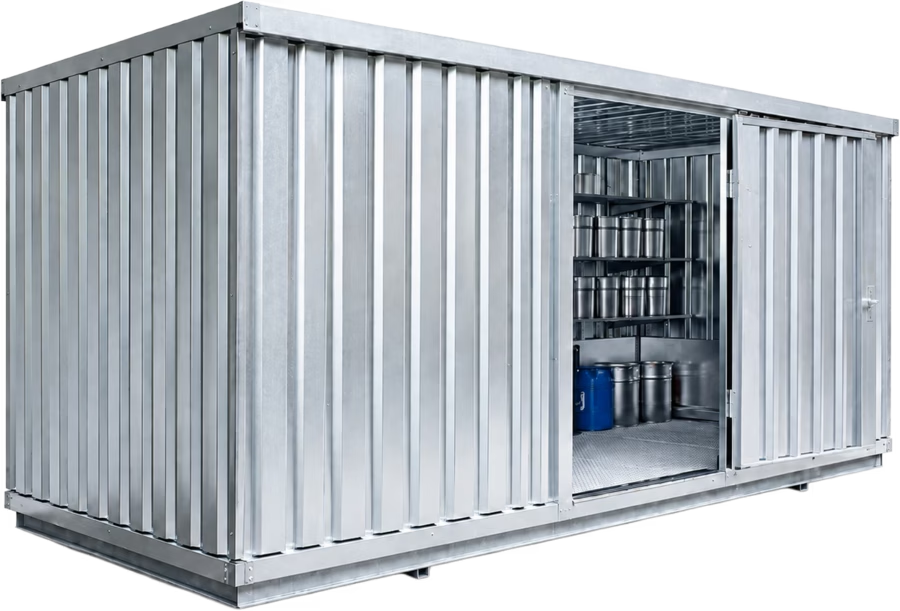
SRC-S Hazardous Substances Room Container
A cost-effective solution for the storage of water-polluting and flammable substances
- DiBt-approved hazardous substances container
- for active or passive storage
- Model featuring trapezoidal sheet metal and a galvanised finish
- Spill tray with galvanised steel grating
- Single-leaf door on the long side as standard (except SRC-S 2.1)
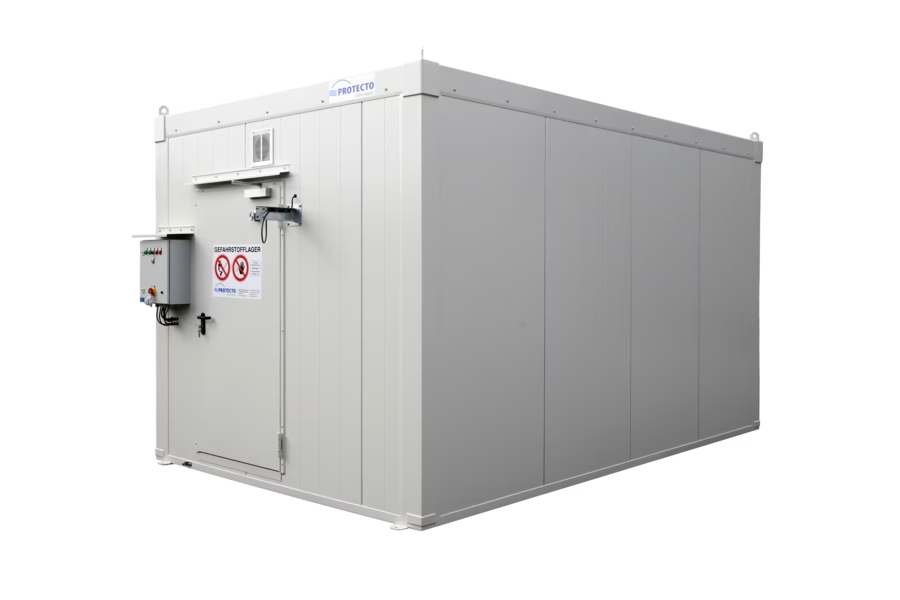
GCS Hazardous Substances Room Container
Temperature-controlled storage of sensitive hazardous substances
- Hazardous substance containers with DiBt-approved bund
- for active or passive storage
- Sturdy, welded frame construction made from steel sections
- Low door threshold: 165 mm
- Anti-corrosion coating in RAL 9002 grey-white
- Floor area fitted with removable, hot-dip galvanised grating

Hazardous substances storage container
For horizontal or vertical storage of large quantities of drums or IBCs.
- Outdoor or indoor storage of large quantities of hazardous substances in compliance with TRGS 510
- up to three storage levels stacked on top of one another
- Shelf dimensions tailored to Euro and chemical pallets or KTC/IBCs
- Welded, robust, sturdy frame construction made from steel sections
- Anti-slip device on the rear wall
- with DIBt-approved bunds, chemical resistance according to DIN 6601, material no. 1.0038
- Removable, hot-dip galvanised grating
- 100 mm ground clearance to protect against contact corrosion
- Standard versions available for a wide range of storage capacities (up to 120 x 200-litre drums)
Frequently Asked Questions

Not sure which solution is right for your application?
Please get in touch; we’d be happy to advise you.