
CEMO campus │ Legal framework
Safe storage of substances hazardous to water
The Basics of Water Protection

What requirements apply to the safe and legally compliant hazardous material storage? What role do water hazard classes and flammability play? When do you need a bund, and what specifications must it meet? How can you reliably protect staff, the environment and your business from hazardous substances leaking into the environment? On the CEMO campus, you’ll find the key legal principles relating to water protection – presented in a concise and practical way.
This is how you protect people, the environment and property.
Protecting our water bodies is an essential part of responsible storage, transport and environmental technology. Clean water not only forms the basis for sturdy ecosystems, but also for the safe use of natural resources in industry, commerce and local authorities. If contamination is prevented at an early stage, habitats are preserved and risks to people and the environment are reliably minimised. Effective water protection therefore focuses on the points where water-polluting substances are stored, transported or decanted – where safe systems and controlled processes are crucial.
The precautionary principle
Water is the most essential basis of life and cannot be replaced by anything else. This has always been the case, and any risk to it poses a threat to our future. For this reason, the so-called ‘principle of concern’ is enshrined in water management law. A legal expert once put it as follows: ‘There is cause for concern not only when damage is likely to occur, but also when the occurrence of damage is not improbable.’
An overview of the key regulations
Abbreviation |
Regulation |
Significance for water protection |
| WHG | Water Resources Act | Sets out the fundamental requirements for the protection of water bodies. Installations must be constructed, operated and maintained in such a way as to prevent any adverse impact on water bodies. |
| AwSV |
Ordinance on Installations Handling Substances Hazardous to Water |
Specifies the requirements of the WHG for installations handling substances hazardous to water. It regulates, amongst other things, classification, containment, monitoring and technical requirements. |
| TRGS 510 | Technical Rules for Hazardous Substances | Regulates the safe storage of hazardous substances and sets out requirements for storage areas, combined storage and protective measures. |
| BetrSichV | Industrial Safety Regulation | Regulates the safe use of work equipment and installations requiring monitoring, thereby also helping to prevent leaks and substance releases. |
| GHS | Globally Harmonised System of Classification and Labelling of Chemicals | Provides important information on the hazards and classification of substances. The labelling helps to determine specifically designed storage and protective measures. |
Physical hazards |
||
 |
GHS01 Exploding bomb |
|
 |
GHS02 Flame |
|
 |
GHS03 Flame above a circle |
|
 |
GHS04 Gas cylinder |
Gases under pressure:
|
 |
GHS05 Corrosive effect |
|
Health hazards |
||
|
GHS05 Corrosive effect |
|
 |
GHS06 Skull and crossbones |
|
 |
GHS07 Exclamation mark |
|
 |
GHS08 Health hazard |
|
Environmental hazards |
||
 |
GHS09 Environment |
|
|
GHS07 Exclamation mark |
|
WATER HAZARD CLASSES ACCORDING TO AWSV
WGK |
Water hazard class |
Examples |
| 1 | low water hazard | Rapeseed methyl ester, AdBlue®, acetic acid, caustic soda |
| 2 | significantly hazardous to water | These, lubricating oils, toluene |
| 3 | highly hazardous to water | Petrol, waste oil, halogenated solvents |
The water hazard class (WGK) indicates the hazard potential of substances that pose a risk to water. The WGK is specified in the safety data sheet.
Certifications
Containers and buns intended for the storage of substances hazardous to water require, in accordance with the Water Resources Act (WHG), a certificate of suitability for use issued by the building authorities, e.g. a general construction inspection approval.
Related products
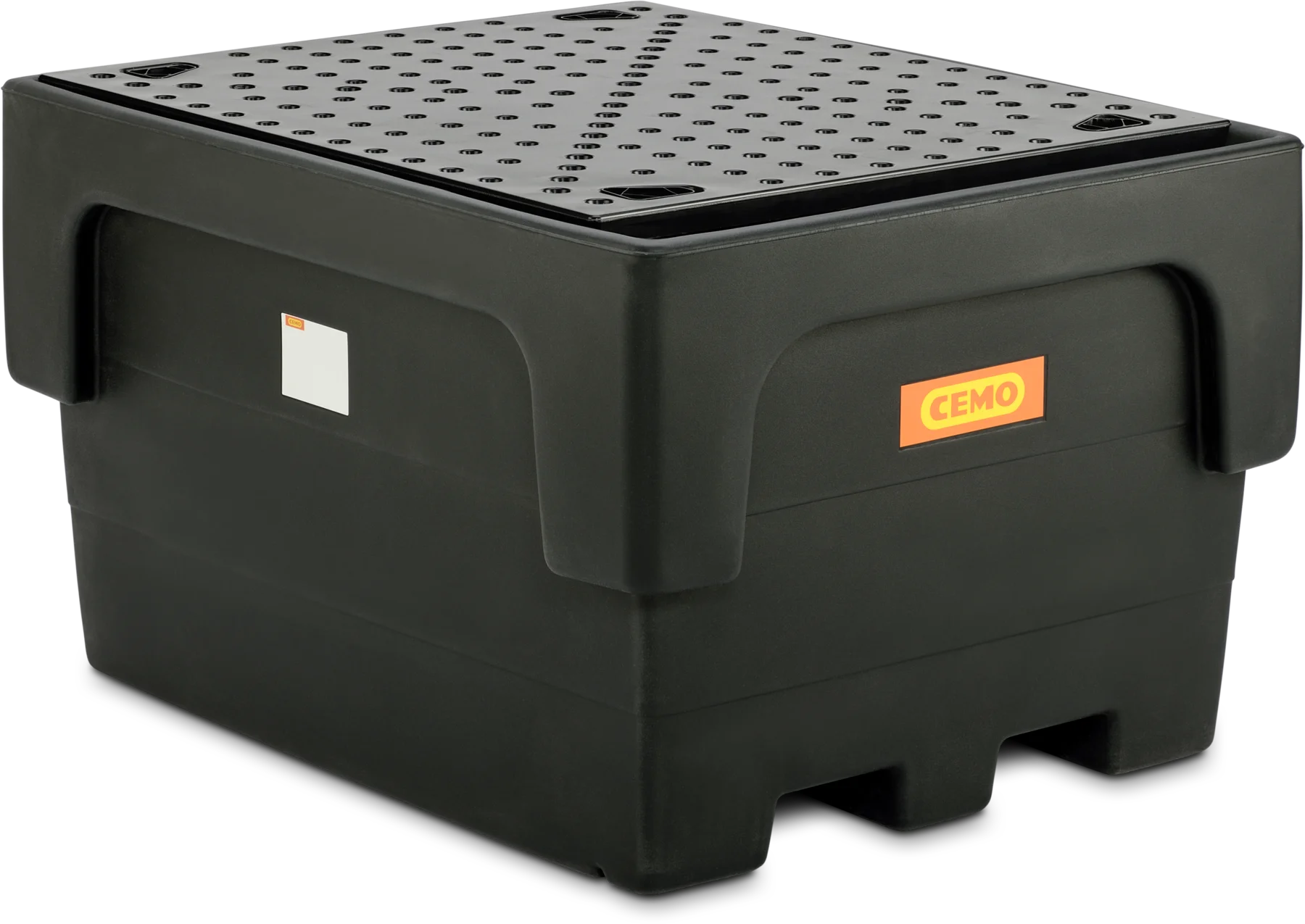
CEMO PE sump for IBCs, 1100/1, black
Art. no. 10950
plus VAT
Freight costs: 92.00 €
Delivery time: On request
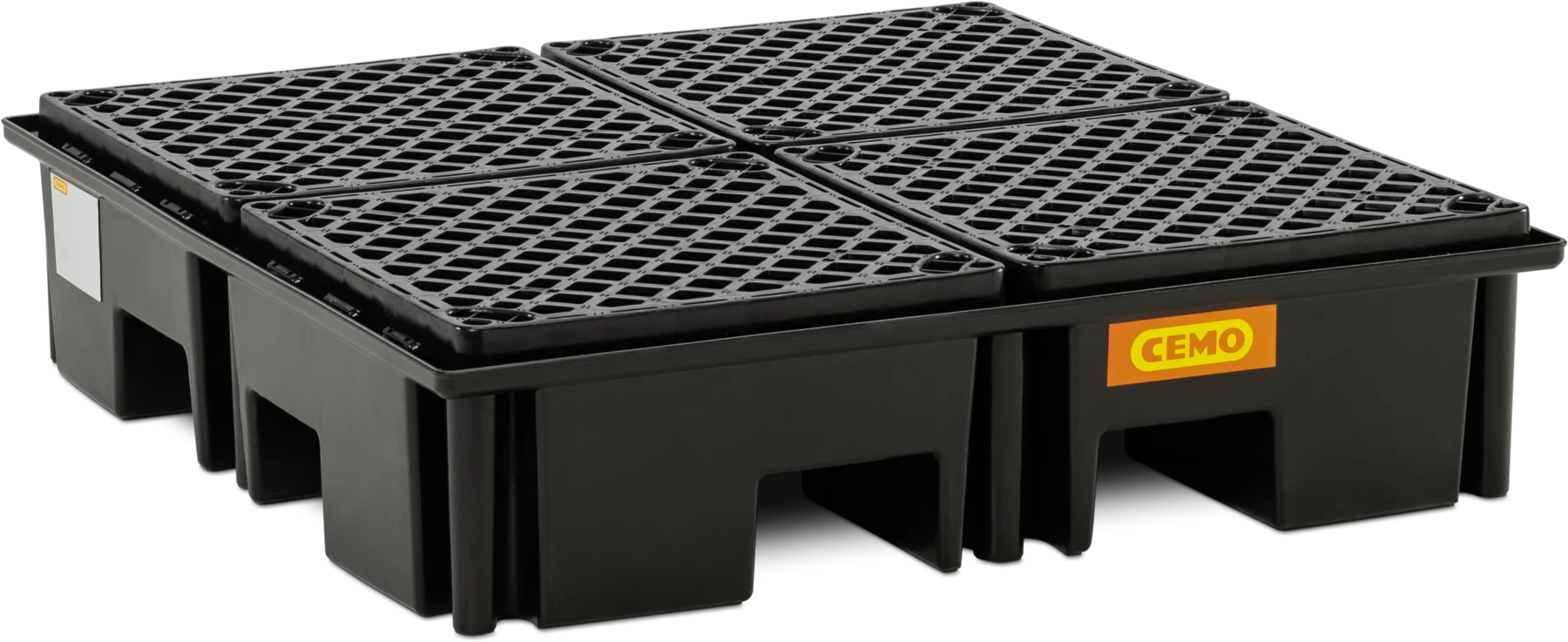
CEMO PE sump for pallets and drums, 220/4, black
Art. no. 11262
plus VAT
Freight costs: 66.00 €
Delivery time: On request
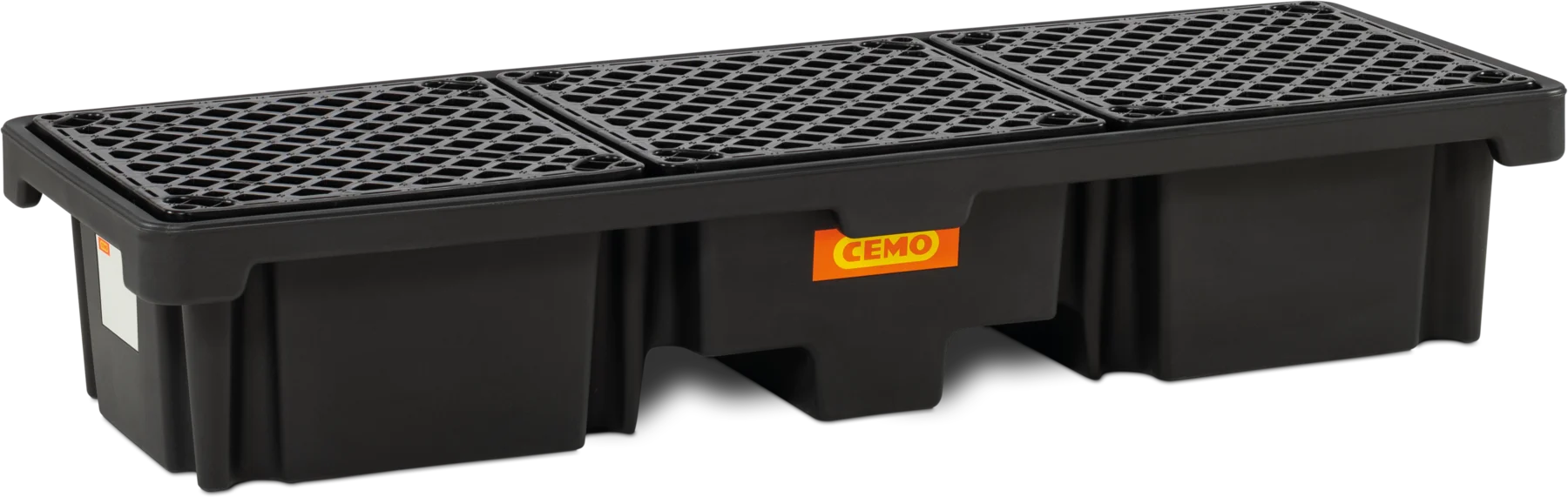
CEMO PE sump for drums, 220/3, black
Art. no. 11272
plus VAT
Freight costs: 66.00 €
Delivery time: On request
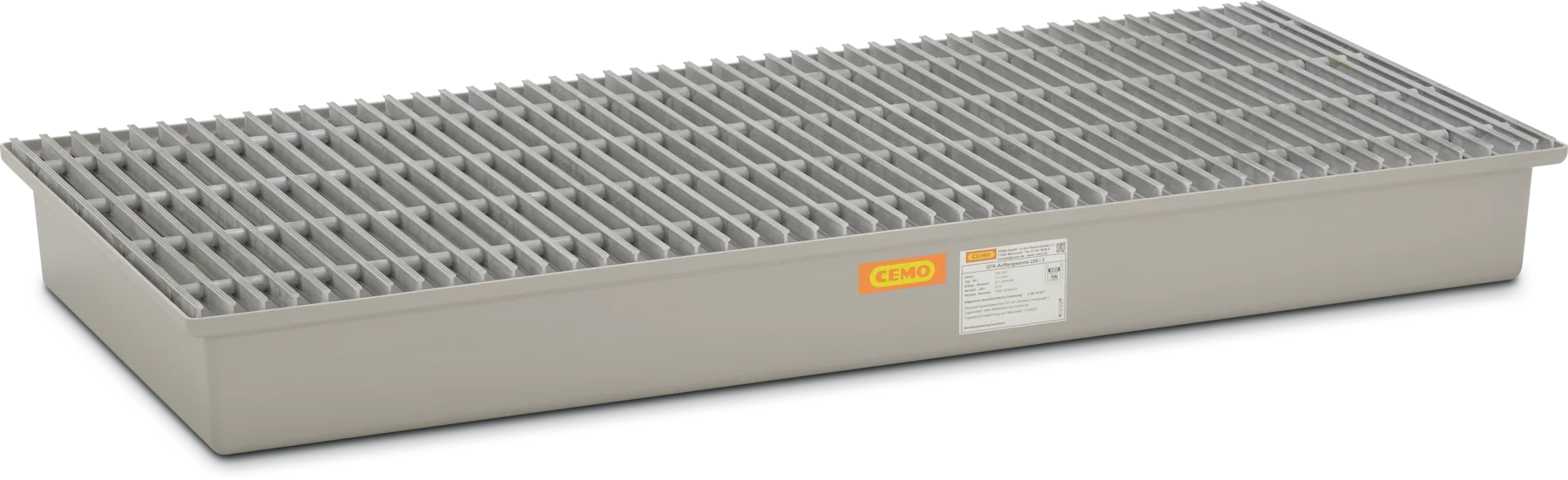
CEMO GRP spill pallet for drums, 220/3, grey
Art. no. 7286
plus VAT
Freight costs: 77.00 €
Delivery time: On request
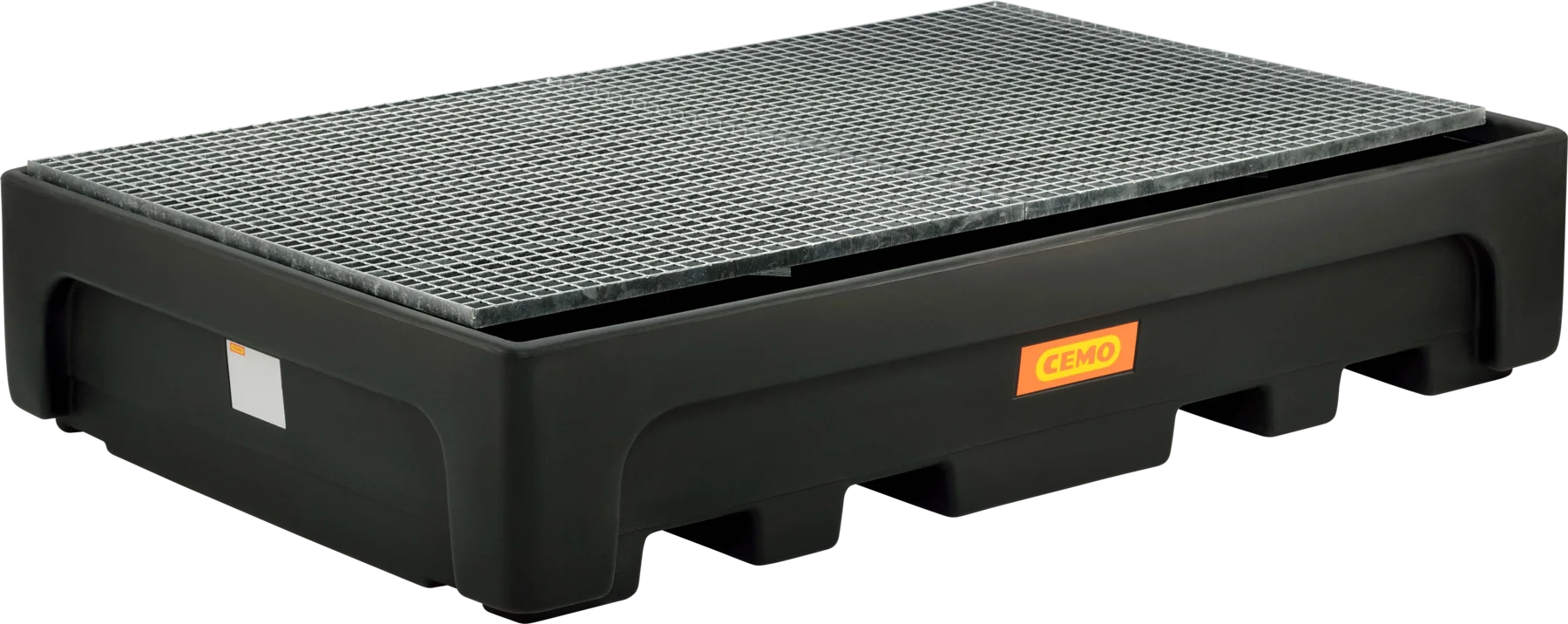
CEMO PE sump for IBCs, 1100/2, black
Art. no. 10949
plus VAT
Freight costs: 124.00 €
Delivery time: On request
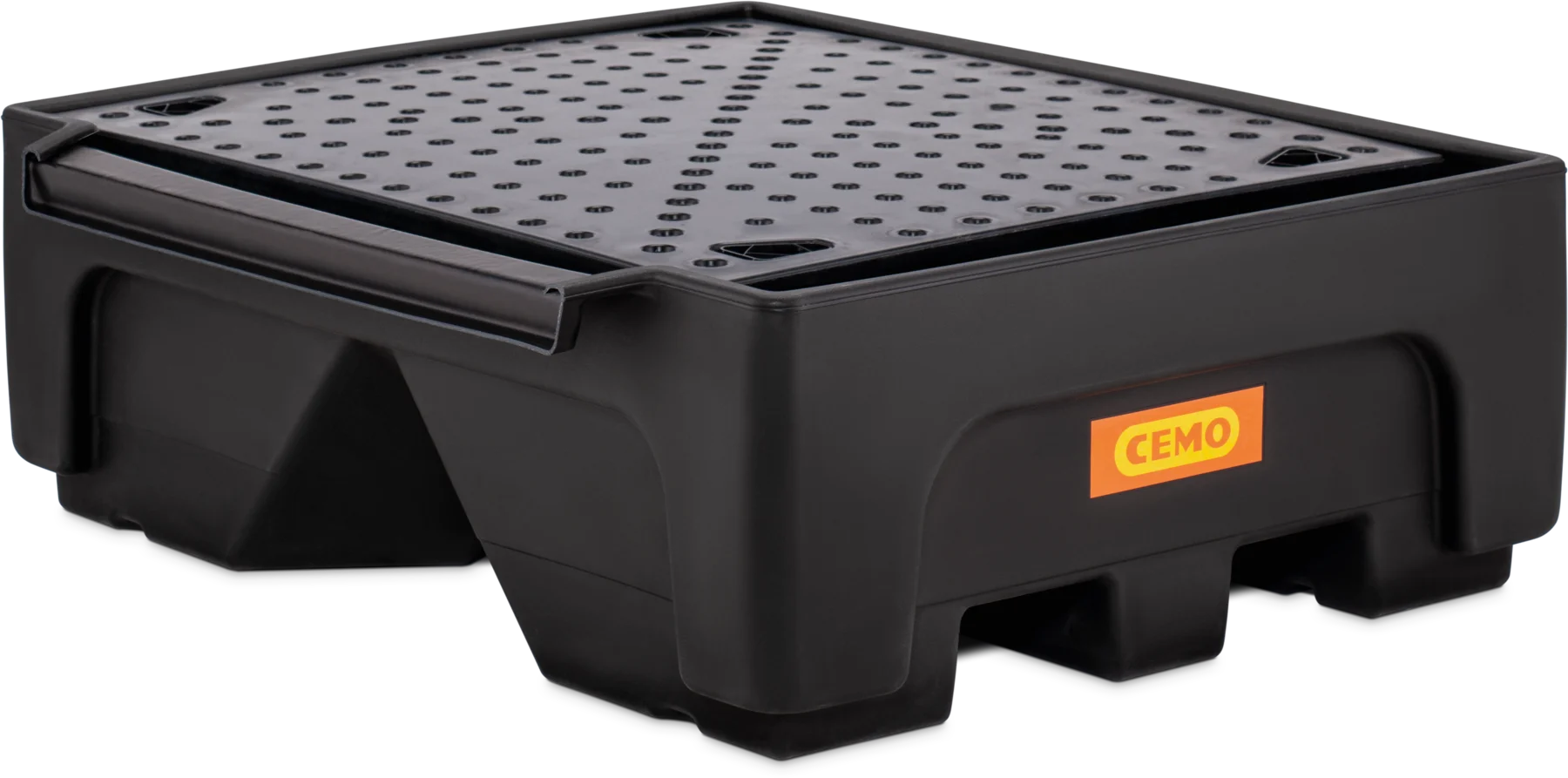
CEMO PE extension sump tray for IBCs, 500/1, black
Art. no. 11865
plus VAT
Freight costs: 92.00 €
Delivery time: On request
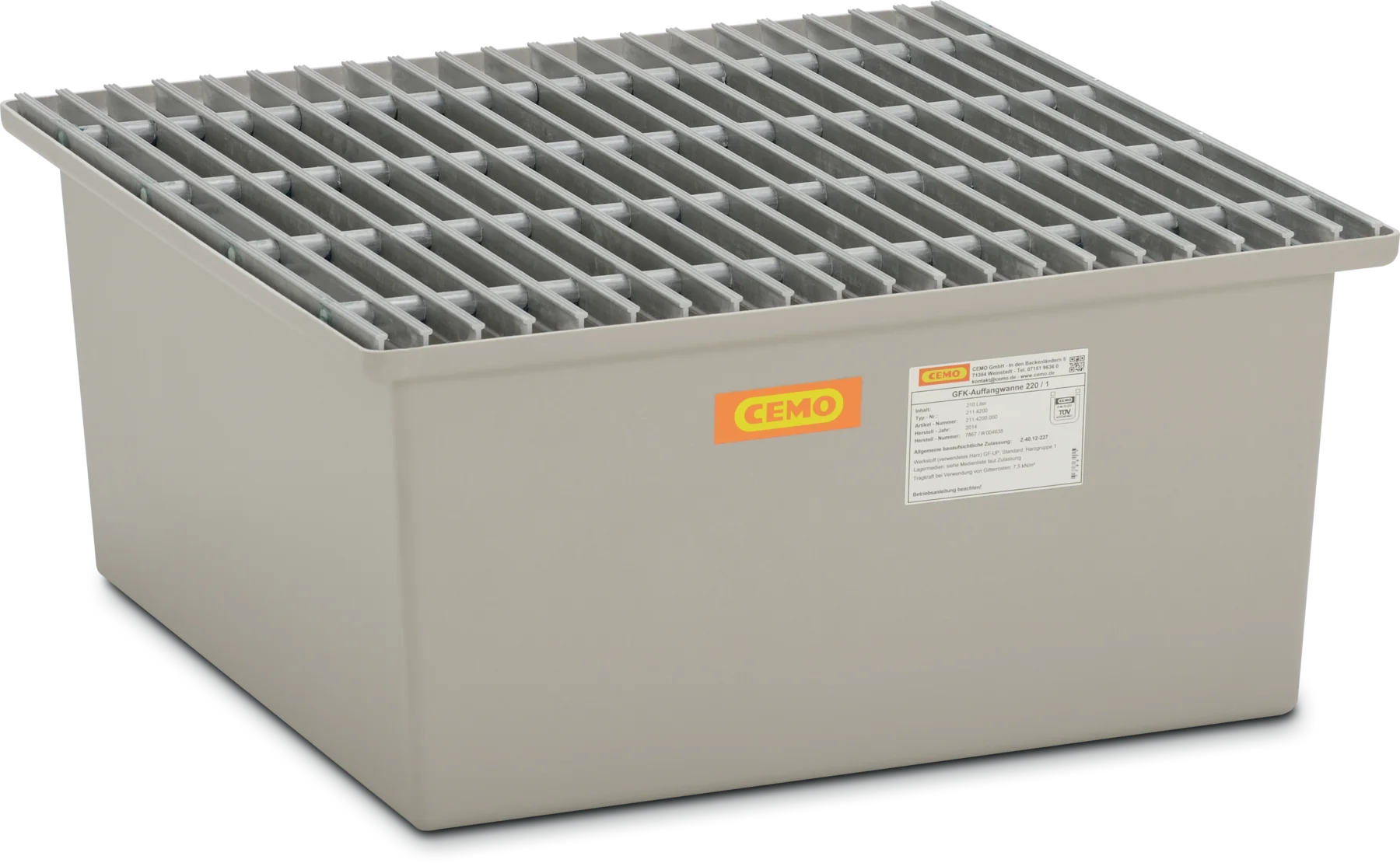
CEMO GRP spill pallet for drums, 220/1, grey
Art. no. 7869
plus VAT
Freight costs: 66.00 €
Delivery time: On request
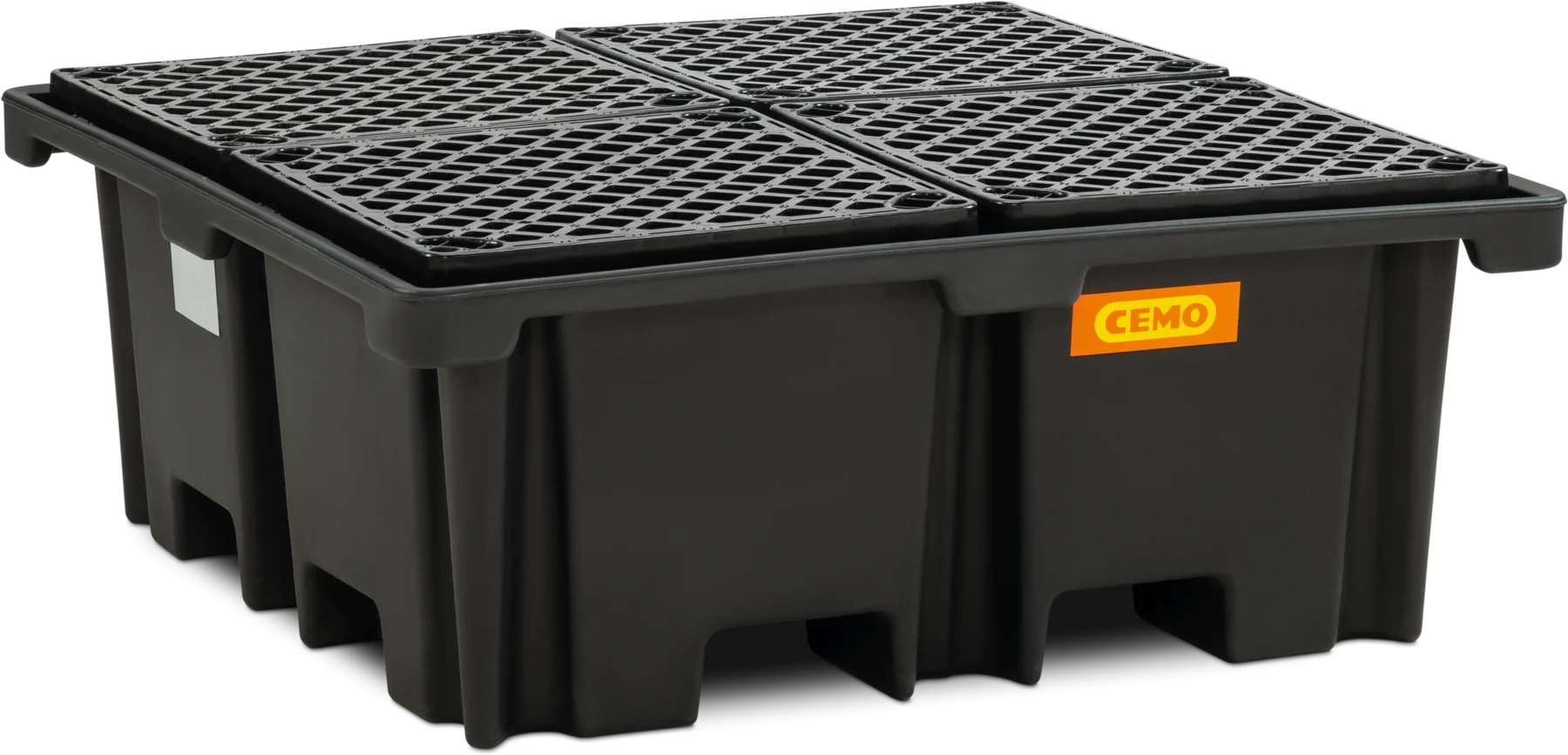
CEMO PE sump for pallets and drums, 400/4, black
Art. no. 11278
plus VAT
Freight costs: 77.00 €
Delivery time: On request
The correct collection volume
As a general rule, the bund must be able to hold at least 10 per cent of the total storage volume or accommodate the largest container size stored. The bund must be designed to accommodate whichever of these values is greater. A special rule applies in water protection areas:
here, it is necessary to ensure 100 per cent of the collection volume for the stored substances.
TIP: The de minimis limit under the AwSV does not apply to above-ground installations outside protected areas:
For a total storage volume of < 220 litres of liquid substances hazardous to water, an approved bund is not required.
Below the de minimis threshold, there is no formal obligation to calculate a collection volume in accordance with the AwSV. Nevertheless, the general precautionary principle of the Water Resources Act (WHG § 62) applies. This means that, even in this case, drums or small containers must not be left unsecured on unprotected ground. This prevents any substances that leak out from contaminating the soil or groundwater – even if no formal containment system needs to be calculated.
HAZARD CLASSIFICATIONS ACCORDING TO AWSV
m³ (liquids) |
WGK 1 |
WGK 2 |
WGK 3 |
| ≤ 0.22 | Class A | Level A | Class A |
| > 0.22 | Level A | Level A | Level B |
| > 1 ≤ 10 | Level A | Level B | Level C |
| > 10 ≤ 100 | Level A | Level C | Level D |
| > 100 ≤ 1,000 | Level B | Level D | Level D |
| > 1,000 | Level C | Level D | Level D |
The following, amongst other things, depend on the hazard levels: reporting requirements, suitability assessments, documentation, operating instructions, the requirement to use specialist contractors, and inspection intervals.
OPERATOR OBLIGATIONS UNDER THE AWSV
Risk level under the AwSV |
Facility documentation |
Inspection obligations |
Information sheet |
Operating instructions |
Notification requirement |
Inspection requirement |
|
Level A |
• |
• |
• |
|
||
|
Level B |
• |
• |
• |
• |
• |
|
|
Level C |
• |
• |
• |
• |
• |
|
|
Level D |
• |
• |
• |
• |
• |
Plant documentation
The operator must maintain system documentation for each system.
Inspection requirements
Checks must be carried out to ensure the system is leak-free and that the safety devices are in working order.
Information sheet
e.g. on the handling of water-polluting substances; to be displayed near the plant.
Operating instructions
The operator must keep the following documents to hand: monitoring plan, maintenance plan, emergency plan, immediate measures for hazard prevention; and must instruct and document operational staff before they commence work and at least once a year.
Subject to notification
All installations subject to inspection must be notified at least 6 weeks in advance.
Inspection requirement
by experts prior to commissioning / following any significant modification.
Safety through WHG-certified contractors
Only specialist contractors who are subject to regular inspections by independent inspection bodies (e.g. TÜV, Dekra) are permitted to manufacture and install systems for the storage of water-polluting or flammable substances.
Activities requiring a specialist contractor:
- Installation
- Repair
- Cleaning
- Decommissioning
STORING FLAMABLE LIQUIDS CORRECTLY
Labelling |
Hazard statements |
flash point |
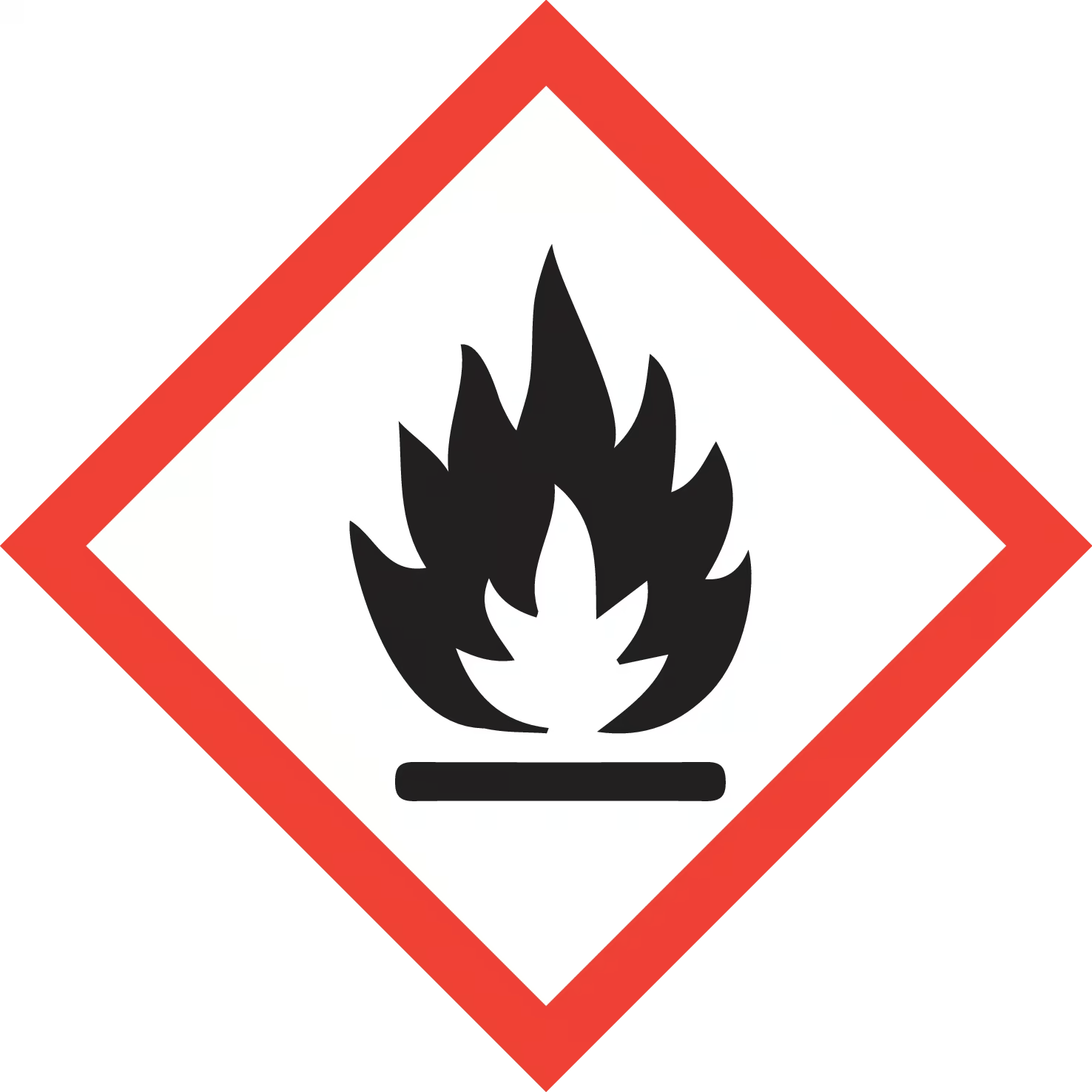 |
flammable H226 | ≥ 23°C and ≤ 60°C |
| highly flammable H225 | < 23°C and boiling point > 35°C | |
| Extremely flammable H224 | < 23°C and boiling point ≤ 35°C |
Need for monitoring
If more than 10,000 litres of flammable, highly flammable or extremely flammable liquids are stored, the facility is deemed to require monitoring within the meaning of Section 2 of the ProdSG.
Material compatibility
The choice of the specifically designed material for a bund depends largely on the substances to be stored. Different substances place different demands on chemical resistance and, consequently, on the specifically designed material.
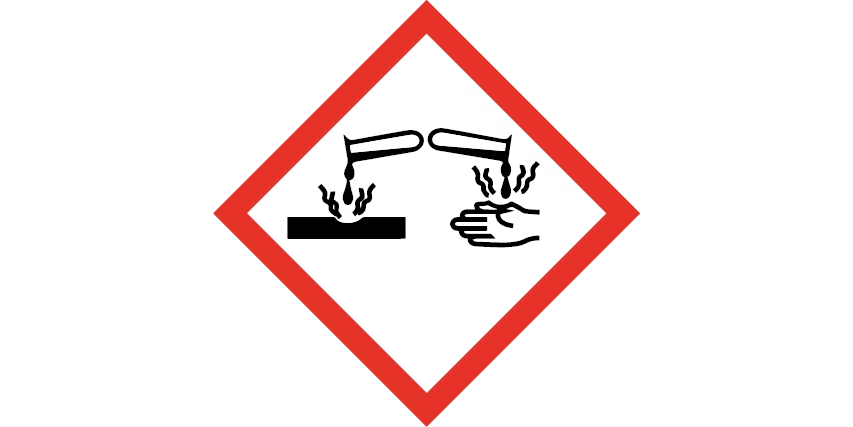
For many applications, PE (polyethylene) is specifically designed due to its high chemical resistance and offers a reliable solution for the storage of numerous substances. The highly resistant material GRP (glass-fibre-reinforced plastic) also demonstrates sufficient resistance in many cases. When storing corrosive substances such as acids and lyes, choosing a suitably resistant material can be crucial.
DIN EN 12285-1:2018, Table B.2 (formerly DIN 6601) may be used to demonstrate the chemical resistance of steel. For approved plastic buns, DIBt Media List 40 may be used as proof of resistance.
You can find details of the resistance of PE and GRP to the respective storage media in our resistance list.
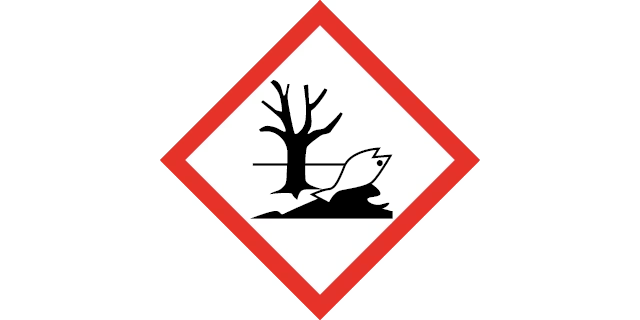
Harmful to the environment
|
Corrosive
|
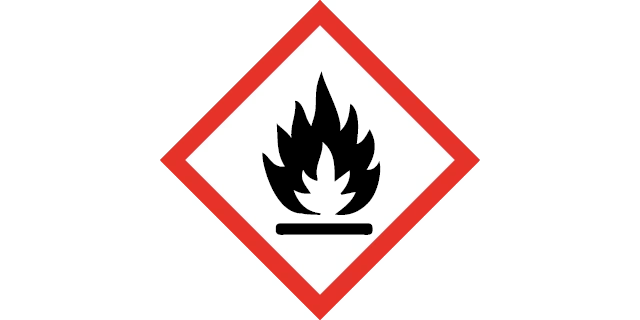
Highly flammable(Flash point < 55°C)
|
Flammable(Flash point > 55°C)
|
|
PE |
Substances hazardous to water (WGK 1–3) | Chemicals, acids and lyes | – | – |
GRP |
Substances hazardous to water (WGK 1–3) | Mild acids and alkalis | – | Diesel, heating oil, fresh and used oil |
steel |
Substances hazardous to water (WGK 1–3) | – | Petrol (petrol-based fuels), paints and thinners | Diesel, heating oil, fresh and used oil |
Frequently Asked Questions

Discover our buns, hazardous-materials racking, hazardous-materials cabinets and other solutions for the safe storage of substances hazardous to water.
Find the right solution for your water protection needs
You now know what requirements apply to the safe and legally compliant storage of water-polluting substances. But which solution is right for your substances, containers and storage conditions?