
CEMO campus │ Legal framework
Load securing

Who is responsible for securing the load? What are the obligations of shippers, hauliers, drivers and vehicle owners? What requirements do the Road Traffic Regulations (StVO) and the Road Traffic Licensing Regulations (StVZO) impose on the safe transport of loads? At CEMO campus, you will find the most important legal principles governing load securing – explained concisely and contextualised in a practical manner.
Practical experience shows that load securing is often carried out inadequately or incorrectly. Yet load securing contributes significantly to road safety, as inadequate load-securing measures can cause not only damage to the cargo but also potential harm to uninvolved third parties. It is therefore essential to be familiar with the legal framework and to be aware of the resulting responsibilities.
This summary is intended to provide an overview of the responsibilities relating to load securing. Under English law, responsibilities relating to load securing are assigned to the shipper/consignor (e.g. the consignor’s loading supervisor), the carrier, the driver and the vehicle owner. In principle, a distinction must be made between civil liability and public law liability.
1. Civil liability
1.1. Safe loading for transport (loader/consignor):
The shipper/consignor must place the goods on the loading area and is obliged to secure them (using lashing straps, chains, wedges or other specifically designed means) and stow (load) them in such a way that dynamic forces during the journey (e.g. impacts,
vibrations, braking) do not cause the goods to tip over, shift on the loading area or fall from the vehicle.
1.2. Safe loading (carrier):
The carrier must provide a specifically designed vehicle with appropriate load-securing devices (e.g. lashing points) and ensure that operational safety is not compromised and that the vehicle’s functions remain operational at all times. Furthermore, the carrier is responsible for ensuring compliance with the dimensions, axle loads and total weight, as well as the load distribution plan.
PLEASE NOTE: If the carrier transfers the load to another vehicle during transport, this will result in the carrier being held liable. In this case, the carrier is liable for inadequate load securing and any loading errors
resulting from the transhipment process.
2. Public service responsibility
The provisions of the StVZO and the StVO are relevant to load securing, which is subject to a statutory obligation.
Anyone who fails to fulfil their public responsibility on the roads and does not comply with their duty to secure loads may be punished with fines or entries in the Central Traffic Register and the Central Trade Register. In the event of negligence or deliberate disregard of the rules, criminal proceedings may also be initiated. This applies to the shipper/consignor, carrier, driver and vehicle owner.
2.1 Legal provisions under public law:
Section 22(1) of the Road Traffic Regulations (StVO): Load The load, including load-securing devices and loading equipment, must be stowed and secured in such a way that, even in the event of emergency braking or a sudden evasive manoeuvre, it cannot slip, tip over, roll back and forth, fall down or generate avoidable noise. The recognised rules of good engineering practice must be observed.
Responsibility lies with the loader/consignor and the driver.
2.2. Section 23(1) of the Road Traffic Regulations (StVO): Other duties of the driver
The driver is responsible for ensuring that their vision and hearing are not impaired by the occupants, animals, the load, equipment or the condition of the vehicle. They must ensure that the vehicle, the train, the combination of vehicles, as well as the load and the occupants, comply with the regulations and that the road safety of the vehicle is not compromised by the load or the occupants. They must also ensure that the prescribed registration plates are always clearly legible. Statutory lighting equipment must be fitted to motor vehicles and their trailers, as well as to bicycles, and must be in working order even during the day; otherwise, it is only required if the vehicle is expected to still be on the road when lighting is necessary (Section 17(1)).
2.3. Section 30(1) of the StVZO: Characteristics of vehicles
Vehicles must be constructed and equipped in such a way that
- their normal use on the road does not cause harm to any person or expose them to greater risk, hindrance or nuisance than is unavoidable,
- occupants are protected as far as possible from injury, particularly in the event of accidents, and the extent and consequences of any injuries are kept to a minimum.
2.4. Section 31(2) of the StVZO: Responsibility for the operation of vehicles
The vehicle owner must not order or permit the vehicle to be put into service if they know, or ought to know, that the driver is not specifically designed to drive independently, or that the vehicle, the combination of vehicles, the combination, the load or the occupants does not comply with the regulations, or that the road safety of the vehicle is compromised by the load or the occupants.
Summary
Section 22(1) of the Road Traffic Regulations (StVO) stipulates that loads must be secured. Civil liability for carrying out load securing in accordance with this provision is clarified (see 1. Civil liability). Section 23(1) of the Road Traffic Regulations (StVO) assigns responsibility for load securing to the driver. According to Section 30(1) of the Road Vehicle Licensing Regulations (StVZO), the vehicle owner must use a specifically designed vehicle and ensure (see 2.4. Basis: Section 31(2) StVZO) that this equipment is adequate for the transport in question.
When securing loads, the recognised rules of good practice must be observed (Section 22(1) of the Road Traffic Regulations (StVO); e.g. VDI Guidelines 2700 and DIN EN standards). The actual load-securing measures must be carried out in accordance with these. Anyone wishing to delegate the statutory responsibility for load securing through agreements or instructions (e.g. to the carrier) must observe the following:
- There must be an explicit mandate or explicit instruction
- The person appointed must be professionally qualified and technically capable
- Random checks must be carried out to verify that the delegated duties are being performed correctly. These checks must be documented. Should any safety deficiencies be identified, measures must be taken to rectify them
Implications for CEMO products
Load securing for CEMO drums and containers
CEMO products placed on the market or into circulation comply with the essential health and safety requirements.
Right from the design stage and through to subsequent manufacture, care is taken to ensure that the products are fitted with specifically designed load-securing devices (e.g. transport packaging, lashing points, sufficiently large load-bearing surfaces, etc.). This
prevents risks arising from falling or ejected objects, risks posed by surfaces, sharp corners and edges, and risks resulting from a loss of stability (e.g. due to small contact areas).
Provided that the statutory requirements for load securing are complied with, this prevents uncontrolled shifts in position during transport and eliminates other general safety risks associated with the carriage of goods.
1.1. Anti-slip mat (frictional grip)
Anti-slip mats are now virtually standard as a load-securing measure. The frictional forces counteract the load slipping and support all load-securing measures. The coefficient of sliding friction μ is always less than 1. Example: The coefficient of sliding friction between metal and wet wood is usually between 0.2 and 0.25 μ. When an anti-slip mat is used, the coefficient of friction increases to 0.6 μ. This equates to 60 per cent load securing achieved through friction alone! As a result, the quantity of lashing straps required may be reduced.
We recommend placing anti-slip mats under the support skids on each side when loading CEMO products to increase the coefficient of friction. When placing several pieces of mat, arrange them so that no parts of the support skids come into contact with the vehicle’s loading area.
1.2. Lashing straps (friction-based securing by lashing downwards)
Lashing straps, ropes and chains must be used in accordance with the manufacturer’s instructions and, where necessary, replaced. In the case of lashing straps, the permissible tensile strength of the strap material must not be confused with the pre-tensioning force of the ratchet when lashing down. The necessary details regarding tensile strength, manual force and tensioning force can be found on the label of the lashing equipment.
To supplement the securing methods described in 1.1 and 1.3, CEMO products must also be secured with at least two lashing straps, which must be fastened on both sides to the lashing points on the vehicle’s loading area. As a general rule, the quantity of lashing straps depends on the mass of the load and the measures applied in accordance with 1.1 and 1.3.
1.3. Brackets for tension chains (friction-based securing via direct lashing)
CEMO support skids are fitted as standard with holders for tension chains with a tensile force of up to 2000 daN, or can be retrofitted. When tension chains are used, the quantity of lashing straps can be reduced (see 1.2).
1.4. Lashing surfaces (form-fit)
Where possible, lashing surfaces should also be used for load securing. The front load compartment boundary (front wall) may be used alongside additionally fitted locking devices, taking into account its strength and the vehicle-specific load distribution plan.
1.5 VDI guidelines
The following guidelines on load securing must be observed:
- VDI 2700 Load Securing on Road Vehicles
- VDI 2700a Certificate of Training
- Load securing
- VDI 2700 Sheet 1 Training and Training Content
- VDI 2700 Sheet 2: Lashing Forces
- VDI 2700 Sheet 3.1 Instructions for use of lashing equipment
- VDI 2700 Part 3.2 Equipment and aids for load securing
- VDI 2700 Part 4 Load distribution plan
The VDI 2700 guideline on load securing on road vehicles is the standard reference work setting out the principles and best practices for load securing.
Related products
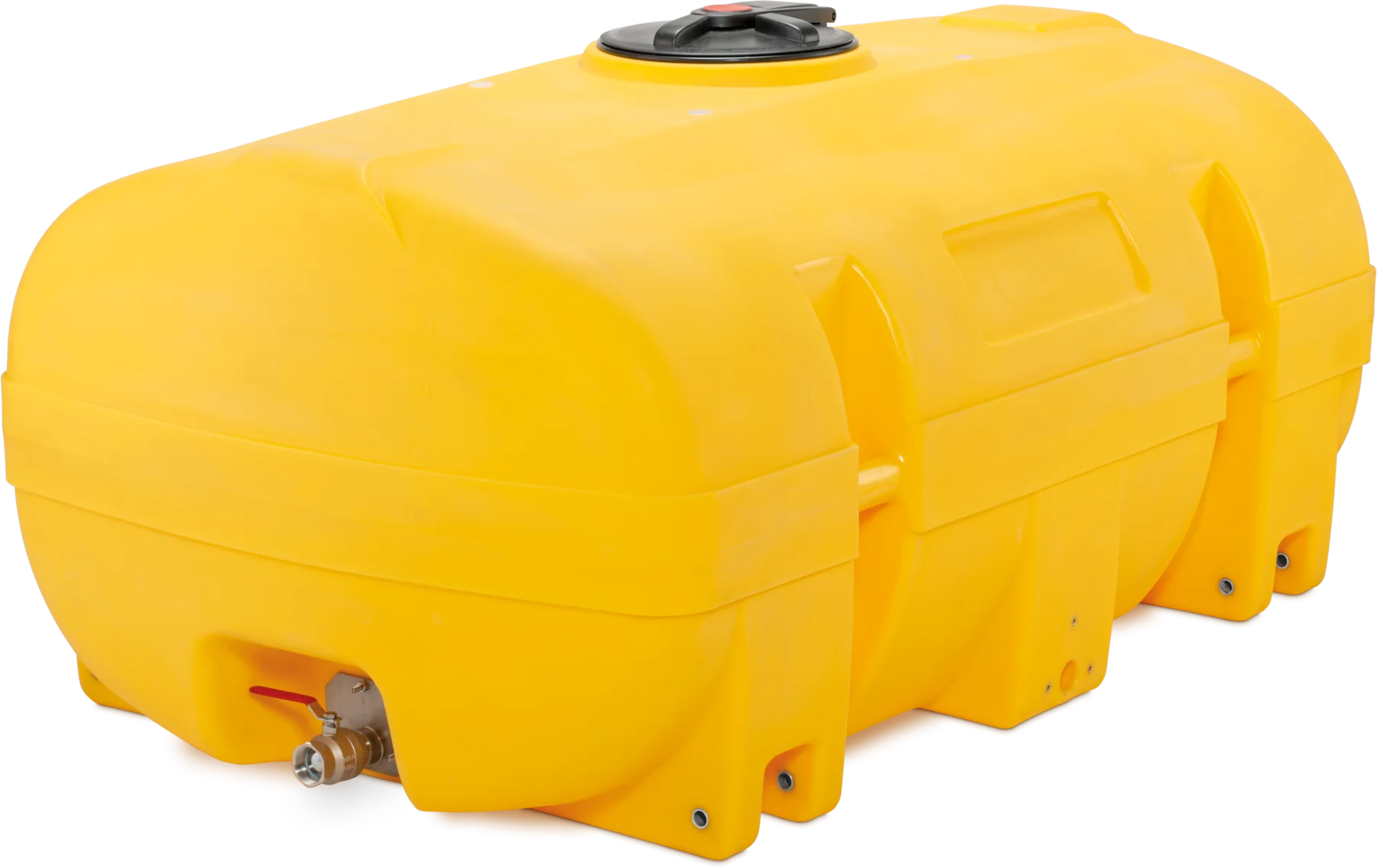
CEMO PE drum, case-shaped with baffles, 3000 L, yellow, with lockable lid, dome centre: 380 mm
Art. no. 11511
plus VAT
Freight costs: 201.00 €
Delivery time: 10 days
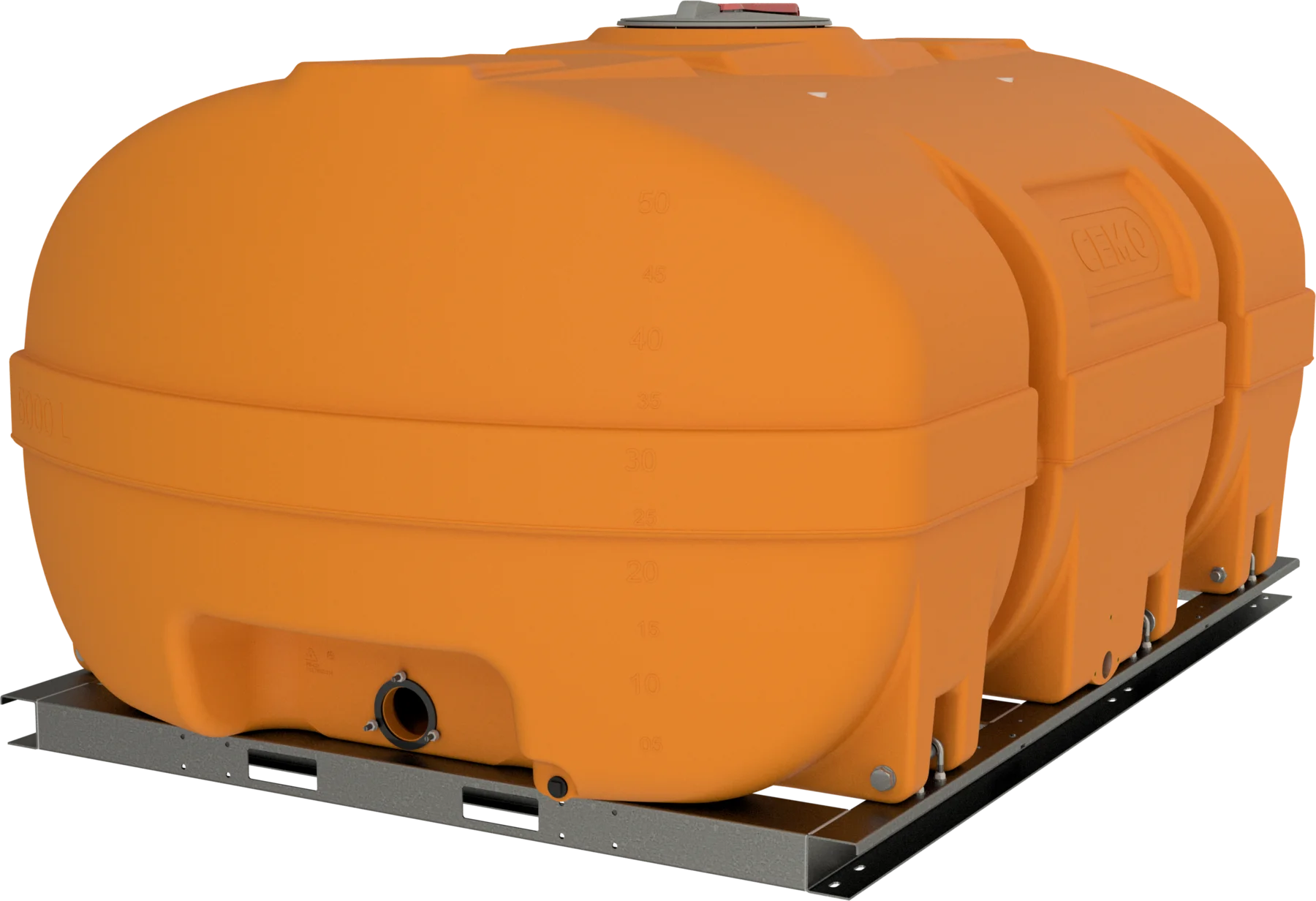
CEMO PE trunk-shaped drum, 5000 L, orange, with lockable lid, dome centre: 380 mm, steel base frame
Art. no. 12256
plus VAT
Freight costs: On request
Delivery time: On request
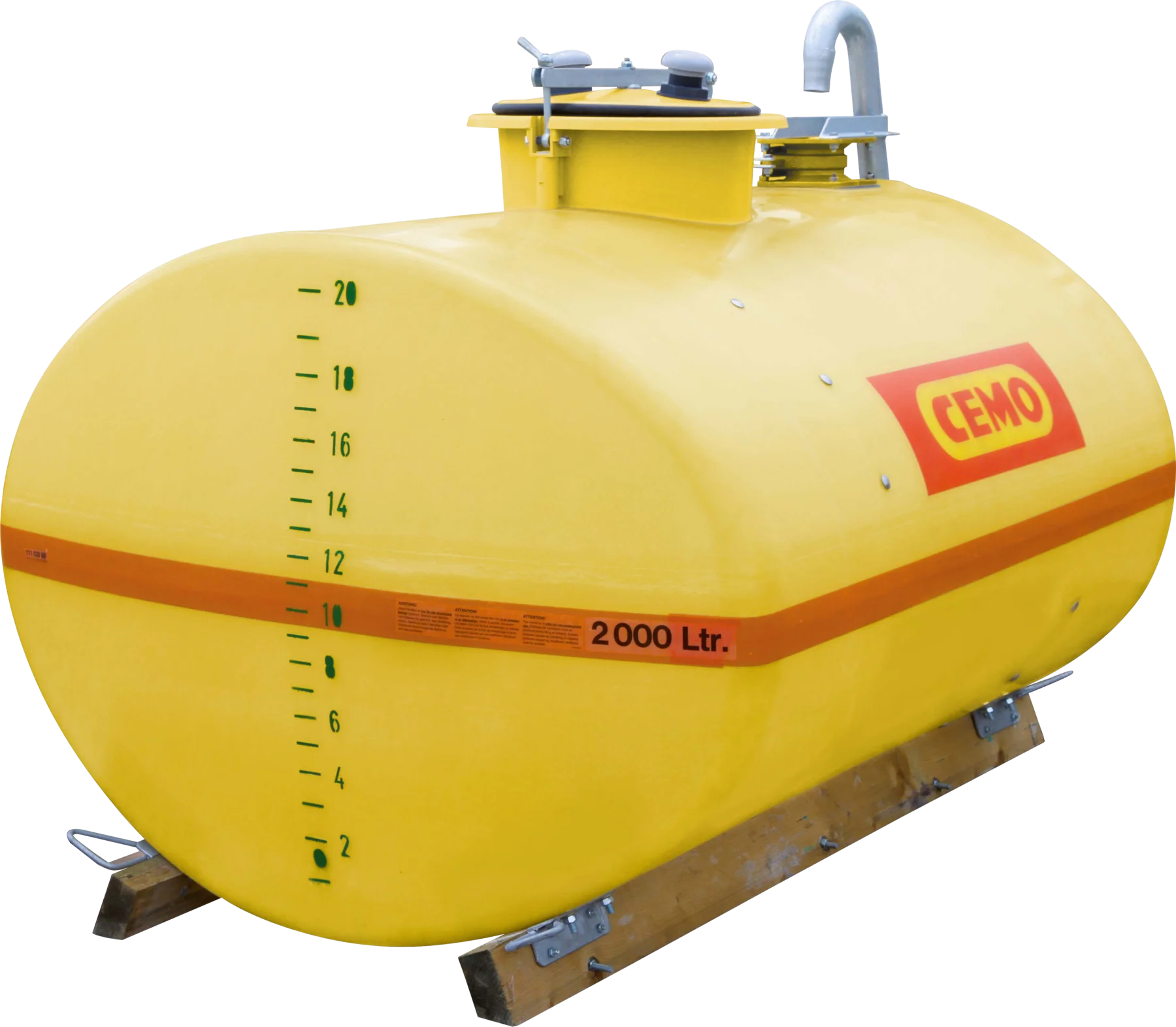
CEMO GRP oval drum, 2000 L, yellow, with lockable lid, dome centre: 420 mm, wooden runners
Art. no. 1824
plus VAT
Freight costs: 286.00 €
Delivery time: 10 days
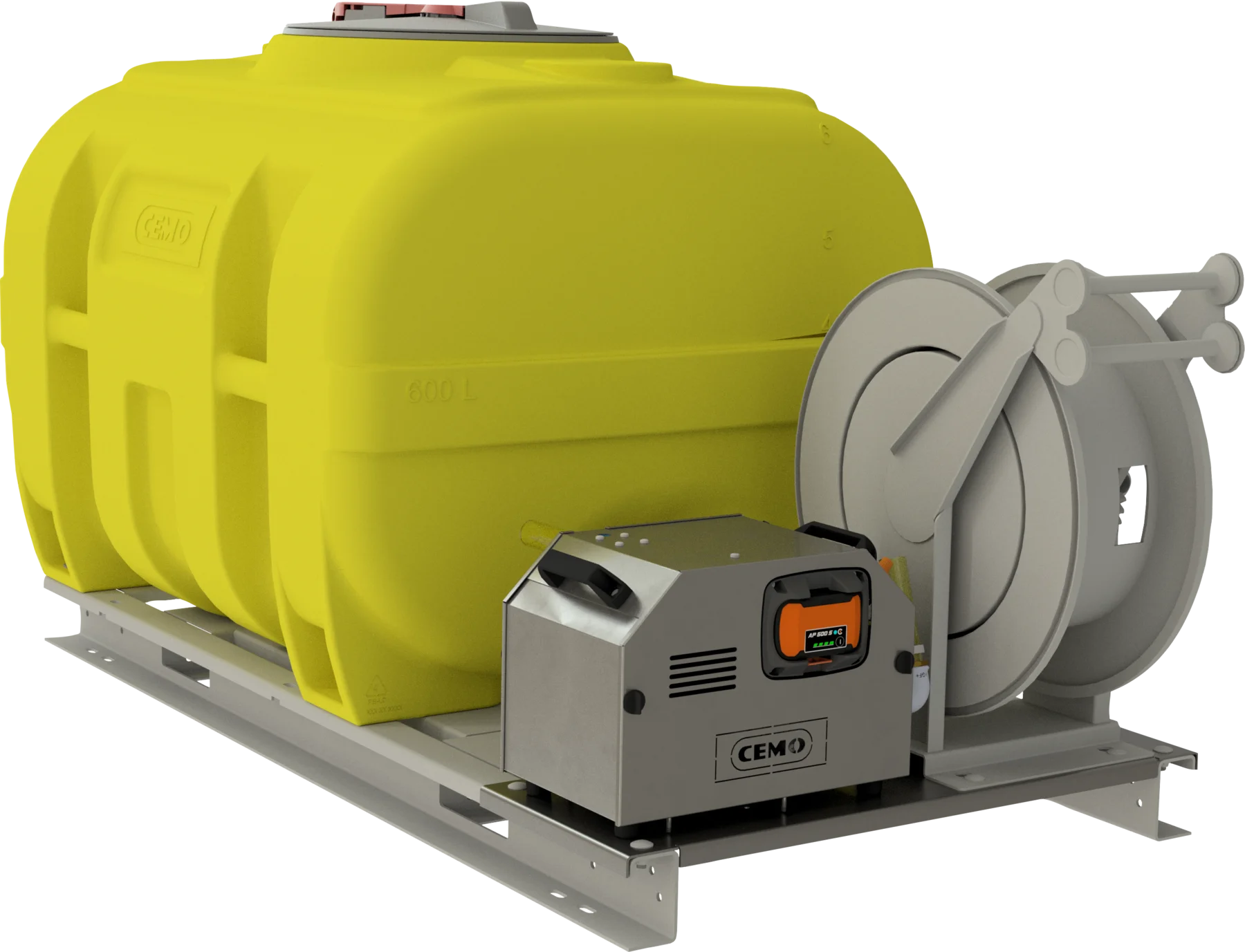
plus VAT
Freight costs: 363.00 €
Delivery time: On request
plus VAT
Freight costs: 521.00 €
Delivery time: 5 weeks
Frequently Asked Questions

Discover our products and find the right solution for your application.
Find the right products
You now know what is important when it comes to securing loads safely and in accordance with the law. But which product is right for your transport, your vehicle and your specific needs?