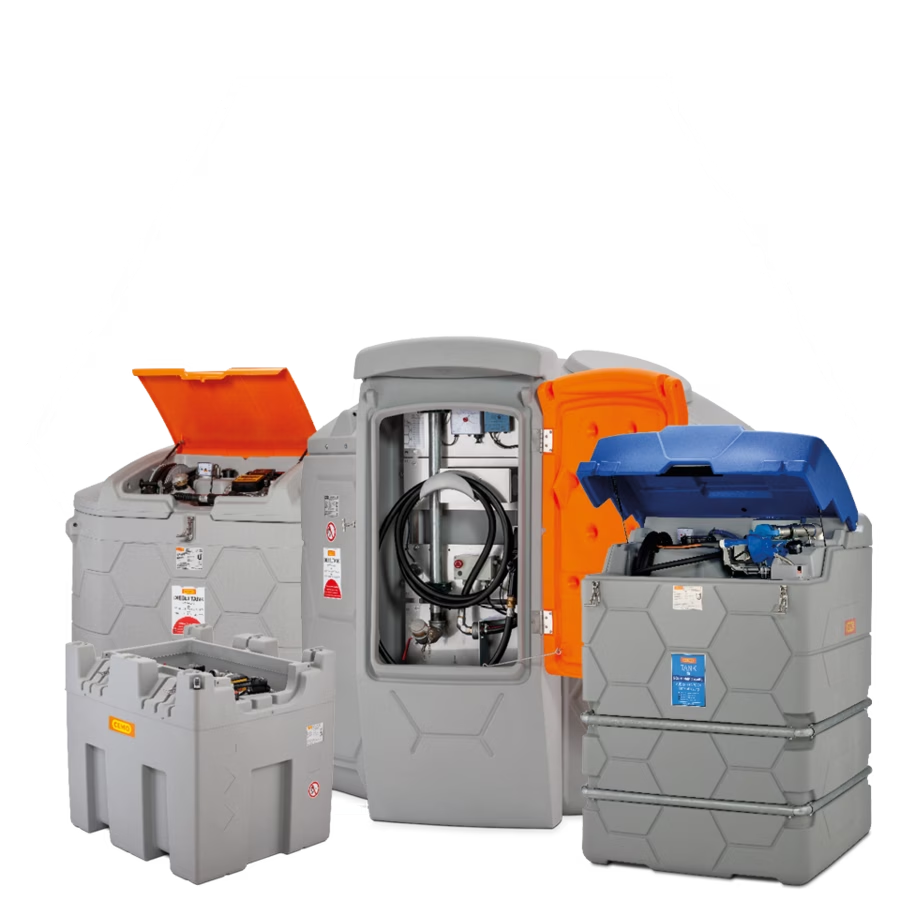
CEMO Campus │ Legal Basis
Stationary refuelling systems: Legal requirements and regulations

What regulations apply to a stationary refuelling system|refilling system? What requirements does the AwSV impose on a self-consumption filling station? When is a refuelling system|refilling system subject to notification or inspection requirements? At CEMO campus, you will find the key legal principles governing the planning, construction and operation of stationary refuelling systems|refilling systems – explained concisely and organised in a practical manner.
An overview of the key regulations
Abbreviation |
Regulation |
Significance for stationary refuelling systems|refilling systems |
| WHG | Water Resources Act | Legal framework for the handling of substances hazardous to water |
| AwSV |
Ordinance on Installations for the Handling of Substances Hazardous to Water |
Sets out the technical requirements nationwide for storage, filling and handling facilities for substances hazardous to water. |
| TRwS 781 |
Technical Regulation on Substances Hazardous to Water “Petrol stations for motor vehicles” |
Specifies the requirements of the AwSV for petrol stations, including those for private use. |
The on-site refuelling station is intended for refuelling the company’s own vehicles. It is operated by the operator or by persons designated and instructed by the operator, and the total annual dispensing volume is limited to a maximum of 100,000 l. The on-site refuelling station consists of the storage tank and the dispensing area. Below is a summary of the requirements that must be met for an on-site refuelling station: On 1 August 2017, the Ordinance on Installations for Handling Substances Hazardous to Water (AwSV) came into force. It standardises the requirements nationwide and replaces the 16 state regulations on installations for handling water-polluting substances (VAwS). Consequently, TRwS 781 (Petrol Stations for Motor Vehicles) is now also regarded nationwide as a generally recognised rule of technology in accordance with Section 62(2) of the Water Resources Act (WHG). TRwS 781 also defines the requirements for on-site refuelling stations.
Operator’s obligations:
- Notification of petrol stations with a capacity of more than 1,000 I to the local water authority.
- Inspection by an expert in accordance with the Water Resources Act (WHG) prior to commissioning of petrol stations with a capacity of more than 1,000 l. Recurring inspection (every 5 years) by an expert in accordance with the Water Resources Act (WHG) for petrol stations with a capacity of more than 10,000 litres.
- Obtain planning permission for petrol stations with a capacity of more than 5,000 litres.
Requirements for the storage facility
- Storage tanks with a certification mark or building authority approval, GRP tanks up to 2,000 l, single-walled without a bund, but placed on a liquid-tight floor with a 1 cm upstand (e.g. R1 sealing surface element), also available as tank banks up to 10,000 l, other tanks must be double walled or installed in a bund.
- When installed outdoors, the storage tank must be certified for this purpose. This requirement is met by CEMO CUBE tanks, CEMO GRP tanks and double walled steel tanks (see certification|admission|approval); PE tanks with a sheet metal jacket must only be installed indoors!
- Collision protection, e.g. crash barriers, large field stones, a high kerb or a splash guard wall as with the ‘Kompakt’ filling station.
- An automatic dispensing valve is required. Exception: Dispensing from storage tanks < 1,000 litres is also permitted using manually operated pumps fitted with a shut-off valve on the filling hose. This also applies to dispensing using electrically operated pumps, provided the pumps are disconnected from the mains supply during periods of inactivity via a manually operated switch.
- Permanently connected filling nozzle with tanker coupling.
- Approved over-fill sensor
- A siphon prevention device on the pump is required.
- No requirement for a specialist contractor for systems up to 10,000 l in capacity.
- Fire safety regulations (clearances, ventilation, construction of walls and doors, etc.) must be observed.
Please note: These guidelines apply to above-ground refuelling systems|refilling systems outside water protection areas.
We would be happy to advise you on this matter.
Requirements for the filling station
- Size of the dispensing area: the effective range of the dispensing valve, i.e. at least the hose length plus 1 m; this may be limited by walls or a guided dispensing hose, e.g. the ‘Kompakt’ dispensing area.
- The retention volume for the dispensing unit is calculated as the pump flow rate in L/min multiplied by 3 minutes. For example, a pump with a flow rate of 50 L/min results in a retention volume
of 150 L.
When filling storage tanks, a containment volume is required for the volume of fuel that may escape at maximum flow rate before automatically operating safety devices
take effect.
This results in a containment volume of R = 0.1 m³ when using a filling hose safety device (ASS), and a containment volume of R = 0.9 m³ when using equipment with an attention button and emergency stop (ANA), a containment volume of R = 0.9 m³.
Notwithstanding this, at self-service filling stations, the maximum flow rate – and thus also the required containment volume – may be reduced by a non-removable restriction, e.g. a smaller hose diameter. - Keep absorbents and fire extinguishers to hand.
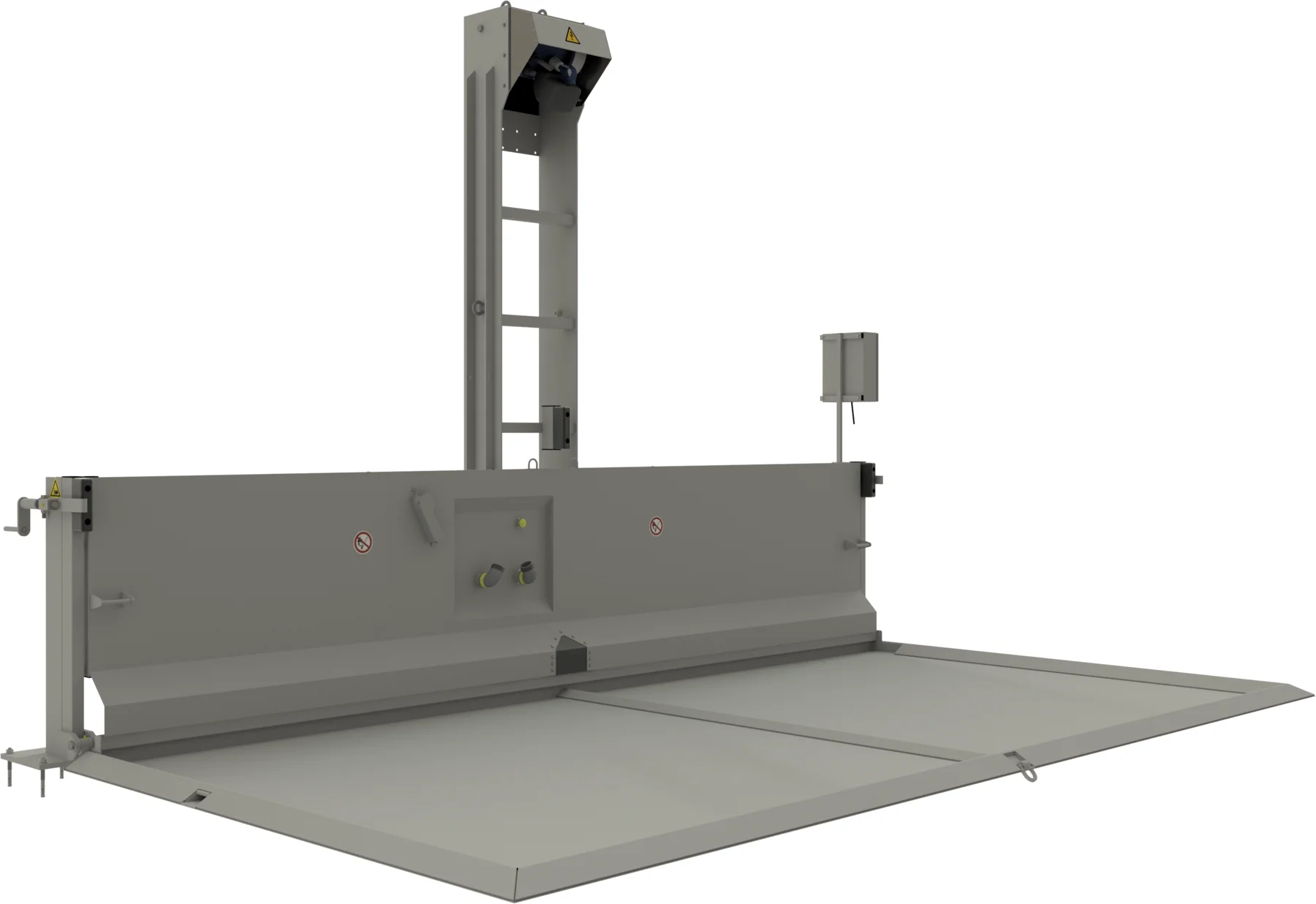
Folding fuel dispensing area, 930 L, 400 V, grey, grey
Art. no. 10754
plus VAT
Freight costs: On request
Delivery time: On request
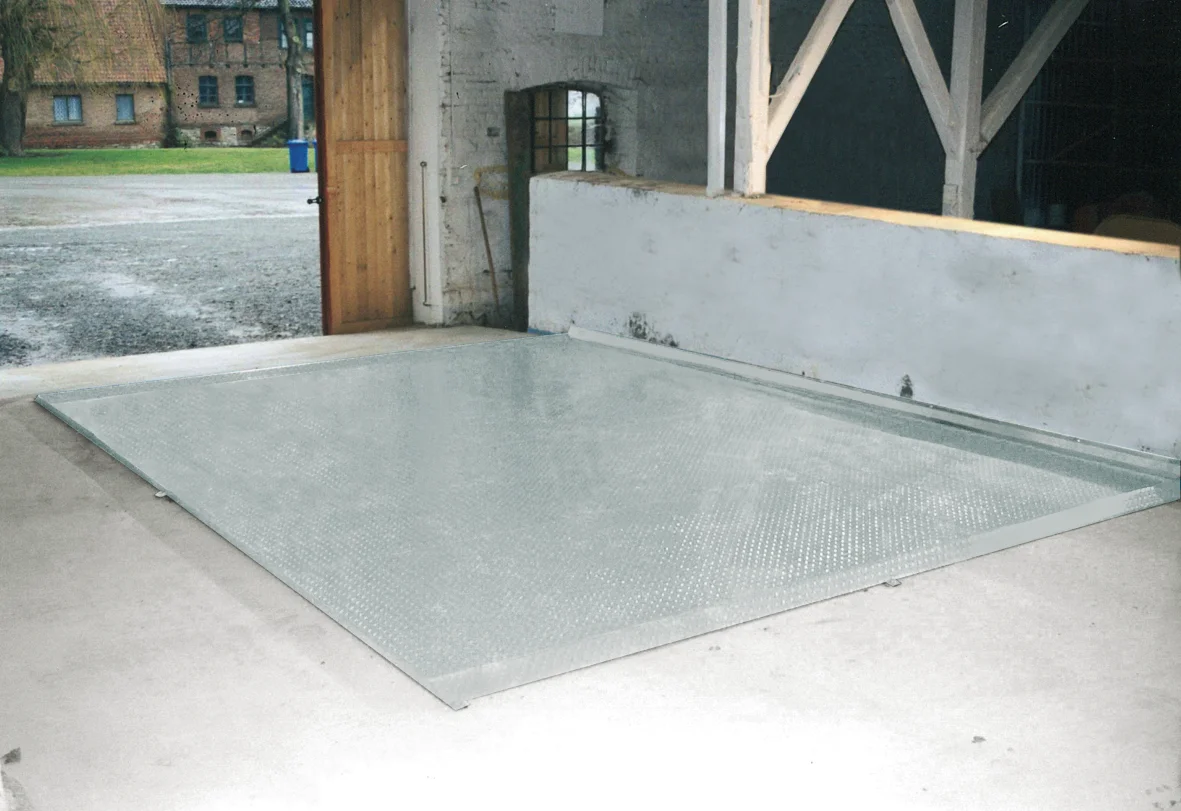
Basic fuel dispensing area, grey
Art. no. 8124
plus VAT
Freight costs: On request
Delivery time: On request
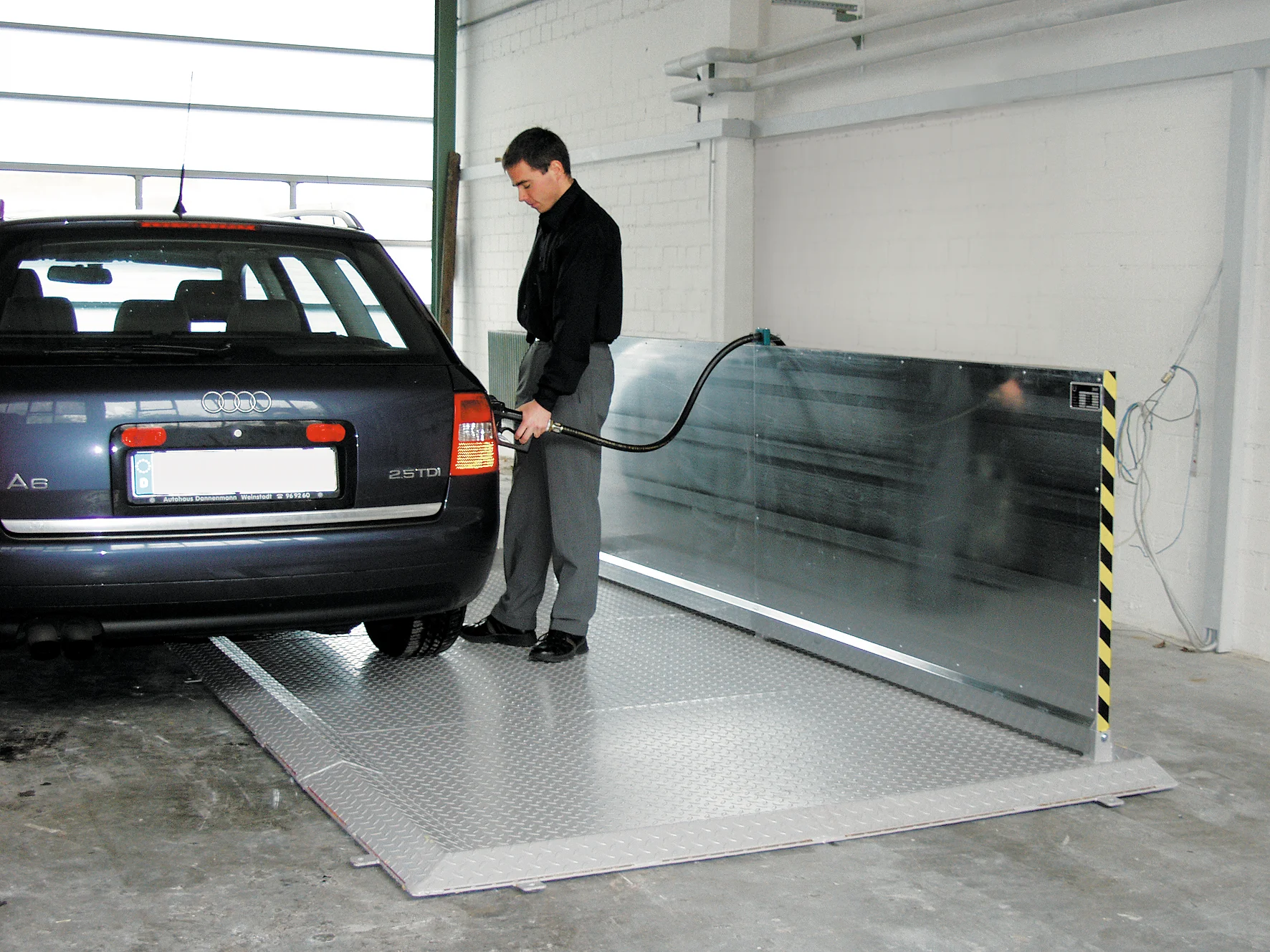
Compact fuel dispensing area, grey
Art. no. 7827
plus VAT
Freight costs: On request
Delivery time: On request
Compact fuel dispensing area, grey
Art. no. 8084
plus VAT
Freight costs: On request
Delivery time: On request
Frequently Asked Questions

Discover our stationary refuelling systems and find the right solution for your application.
Find the right stationary refuelling system|refilling system
You now know what legal requirements apply to stationary refuelling systems. But which refuelling system|refilling system is right for your business, your fuel and your needs?