
Environmental protection
Safety when handling substances that pose a risk to water
Protecting our water bodies is an essential part of responsible storage, transport and environmental technology. Clean water not only forms the basis for sturdy ecosystems, but also for the safe use of natural resources in industry, commerce and the municipal sector. If contamination is prevented at an early stage, habitats are preserved and risks to people and the environment are reliably minimised. Effective water protection therefore focuses on the points where substances hazardous to water are stored, transported or transferred – where safe systems and controlled processes are crucial.
The ‘precautionary principle’:
Water is the most important basis of life and cannot be replaced by anything else. This has always been the case, and any risk to it poses a threat to our future. For this reason, the so-called ‘precautionary principle’ is enshrined in water management law. A lawyer once put it as follows: “There is cause for concern not only when damage is likely to occur, but also when the occurrence of damage is not unlikely.”
Safe storage and handling of water-polluting substances.
Solutions for the storage, transport and handling of hazardous substances – for maximum reliability and operational safety.
Benefits of CEMO’s water protection solutions
CEMO Campus Expertise
Legal framework for the storage of substances hazardous to water
The storage of substances that pose a risk to water bodies is subject to clear legal requirements in Germany. The basis for this is the Water Resources Act (WHG), which, through the so-called ‘precautionary principle’, already stipulates that a risk to water bodies does not need to be probable in order to trigger the need for action – it is sufficient that it is not improbable.
This principle is set out in more detail in the Ordinance on Installations for the Handling of Substances Hazardous to Water (AwSV). It sets out uniform requirements across Germany regarding the technical and organisational standards that operators of storage facilities must meet – ranging from type approval and the required containment capacity to periodic inspections.
The water hazard class (WGK) of the substance in question is key to selecting the right storage solution:
- WGK 1 – low water hazard
- WGK 2 – water-hazardous
- WGK 3 – highly hazardous to water
Depending on the WGK, the quantity stored and other factors (e.g. the location of the facility, proximity to drinking water protection areas), different requirements apply to collection volume, material resistance and inspection intervals. Facilities must generally be inspected at regular intervals by qualified experts (Section 46 AwSV) – the exact intervals depend on the hazard level and the size of the facility.
Related products
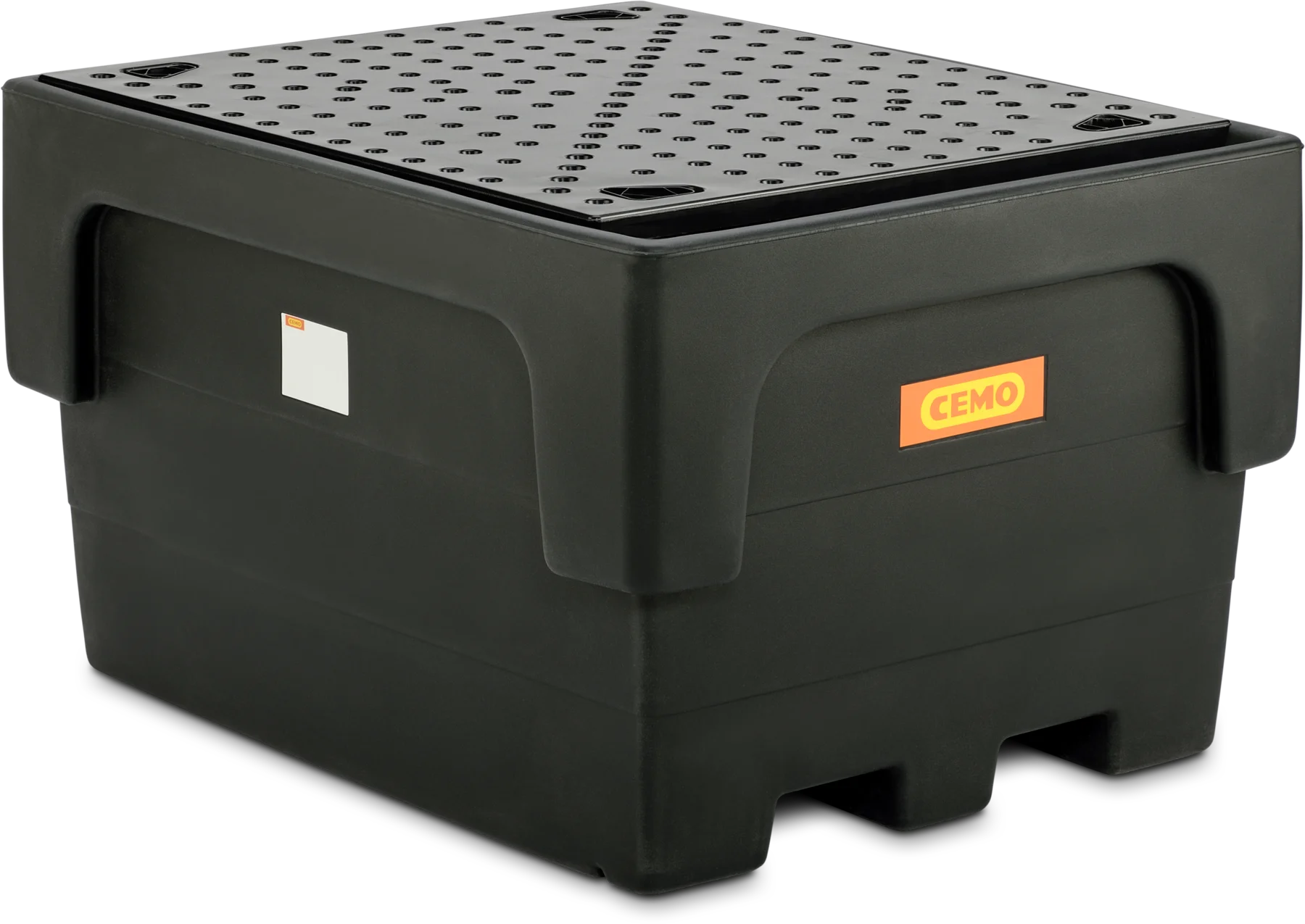
CEMO PE sump for IBCs, 1100/1, black
Art. no. 10950
908.25 €plus VAT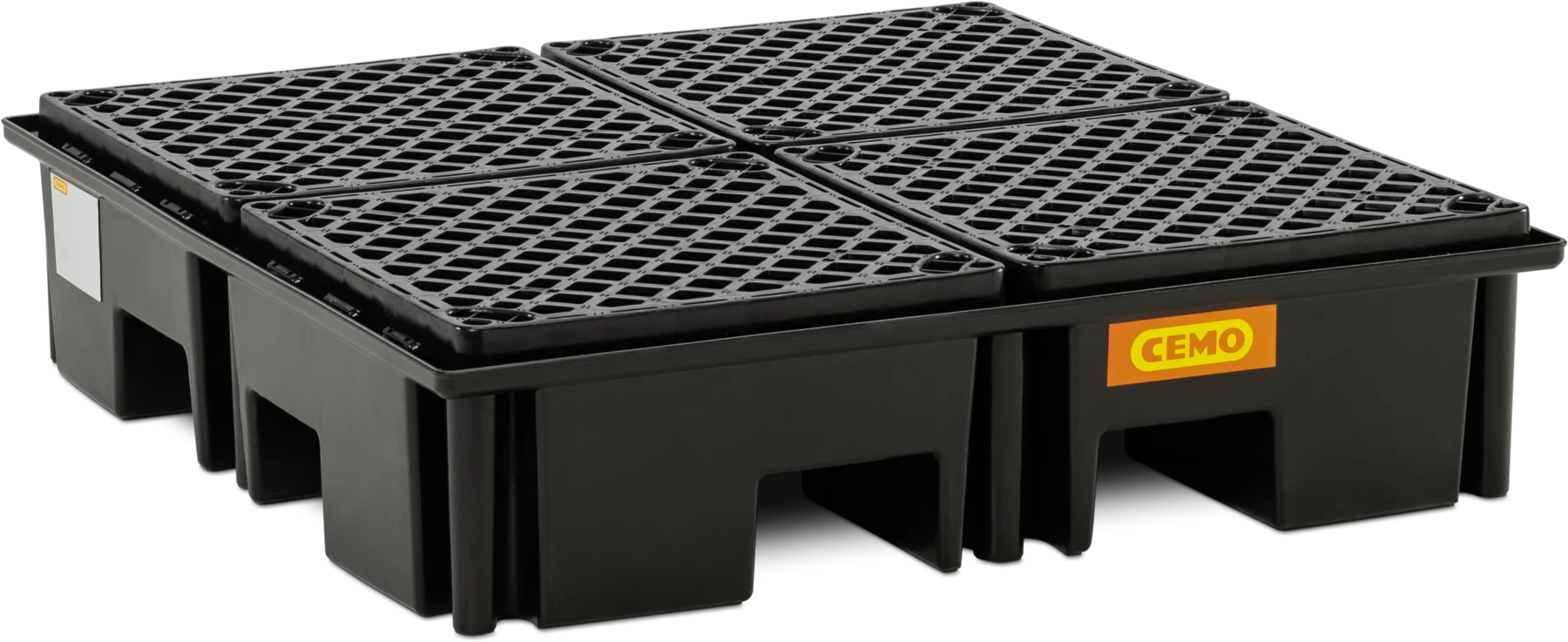
CEMO PE sump for pallets and drums, 220/4, black
Art. no. 11262
420.00 €plus VAT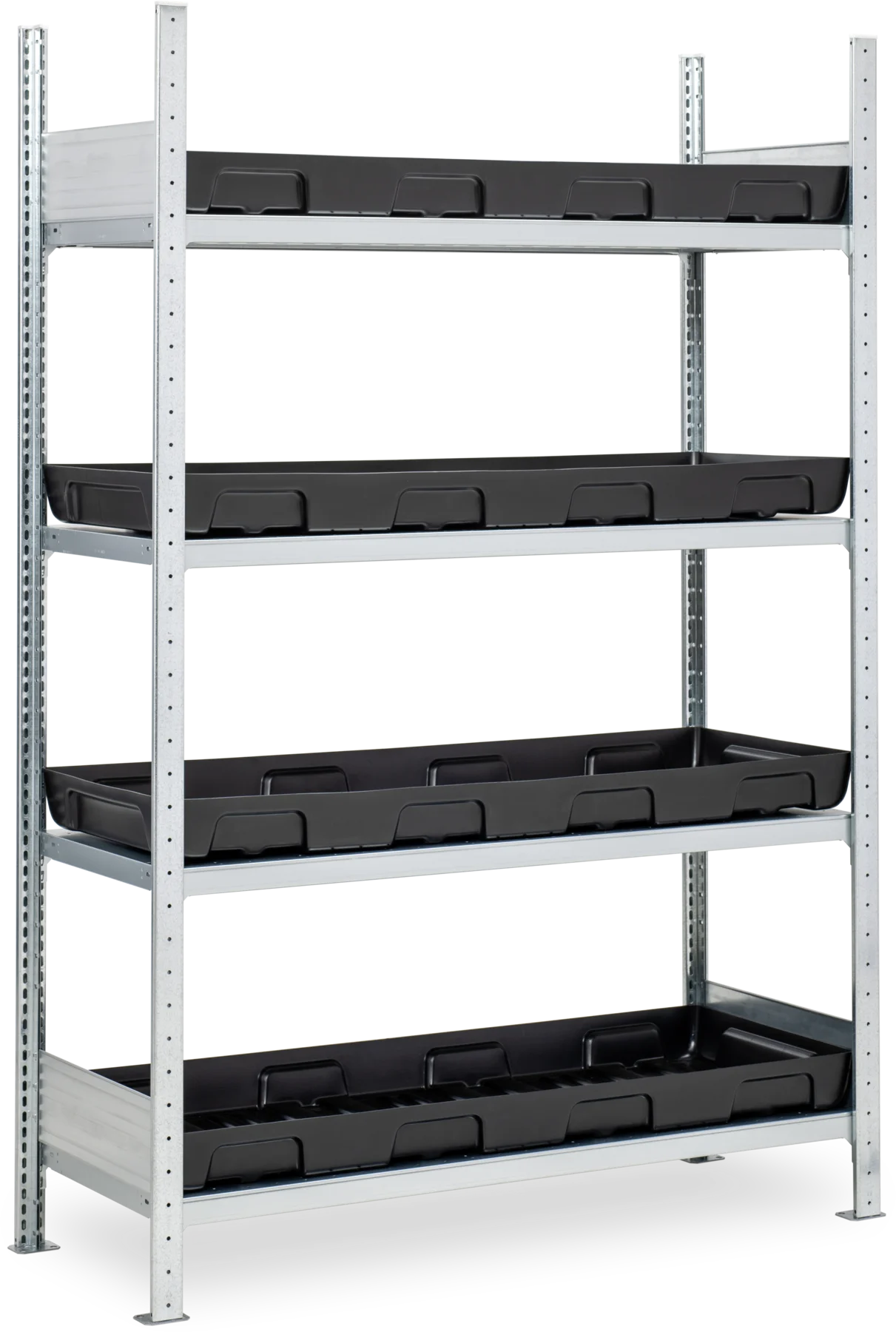
CEMO hazardous substances rack for small containers with PE sumps, 36 L
Art. no. 11945
735.00 €plus VAT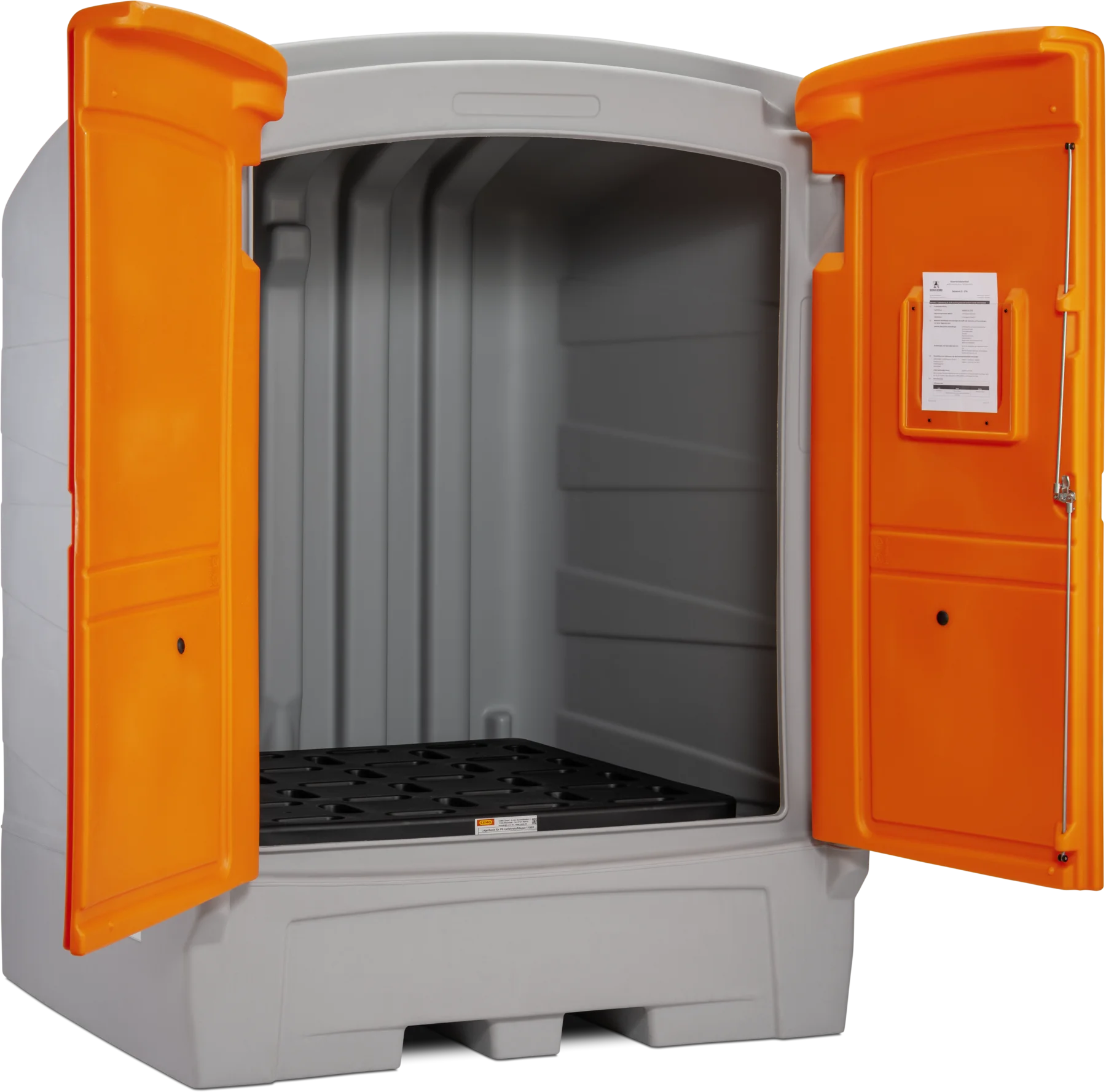
CEMO PE hazardous material depot, 1100/1, grey, double hinged doors, orange doors
Art. no. 11551
2,367.75 €plus VAT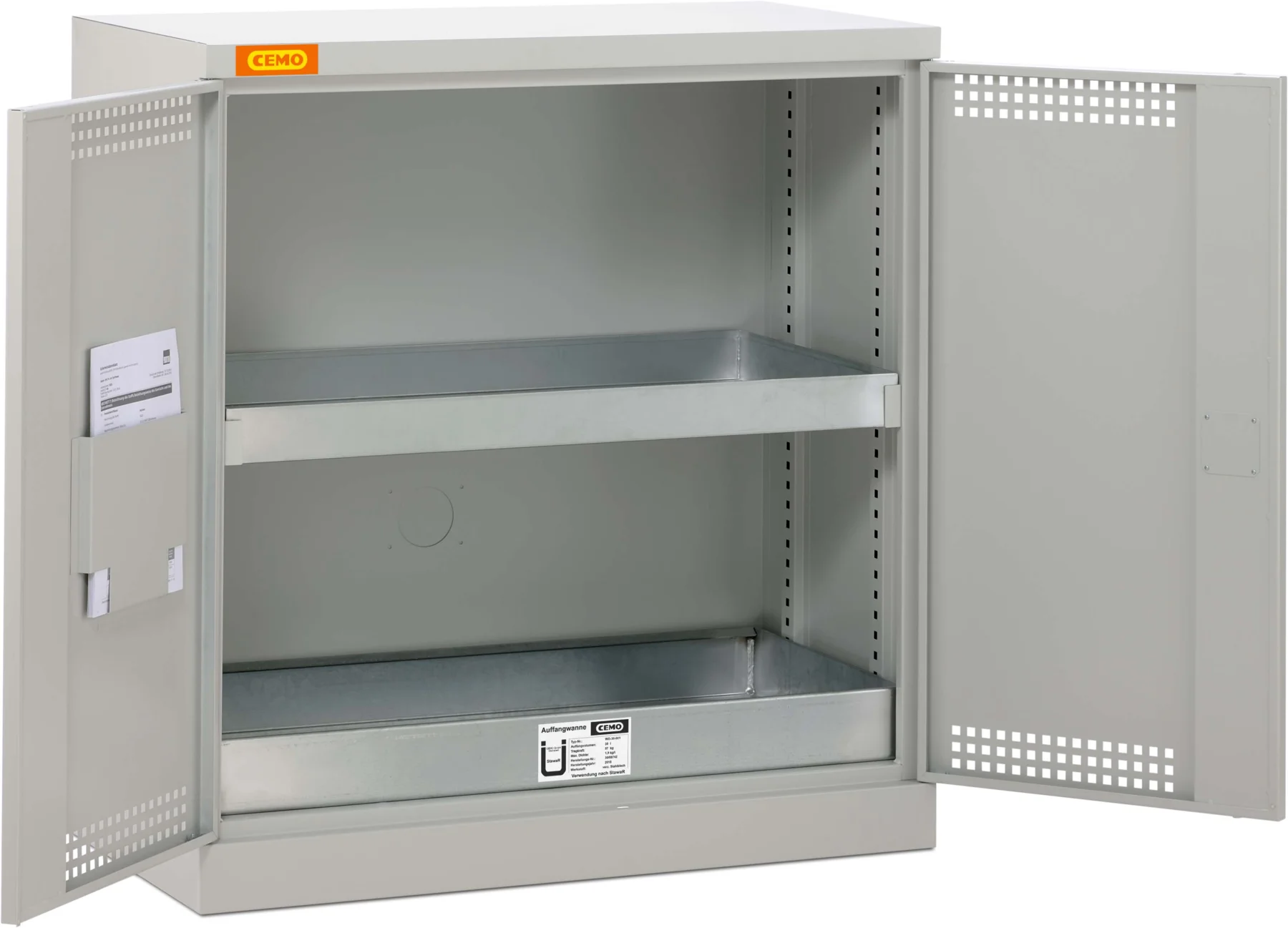
Environmental cabinet with shelves, 30 L, grey, double hinged doors, grey doors
Art. no. 11000
614.25 €plus VATCEMO Glossary: Terms explained briefly
Term |
Explanation |
| AwSV | The Ordinance on Installations for the Handling of Substances Hazardous to Water regulates the technical requirements for storage, filling and transhipment facilities for substances hazardous to water throughout Germany. |
| WHG |
The Water Resources Act is the overarching legal basis for German water protection law and includes, amongst other things, the precautionary principle. |
| WGK 1 │ WGK 2 │ WGK 3 | The water hazard class indicates the extent to which a substance may pose a risk to water bodies – ranging from low (WGK 1) through to water-hazardous (WGK 2) and highly water-hazardous (WGK 3). It plays a key role in determining the requirements for storage. |
| General Construction Inspection Approval (abZ) | Certification by the German Institute for Building Technology (DIBt) that a construction product or system complies with building regulations – e.g. approval number Z-40.22-564 for CEMO PE sumps for IBCs. |
| StawaR certification (German steel bund certification) | The (region-specific) guideline on requirements for steel bunds and other containment systems defines type-specific approval criteria for bunds and containment tanks. |
| Precautionary principle | A legal principle derived from the Water Resources Act (WHG): even the mere possibility of water pollution – not just its likelihood – gives rise to obligations to act and provide protection. |
| H224–H226 | Hazard statements (H-phrases) under the CLP Regulation, which classify the flash point and thus the flammability of a substance (H224 = extremely flammable, up to H226 = flammable). |
| Collection volume / retention capacity | The volume that a bund or storage system can reliably contain in the event of a leak – a key parameter for the design of any storage facility. |
How to find the right solution for water protection in your business
1. Where should the hazardous substances be stored?
1 Buns │ Surface protection elements
- for small containers, drums and IBCs
- with general construction inspection certification or the ‘Ü’ mark in accordance with StawaR certification (German steel bund certification)
- Specifically designed for water-polluting, corrosive and highly flammable substances
2 shelves for hazardous substances
- Space-saving storage of small containers, drums and pallets
- Spill containment buns with general construction inspection certification or the ‘Ü’ mark in accordance with StawaR certification (German steel bund certification)
- Wide range and modular design
3 hazardous substances cupboards
- Base bund with Ü mark in accordance with StawaR certification (German steel bund certification)
- for small containers and drums
- special models for the storage of pesticides
4 hazardous material depots
- for the storage of drums and IBCs
- bearing the Ü mark in accordance with StawaR certification or general construction inspection approval
- for water-polluting substances (WGK 1–3)
5 hazardous waste containers
- For the storage of large quantities and containers
- with general construction inspection certification
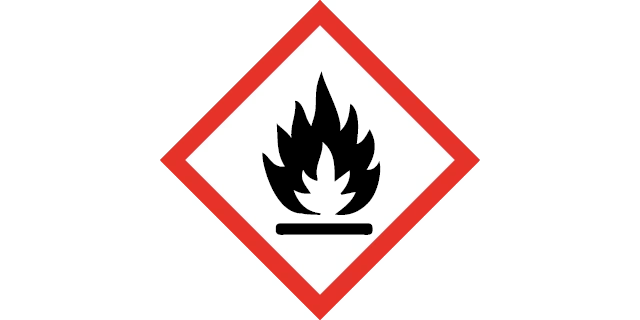
- Storage of water-polluting substances (WGK 1–3) or flammable substances (H224–226)
2. Which containers are to be stored?
The type and quantity of containers influence the technical design of the system. Whether canisters, drums, IBCs or larger storage units: the required capacity and day-to-day handling determine the optimal solution. As container sizes increase, so do the requirements in terms of load-bearing capacity, collection volume, accessibility and handling.
A sufficiently large collection volume is a key prerequisite for effective water protection. It ensures that, in the event of leaks or accidents, any spilled liquids are reliably contained and do not enter the ground or watercourses. The design of the collection volume depends on the type and quantity of the substances stored, as well as on the applicable legal requirements. Only if the spill absorbtion pad is correctly sized can the environment, the business and staff be effectively protected.
Small containers
drums
IBC
bulk quantities
3. Which hazardous substances are to be stored?
The choice of the specifically designed material for a bund depends largely on the substances to be stored. Different substances place different demands on chemical resistance and, consequently, on the specifically designed material.
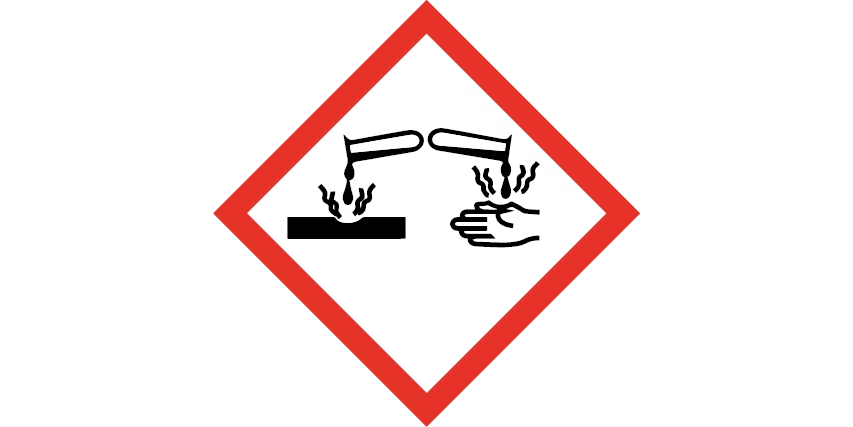
For many applications, PE (polyethylene) is specifically designed due to its high chemical resistance and offers a reliable solution for the storage of numerous substances. The highly resistant material GRP (glass-fibre-reinforced plastic) also demonstrates sufficient resistance in many cases. When storing corrosive substances such as acids and lyes, choosing a suitably resistant material can be crucial.
DIN EN 12285-1:2018, Table B.2 (formerly DIN 6601) may be used to demonstrate the chemical resistance of steel. For approved plastic buns, DIBt Media List 40 may be used as proof of resistance.
You can find details of the resistance of PE and GRP to the respective storage media in our resistance list.
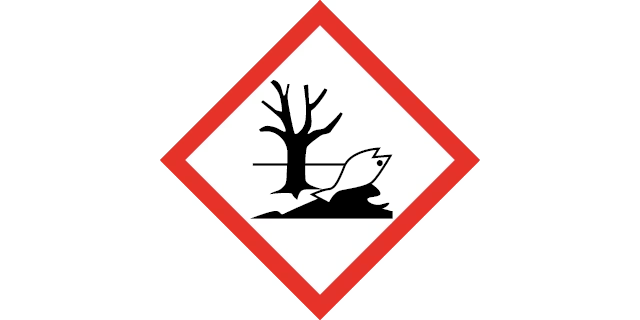
Harmful to the environment
|
Corrosive
|
Highly flammable(Flash point < 55°C)
|
Flammable(Flash point > 55°C)
|
|
PE |
Substances hazardous to water (WGK 1–3) | Chemicals, acids and lyes | – | – |
GRP |
Substances hazardous to water (WGK 1–3) | Mild acids and alkalis | – | Diesel, heating oil, fresh and used oil |
steel |
Substances hazardous to water (WGK 1–3) | – | Petrol (petrol-based fuels), paints and thinners | Diesel, heating oil, fresh and used oil |





Frequently Asked Questions

Not sure which solution is right for your application?
Please get in touch; we’d be happy to advise you.