CEMO campus │ Legal basis
Fire prevention: Fire rating and regulations
The Basics of Fire Prevention

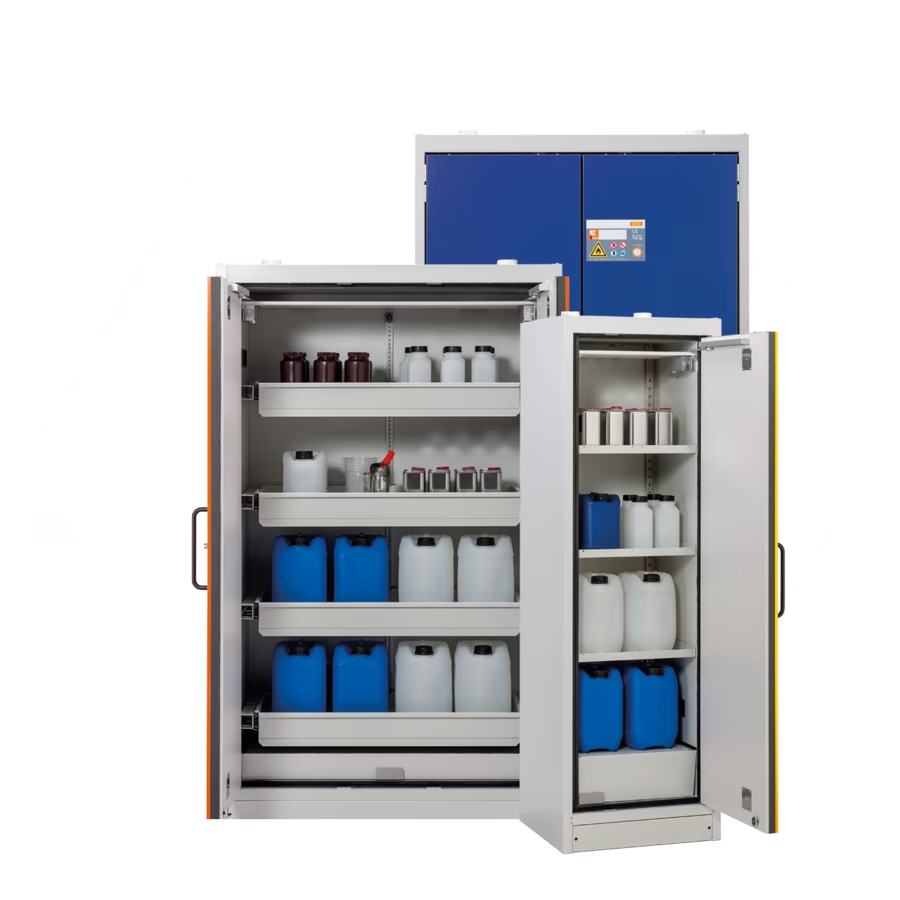
What are the requirements regarding the fire resistance of safety cabinets and safety containers? How are flammable liquids classified? What containment capacities are required, and what regulations apply to ventilation and explosion-hazard zones? On the CEMO Campus, you’ll find the key fundamentals of workplace fire prevention – explained concisely and organised in a practical manner.
Safety starts with the right fire prevention measures
Flammable liquids, chemicals and other hazardous substances are part of everyday working life in many businesses. Even small quantities of leaked substances can be ignited by sparks, hot surfaces or electrical equipment. The aim of workplace fire prevention is to protect people, property and the environment from the consequences of a fire or explosion.
| Protecting people | Protecting buildings | Protecting processes | Protecting the environment |
|
|
|
|
An overview of the key regulations
Abbreviation |
Regulation |
Significance for water protection |
| GefStoffV | Hazardous Substances Ordinance | Regulates the protection of employees when handling hazardous substances and sets out requirements for their safe storage and handling. |
| TRGS 510 | Technical Rules for Hazardous Substances | Regulates the safe storage of hazardous substances and sets out requirements for storage areas, combined storage and protective measures. |
| TRGS 720 et seq. | Technical Rules for Explosion Protection | Set out the specific requirements for explosion protection and describe measures to prevent the formation of explosive mixtures and effective ignition sources. |
| DIN EN 14470-1 | Product standard for flammable liquids | Sets out requirements for safety cabinets used to store flammable liquids, particularly with regard to fireproof|fire rating, construction and safety features. |
fireproof|fire rating
Fire resistance explained simply
Fire-resistant cabinets and fire-resistant containers are classified according to their fire rating in accordance with DIN EN 14470-1. In the event of a fire, they protect their contents from the effects of an external fire for a defined period of time. The temperature rise inside the cabinet or container must not exceed 180 K during the test period.
Type |
Fire resistance |
| Type 30 | 30 minutes |
| Type 60 | 60 minutes |
| Type 90 | 90 minutes |
As a general rule, the longer the fire rating, the more time is available for evacuation, alerting the fire service and firefighting.
Storing flammable liquids correctly
Labelling |
Hazard statements |
flash point |
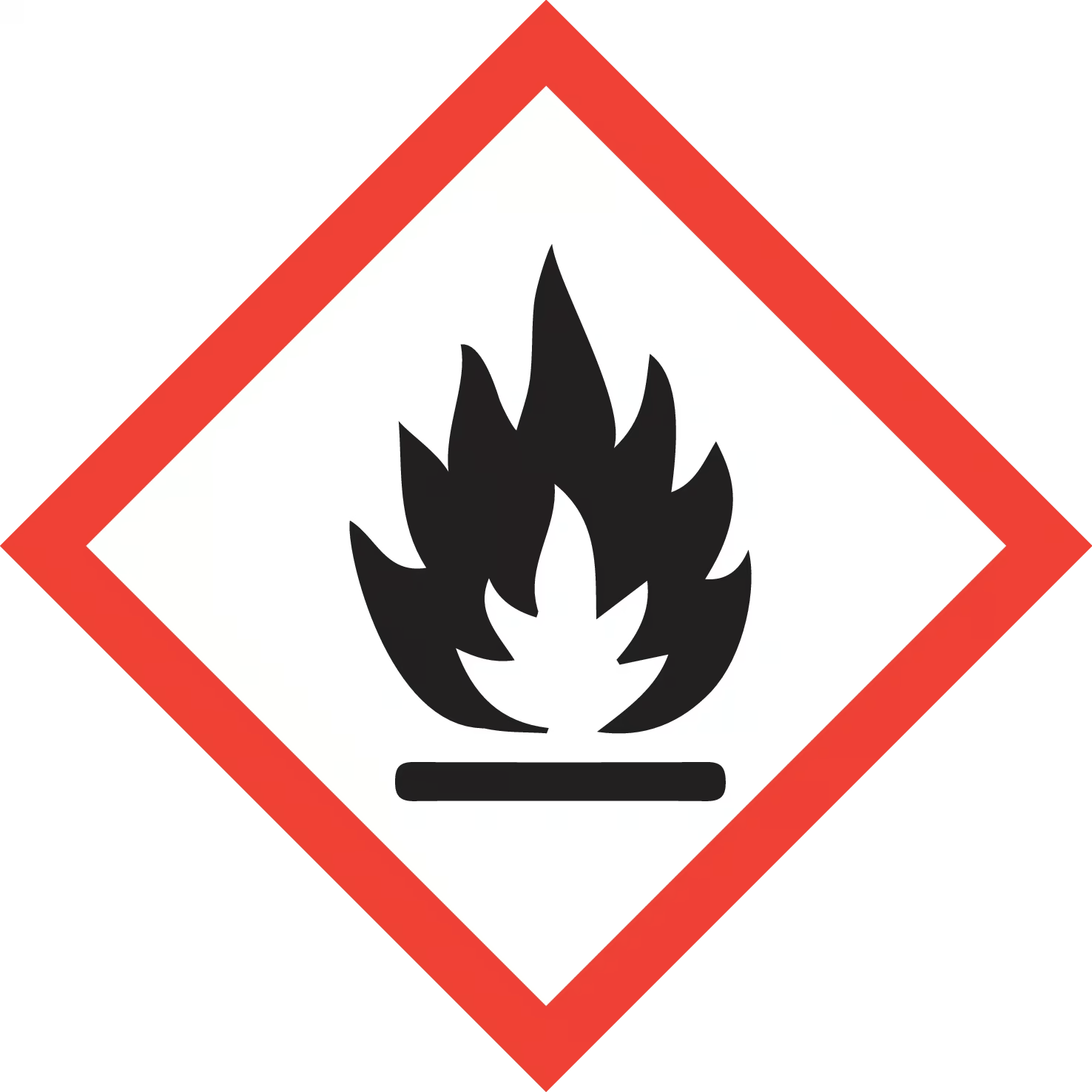 |
flammable H226 | ≥ 23°C and ≤ 60°C |
| highly flammable H225 | < 23°C and boiling point > 35°C | |
| Extremely flammable H224 | < 23°C and boiling point ≤ 35°C |
Need for monitoring
If more than 10,000 litres of flammable, highly flammable or extremely flammable liquids are stored, the facility is deemed to require monitoring within the meaning of Section 2 of the ProdSG.
The correct collection volume
As a general rule, the bund must be able to hold at least 10 per cent of the total storage volume or accommodate the largest container size stored. The bund must be designed to accommodate whichever of these values is greater. A special rule applies in water protection areas:
here, it is necessary to ensure 100 per cent of the collection volume for the stored substances.
TIP: The de minimis limit under the AwSV does not apply to above-ground installations outside protected areas:
For a total storage volume of < 220 litres of liquid substances hazardous to water, an approved bund is not required.
Below the de minimis threshold, there is no formal obligation to calculate a collection volume in accordance with the AwSV. Nevertheless, the general precautionary principle of the Water Resources Act (WHG § 62) applies. This means that, even in this case, drums or small containers must not be left unsecured on unprotected ground. This prevents any substances that leak out from contaminating the soil or groundwater – even if no formal containment system needs to be calculated.
Related products
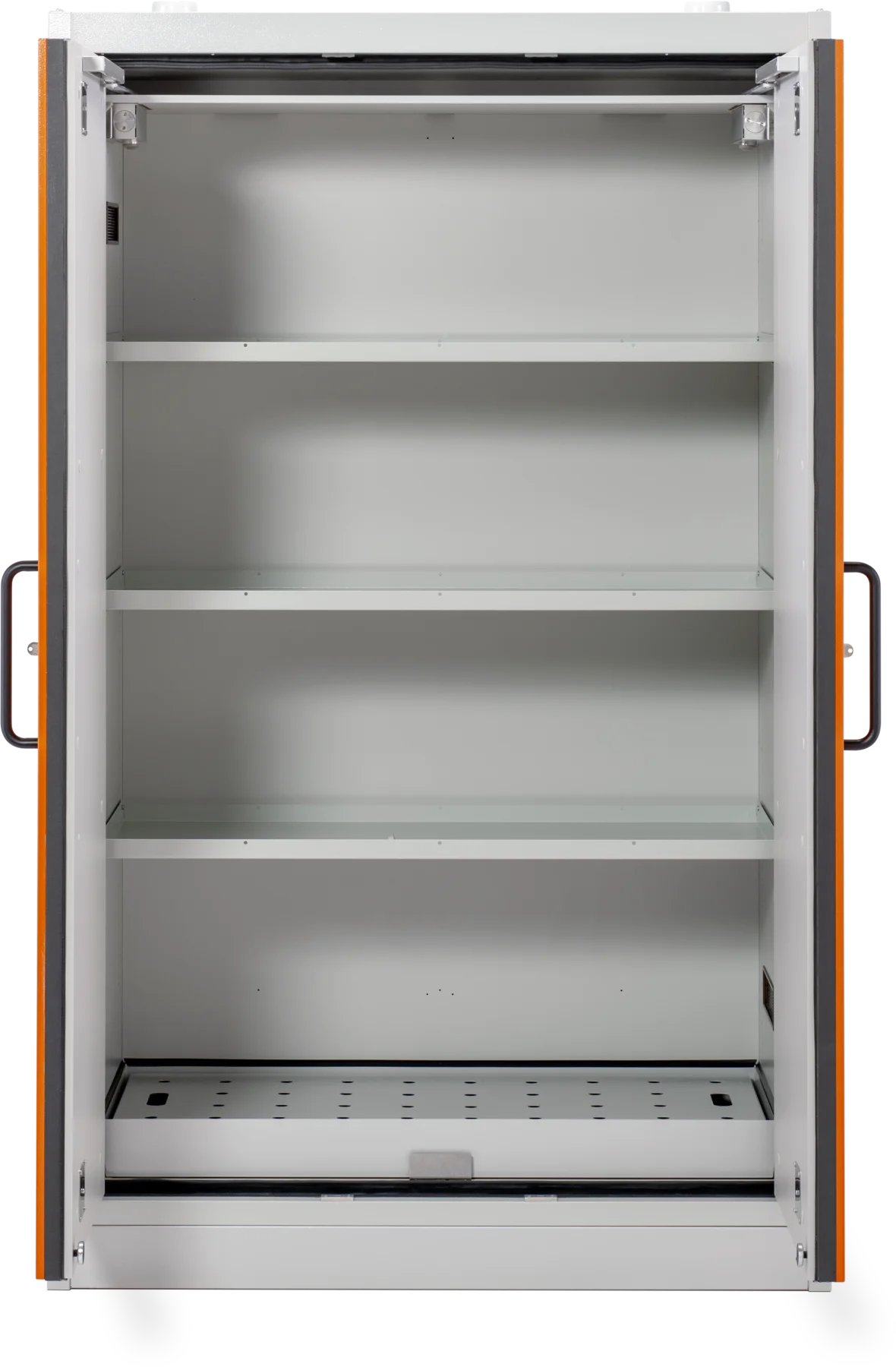
CEMO PROline safety cabinet with shelves, 33 L, grey, double hinged doors, orange doors
Art. no. 11880
3,449.25 €plus VAT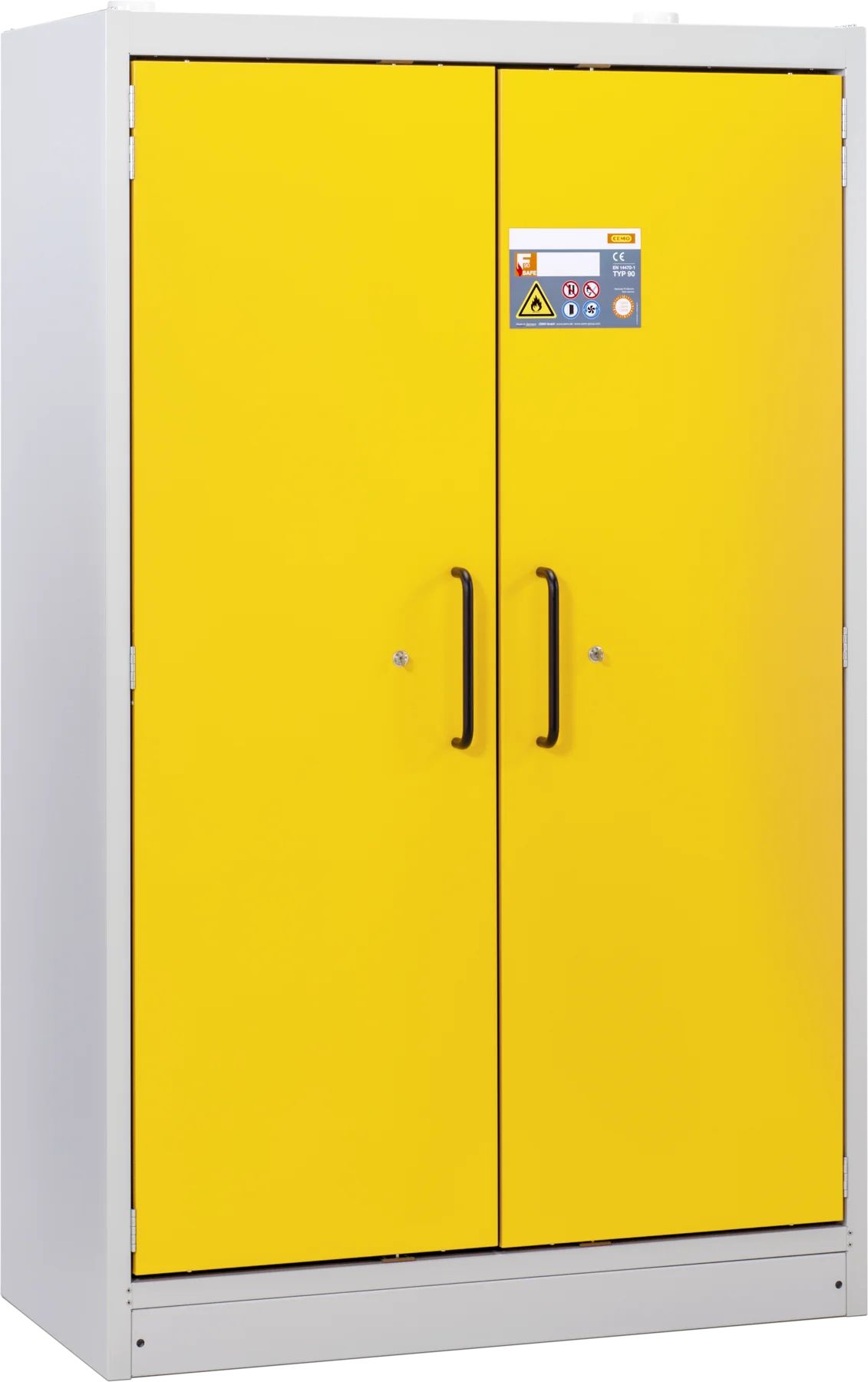
CEMO PROline safety cabinet for drums, 66 L, grey, double hinged doors, yellow doors
Art. no. 12040
3,727.50 €plus VAT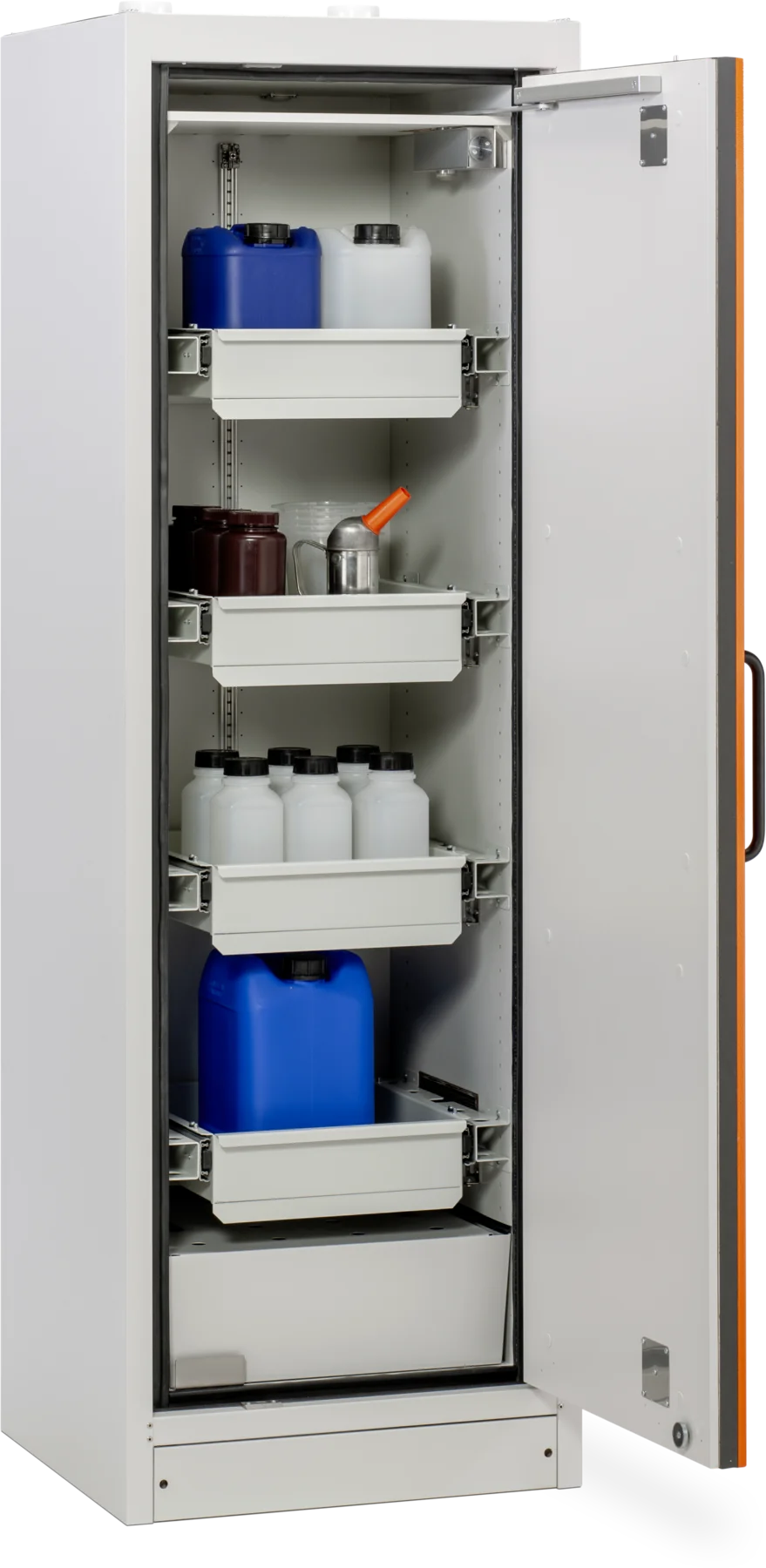
CEMO PROline safety cabinet with full-extension pull-out shelves, 33 L, grey, left-opening door, blue doors
Art. no. 12095
3,701.25 €plus VAT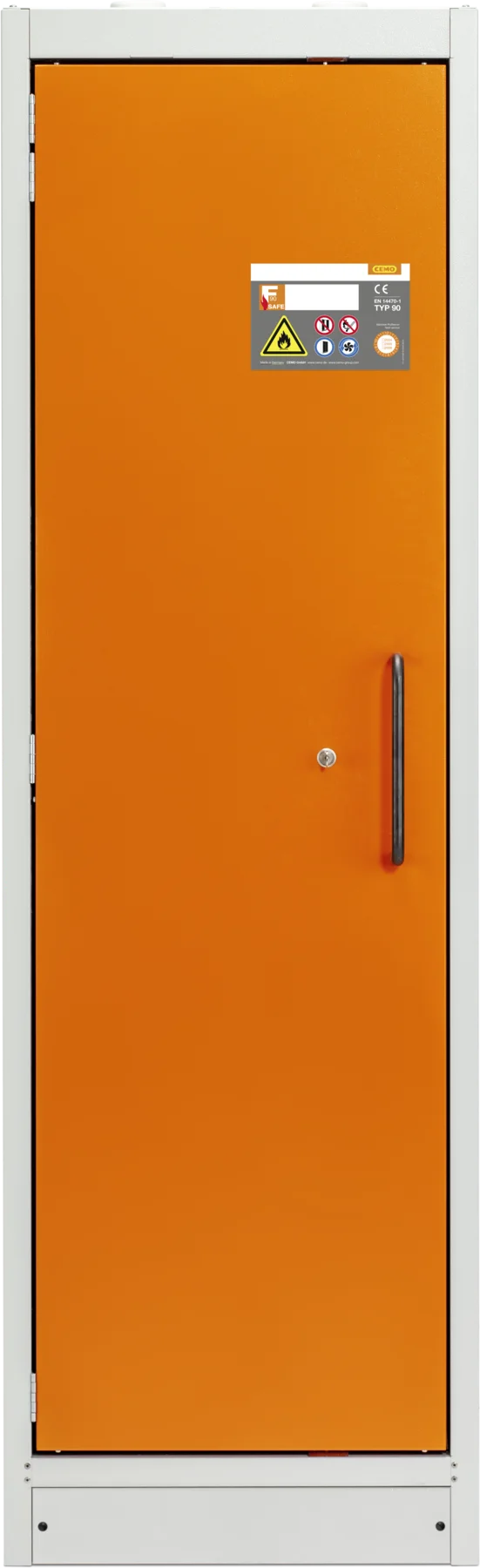
CEMO PROline safety cabinet with full-extension pull-out shelves, 33 L, grey, left-opening door, orange doors
Art. no. 12019
3,921.75 €plus VAT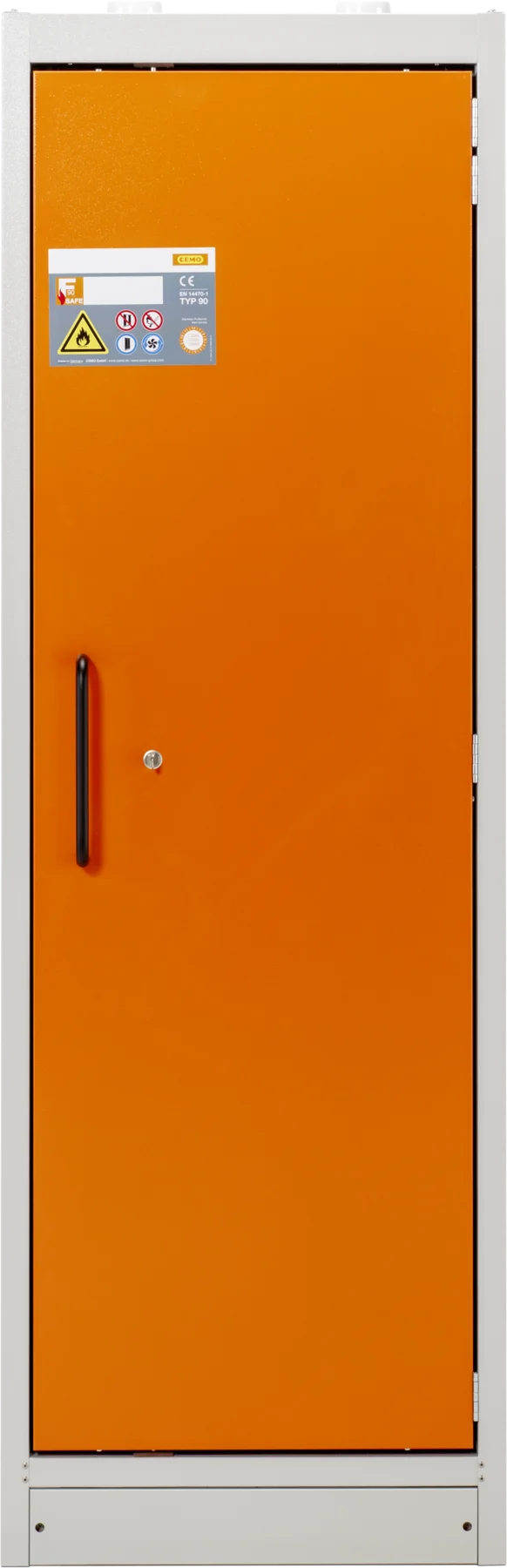
CEMO PROline safety cabinet with stainless steel shelves, 33 L, grey, right-opening door, orange doors
Art. no. 11990
2,829.75 €plus VATEX zones
Areas at risk of explosion
In storage areas where flammable liquids are stored, the presence of an explosive atmosphere must be anticipated. Depending on the circumstances, the following zones are distinguished:
Zone 2
During normal operation, an explosive atmosphere does not occur, or occurs only briefly.
Zone 1
An explosive atmosphere may occasionally occur during normal operation.
Zone 0
An explosive atmosphere is present continuously, over a prolonged period or frequently.
Safety distances for the storage of flammable liquids
In the case of hazardous substance storage facilities without fire prevention, a safety distance must be maintained when storing flammable and combustible liquids. According to TRGS 510, Section 12.4.1, Paragraph 2, this distance depends on the quantity to be stored:
Distance |
Total storage volume (GLV) |
Substance |
| None |
GLV ≤ 200 kg TLV ≤ 1,000 kg |
H224, H225, H226 |
| 5 m | 200 kg ≤ GLV < 1,000 kg | H224, H225 |
| 10 m | 1,000 kg ≤ GLV | H224, H225, H226 |
| 10–30 m | GLV > 10 m³ | Calculation according to TRGS 510, Section 12.4.2 |
Alternatively, either fire-resistant external building walls (F90 according to DIN 4102) or fire-resistant structural elements between the building and the hazardous substances storage facility, of a corresponding height and width, would be sufficient; however, in practice, these are rarely present. If, however, a hazardous substances storage facility is to be erected directly against the building, a Type 90 fire protection container of fire-resistant construction is required.
Passive storage
Storage in tightly sealed containers is often referred to as ‘passive’ storage. During storage, the containers must not be emptied or filled, and opening them for any other purpose is prohibited. The entire room is defined as an Ex Zone 2. A minimum air change rate of 0.4 is required. This may also be achieved through natural ventilation.
Active storage
If further activities are carried out in the storage area (e.g. decanting or transferring – ‘active’ storage), a risk assessment must be carried out to determine the ventilation requirements. Recommended freely accessible sources for the assessment include, amongst others, DGUV 113-001 (Ex-Guideline), TRGS 509 and EMKG (BAuA). As a rule, the entire room is defined as Ex Zone 1 and a ventilation rate of 5 air changes per hour is specified.
Storage |
Air changes |
Type of ventilation |
Monitoring |
| Passive | 0.4 air changes per hour | natural / mechanical | no / yes |
| active | according to the risk assessment (usually 5 air changes per hour) | mechanical | yes |
Adequate ventilation
When storing flammable liquids, ventilation at floor level must be effective at all times. In the case of active storage – i.e. where liquids are stored and decanted – a 5-fold air change rate is required. This air change rate is ensured by a mechanical ventilation system, which must be permanently operational and continuously monitored for effectiveness via an air flow monitoring system.
During passive storage – i.e. when no decanting takes place in the storage area – there must be at least a 0.4-fold air change. However, the volume of the storage area must also be taken into account here (see table ‘Passive storage’).
PASSIVE STORAGE OF FLAMABLE LIQUIDS
Room volume |
Required air changes |
Ex zone |
Special features |
| up to 100 m³ | at least 0.4 times | Zone 2 | None |
| Over 100 m³ | at least 0.4 times | Zone 2 up to 1.5 m in height | None |
| over 100 m³ | at least 0.4 times | Not applicable when a gas detection system (GWA) is in use | Increase the air change rate via the GWA to 2-high |
| over 100 m³ | at least 2-high | No explosion hazard zone from a height of 0.8 m | Up to a height of 0.8 m, explosion-protected equipment must be used. |
Suitable ventilation systems for Type 90 safety cabinets
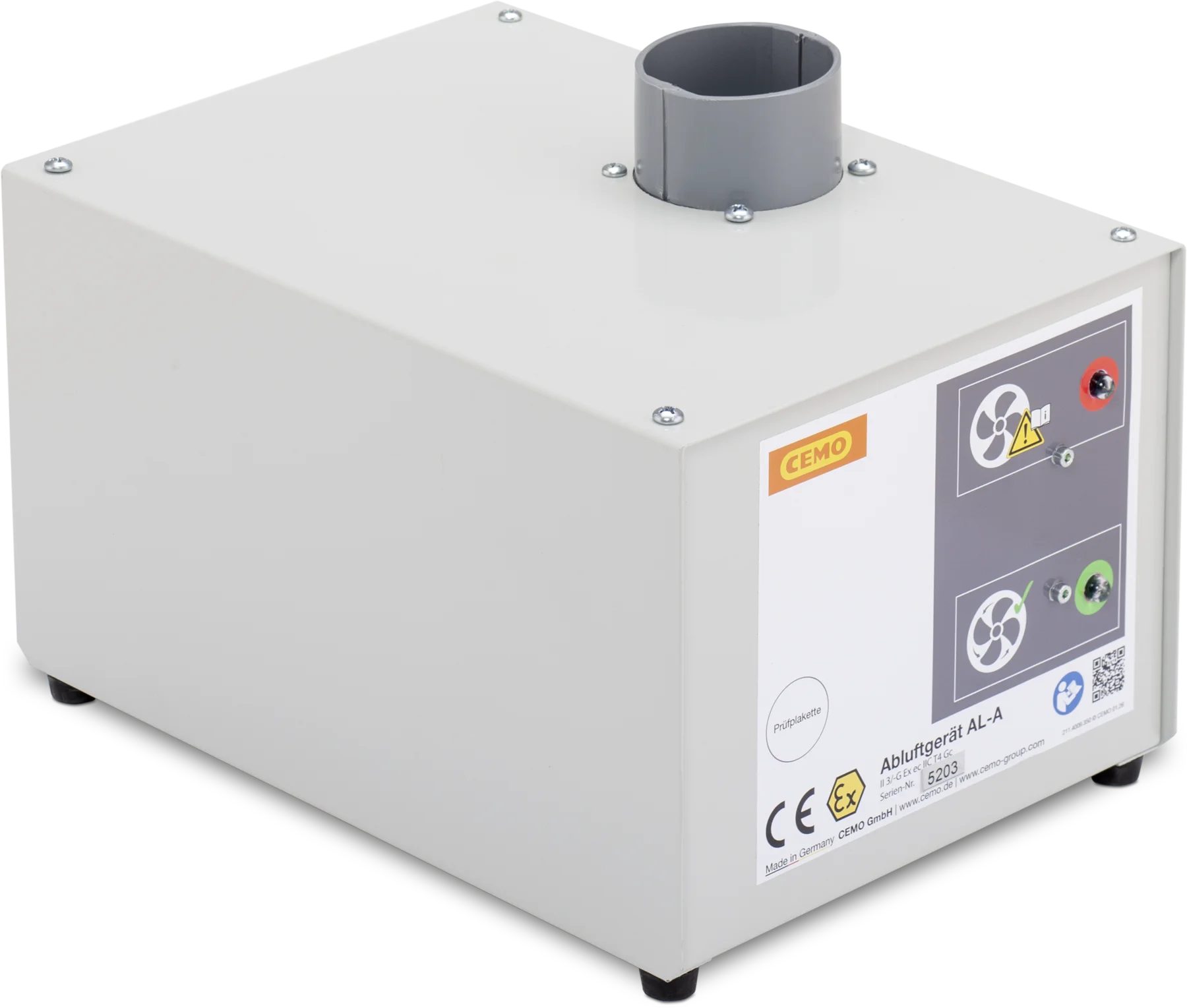
SST AL Extractor Fan, 230 V, grey
Art. no. 8739
plus VAT
Freight costs: 20.00 €
Delivery time: 10 days
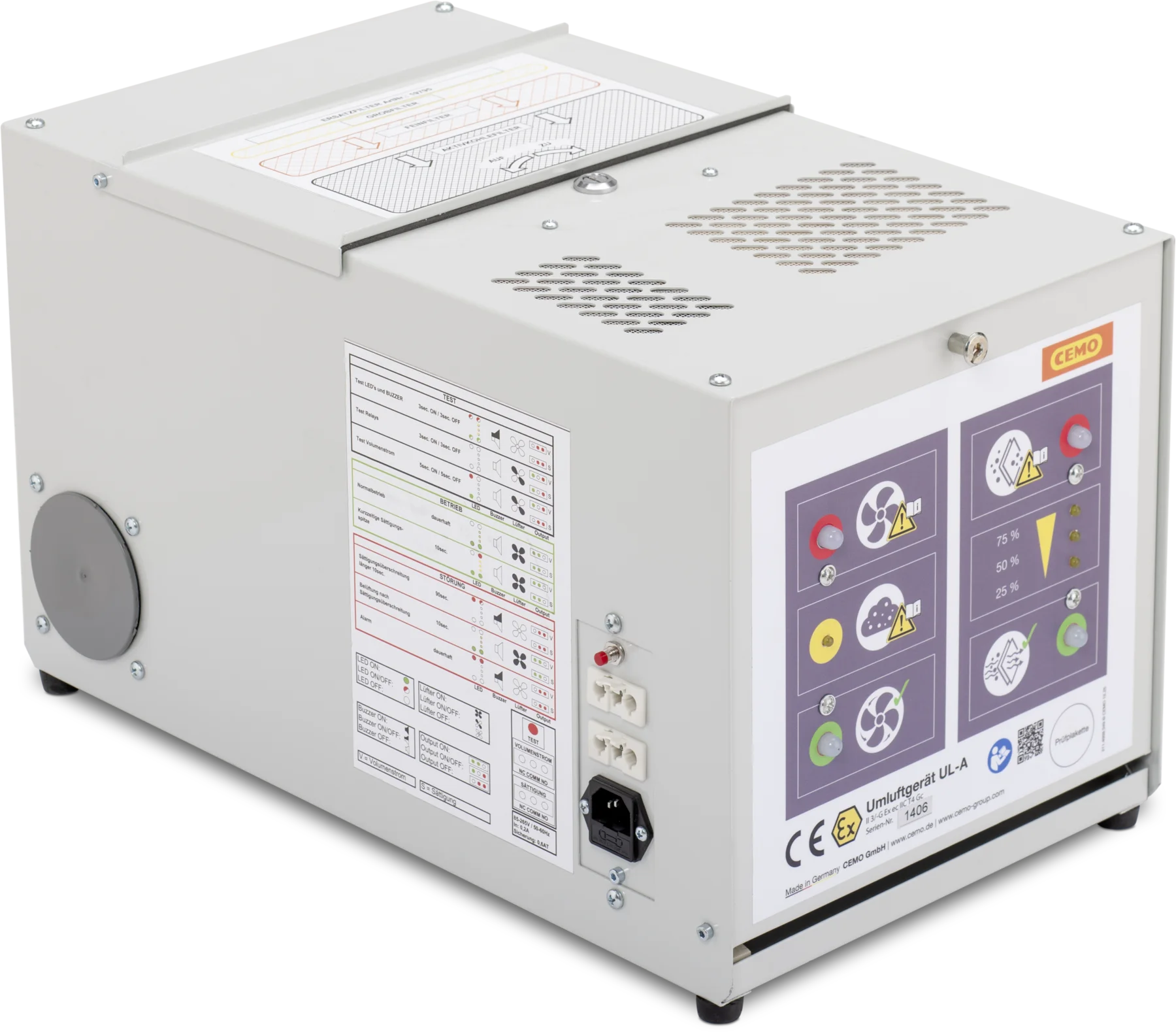
SST UL recirculation fan, 230 V, grey
Art. no. 10963
plus VAT
Freight costs: 20.00 €
Delivery time: On request
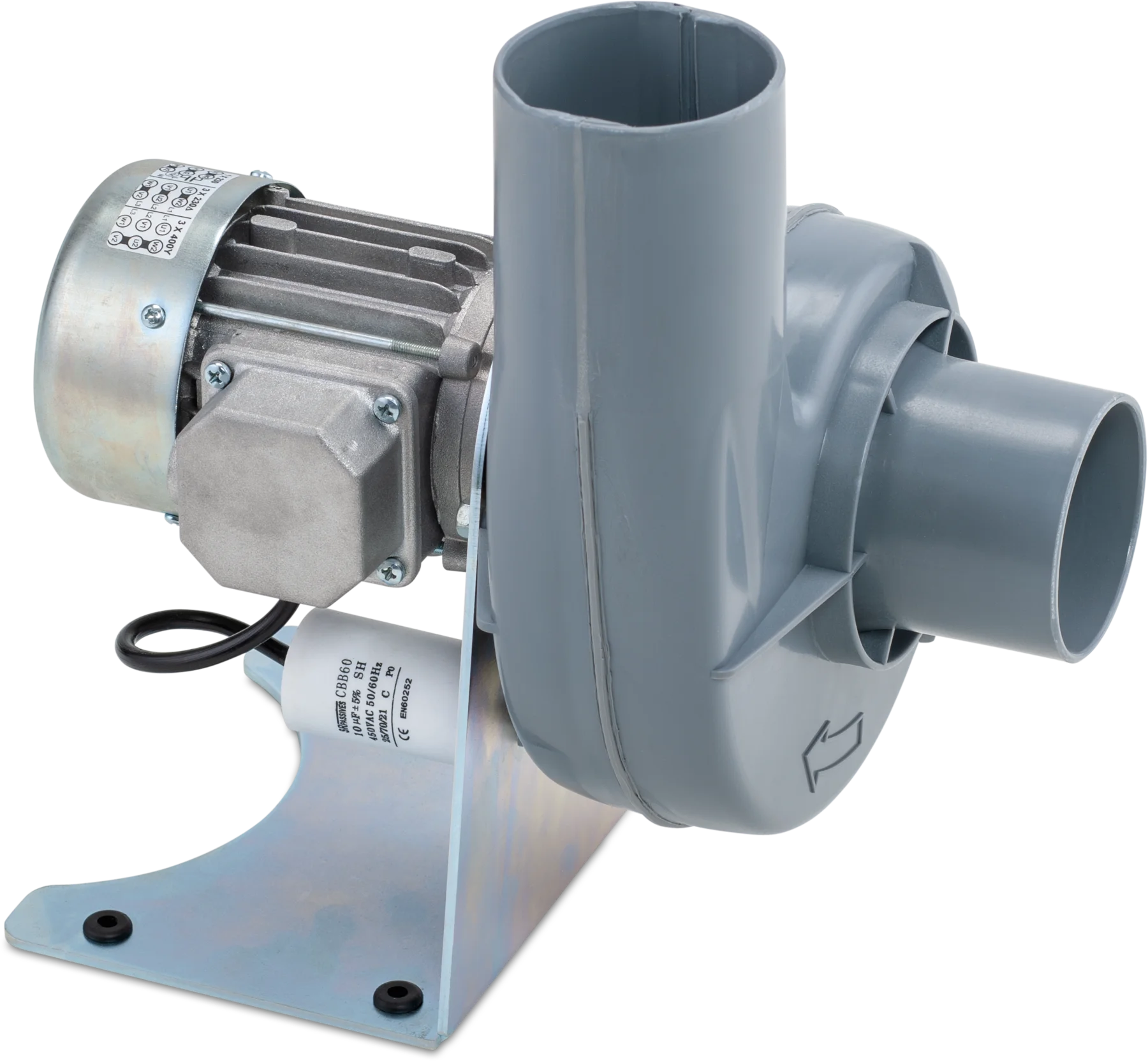
Radial fan without an explosion-proof motor, 230 V
Art. no. 11431
plus VAT
Freight costs: 20.00 €
Delivery time: On request
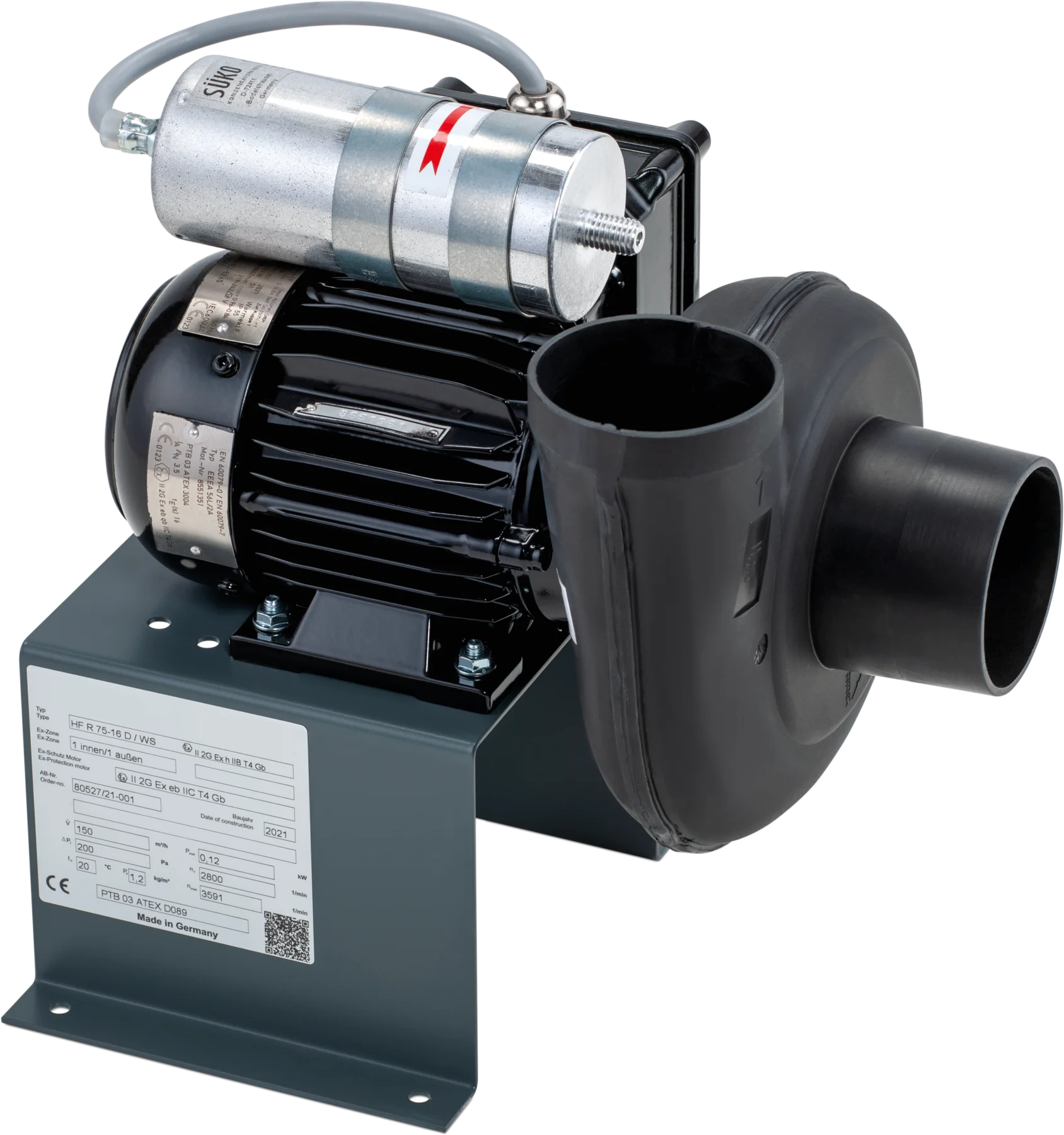
Radial fan with explosion-proof motor, 230 V
Art. no. 11432
plus VAT
Freight costs: 20.00 €
Delivery time: On request
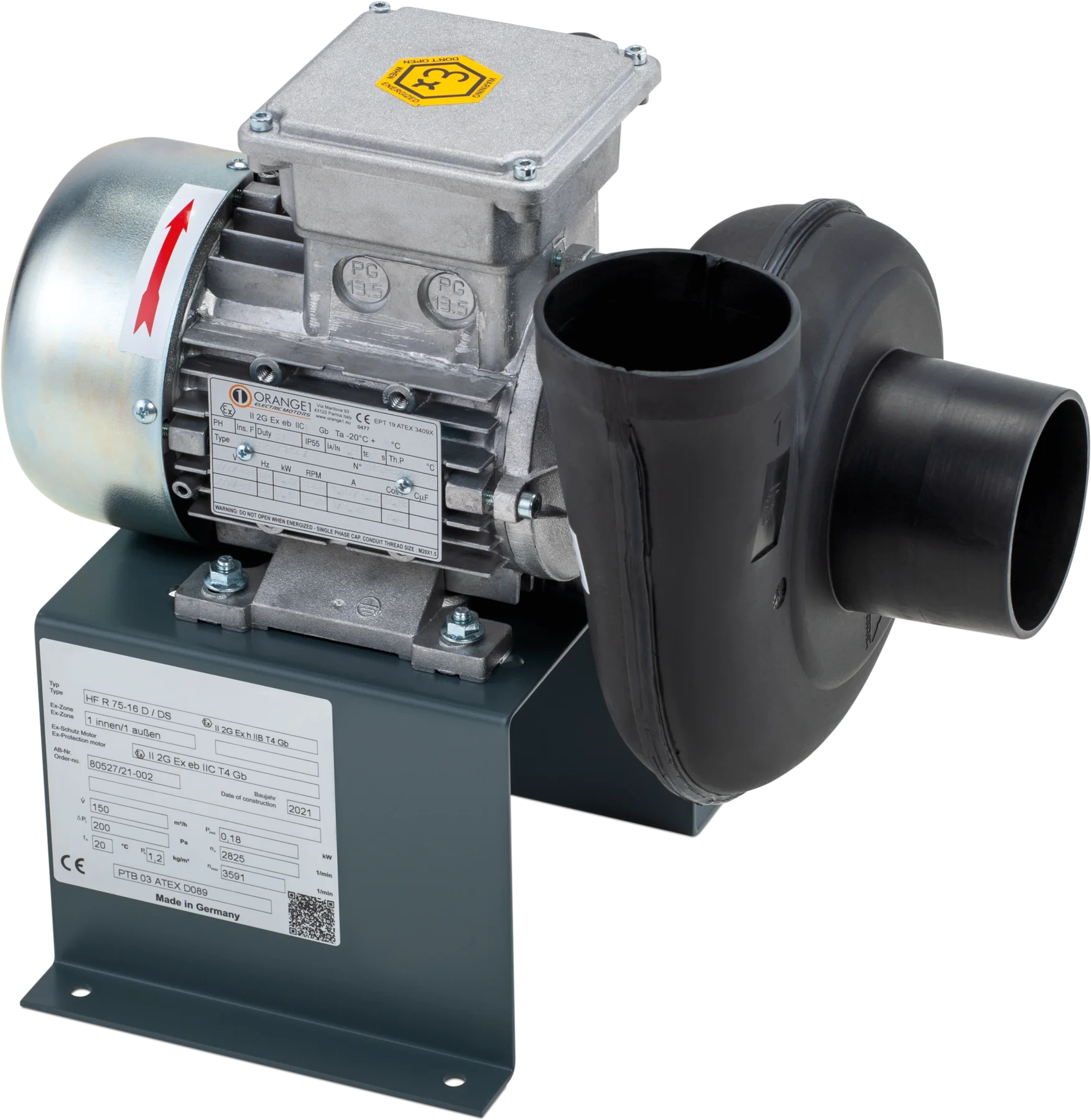
Radial fan with explosion-proof motor, 230 V / 400 V
Art. no. 11433
plus VAT
Freight costs: 20.00 €
Delivery time: On request
Frequently Asked Questions

Discover the right safety cabinets and hazardous materials storage solutions from CEMO, or get personalised advice.
The right solution for hazardous material storage
You are now familiar with the key requirements regarding fire resistance, collection volume, ventilation and explosion protection. But which solution is best suited to your hazardous substances, storage quantities and operational requirements?