
Battery safety
Compact energy storage systems. Underestimated risks.
Batteries, particularly lithium-ion batteries, are now used in almost every sector – from agriculture and forestry through to industry and the construction sector. Battery-powered equipment offers a high degree of flexibility, reduced maintenance requirements and benefits from increasingly powerful and sustainable battery technology. At the same time, these energy storage devices require special care: their high energy density and performance entail specific risks. Fires and accidents involving batteries have increased in recent years, making the issue of battery safety more pressing than ever.
Safe storage and handling of lithium batteries in the workplace.
Protects people, the workplace and the environment through controlled storage and charging processes.
CEMO Campus: Expertise in battery safety
Legal requirements for the storage, charging and transport of lithium-ion batteries
The safe storage, charging and transport of lithium-ion batteries require specifically designed safety measures. Key factors here include, in particular, the power rating of the batteries, the amount of energy stored and the potential risk of thermal runaway.
For storage and charging in safety cabinets, VDMA Standard Sheet 24994:2024-08 in particular sets out the current requirements for fire resistance, permissible stored energy and technical safety equipment.
Lithium batteries are also classified as hazardous materials during transport and are subject to the relevant hazardous materials regulations. UN certification of the transport container alone does not guarantee that all requirements for ADR-compliant transport are met. In addition to selecting specifically designed packaging, particular attention must be paid to the packaging instructions, labelling and the conduct of the transport. This also applies to the handling of damaged lithium-ion batteries.
Transport containers that are correctly packed and used according to dangerous goods regulations can, in many cases, also be used for on-site storage. However, their specific suitability should be assessed on the basis of an on-site risk assessment.
Related products
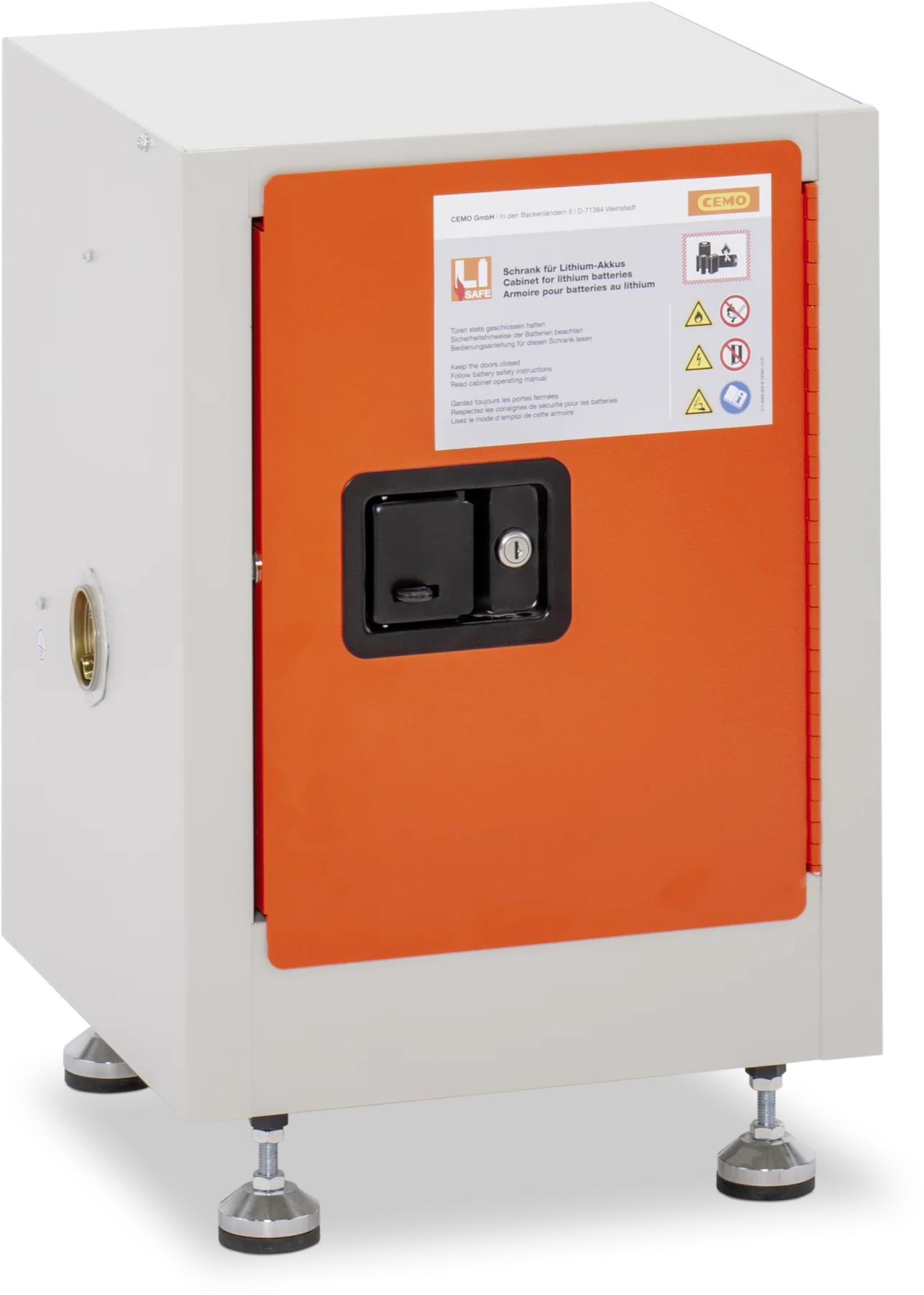
CEMO FMplus battery-operated fire-resistant cabinet with charging unit, US, 230 V, grey, right-opening door, orange doors, feet
Art. no. 11877
1,218.00 €plus VAT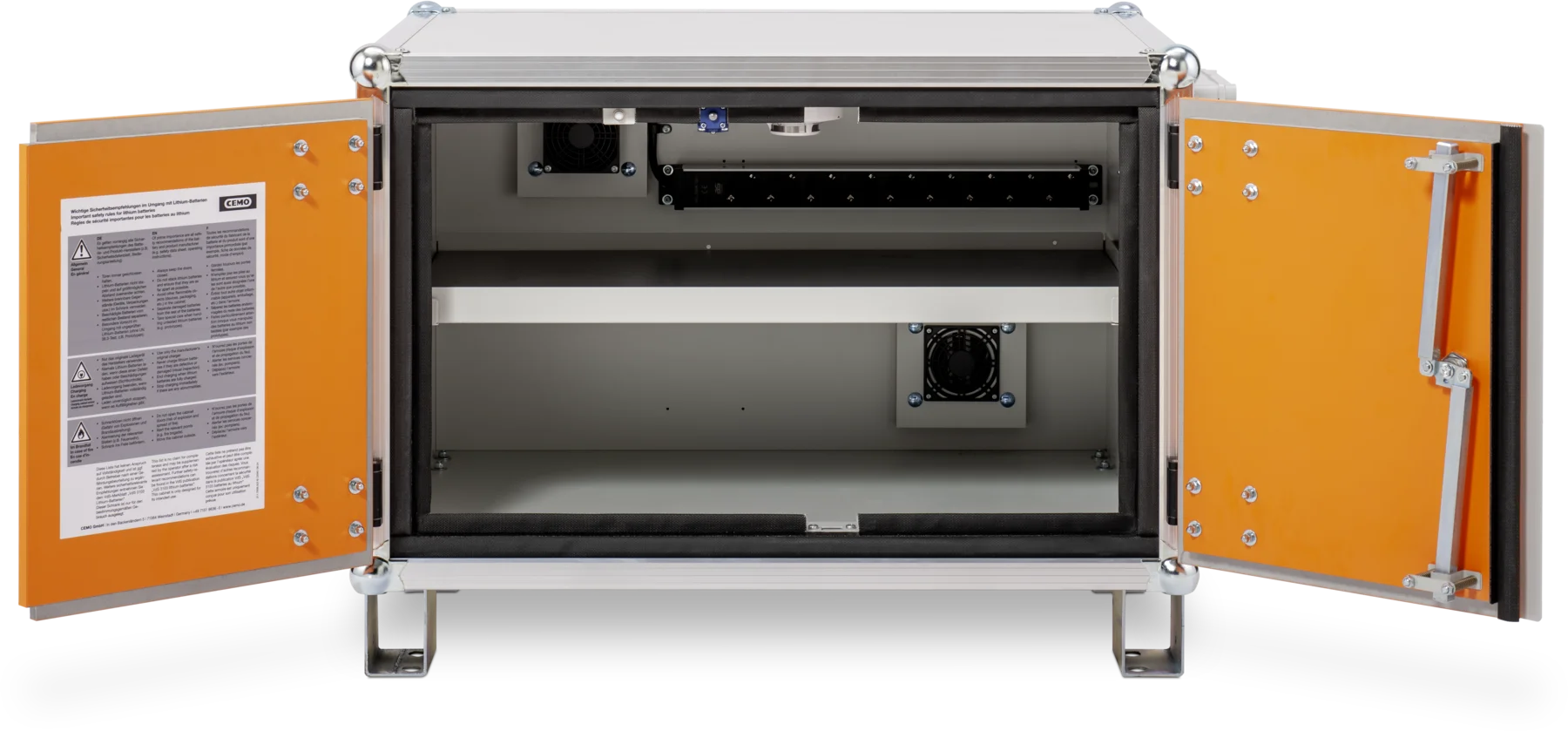
CEMO Battery charging cabinet Premium, 230 V, grey, double hinged doors, orange doors, with stacking feet
Art. no. 12111
3,360.00 €plus VAT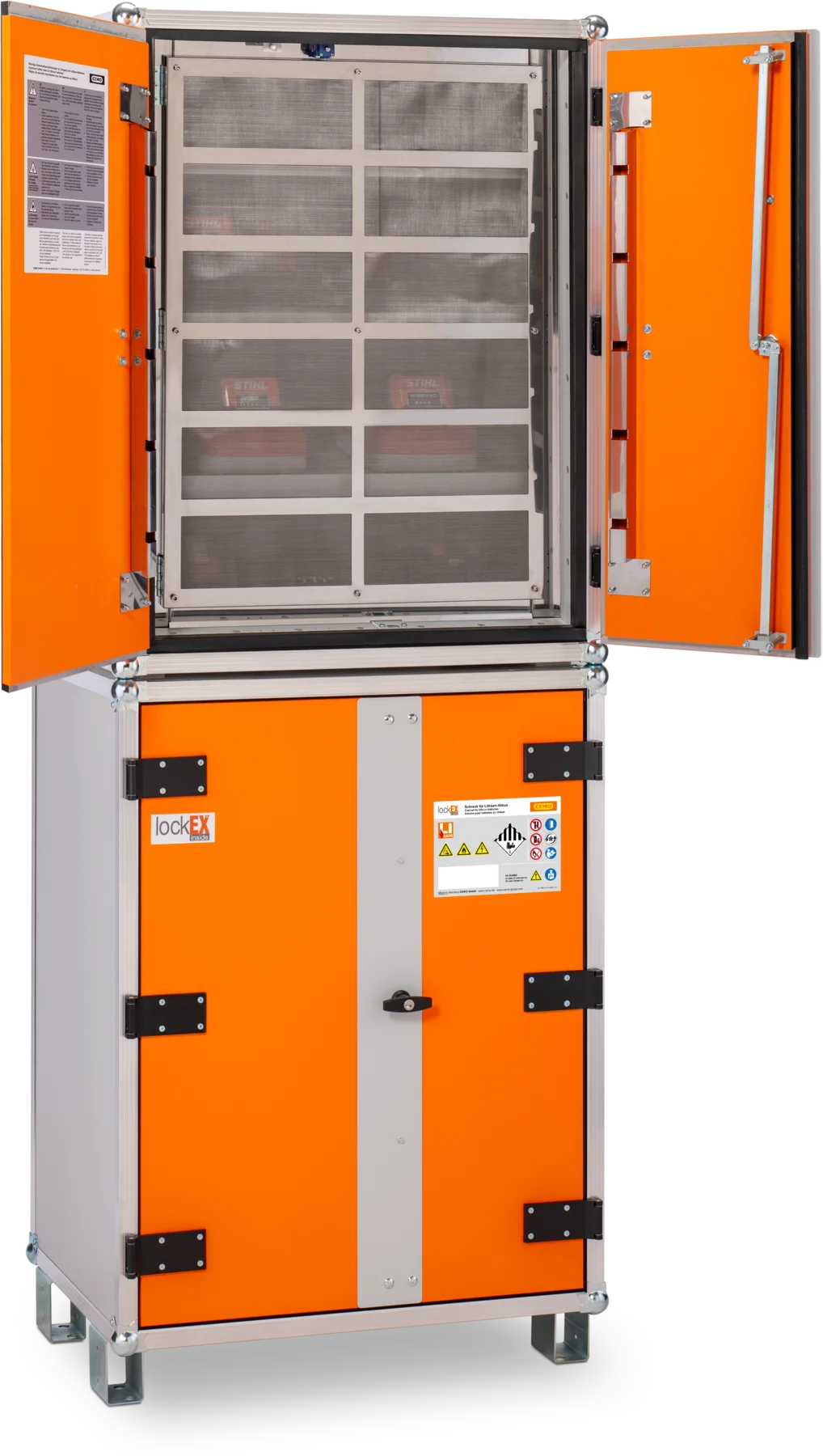
CEMO Battery charging cabinet Basic, 230 V, grey, double hinged doors, orange doors, feet
Art. no. 12048
6,683.25 €plus VAT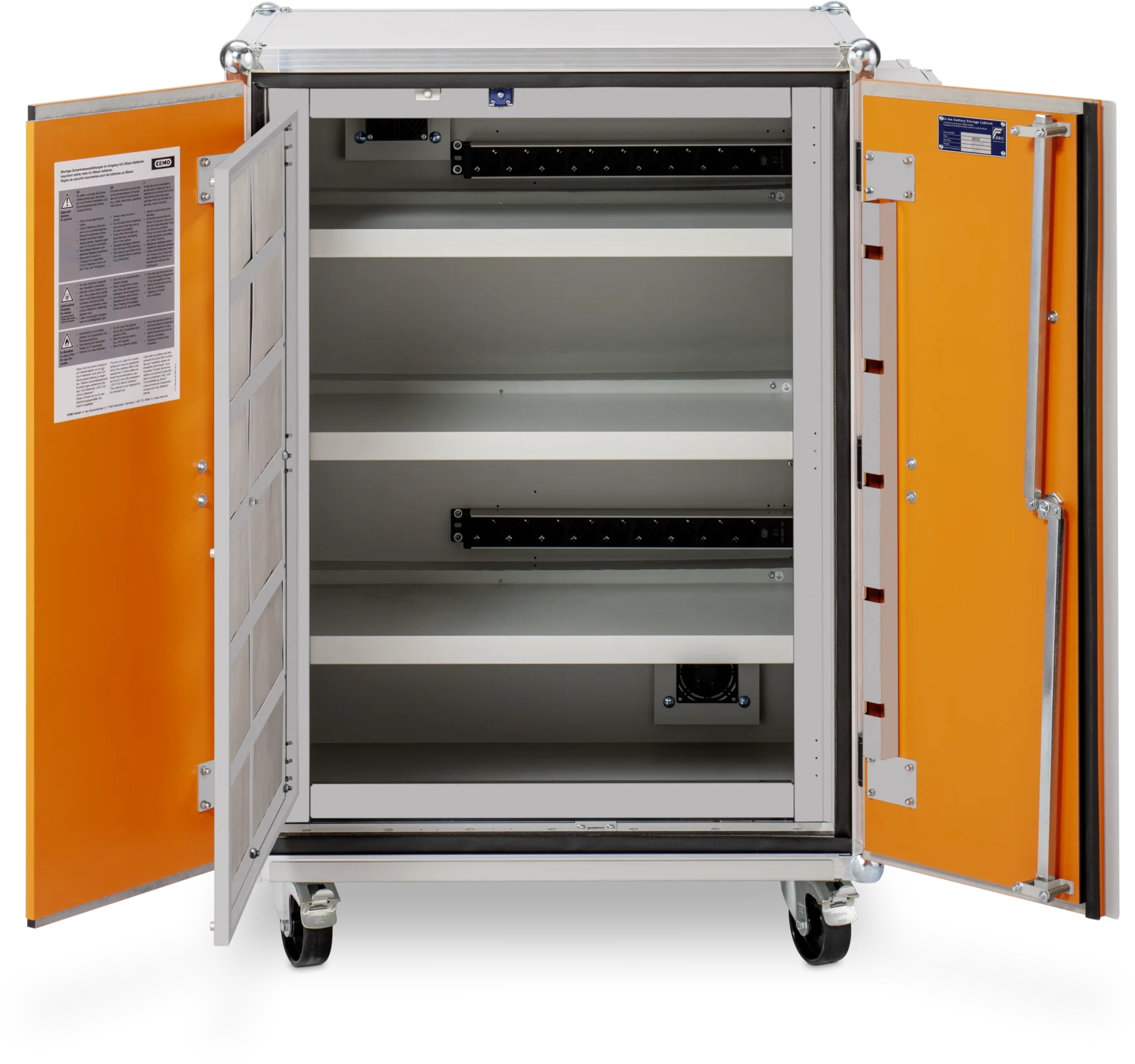
CEMO Battery charging cabinet Premium Plus, 230 V, grey, double hinged doors, orange doors, castors
Art. no. 12124
5,512.50 €plus VAT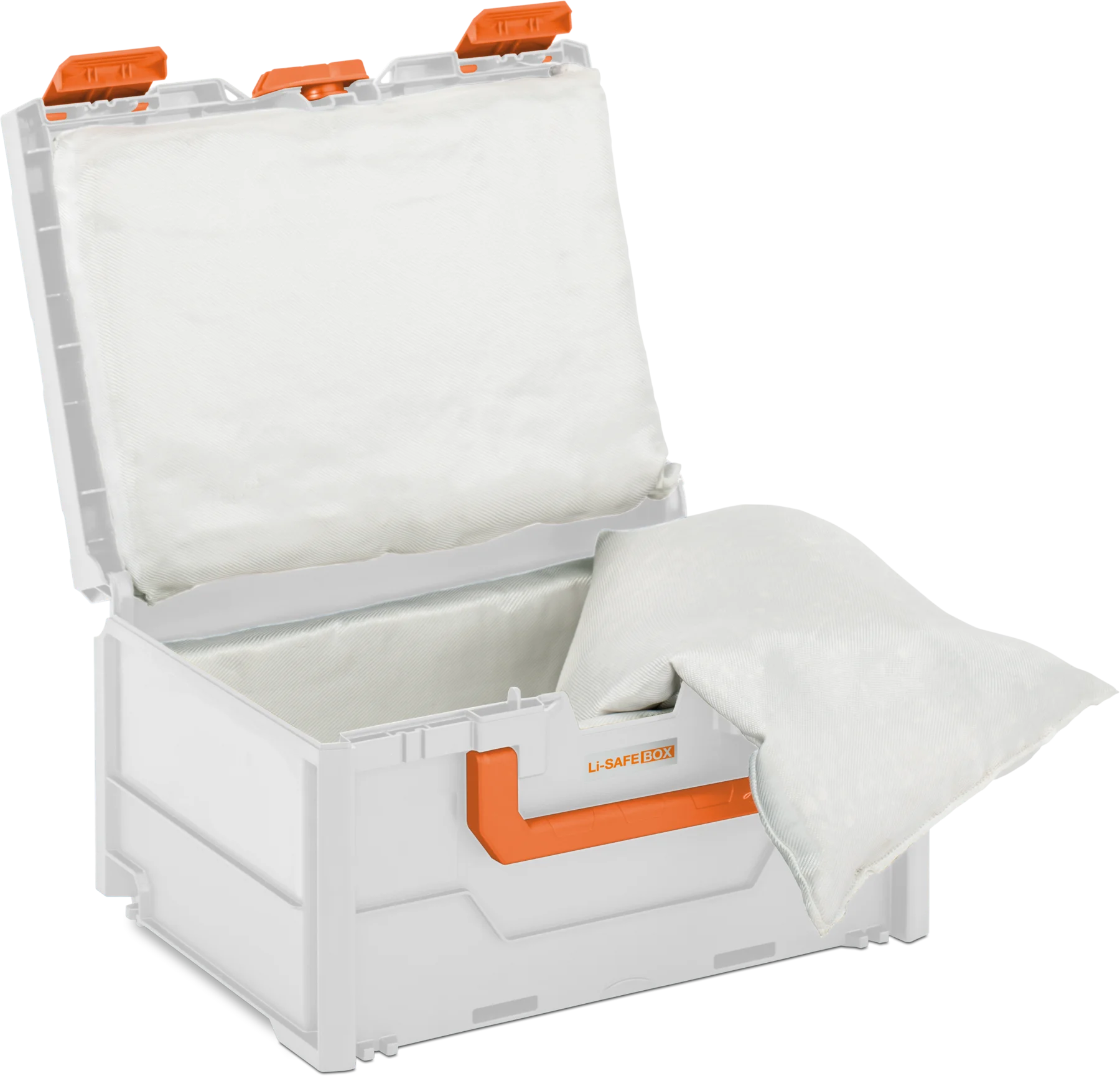
CEMO Li-SAFE battery fireproof box, 2-S, grey
Art. no. 11563
351.75 €plus VAT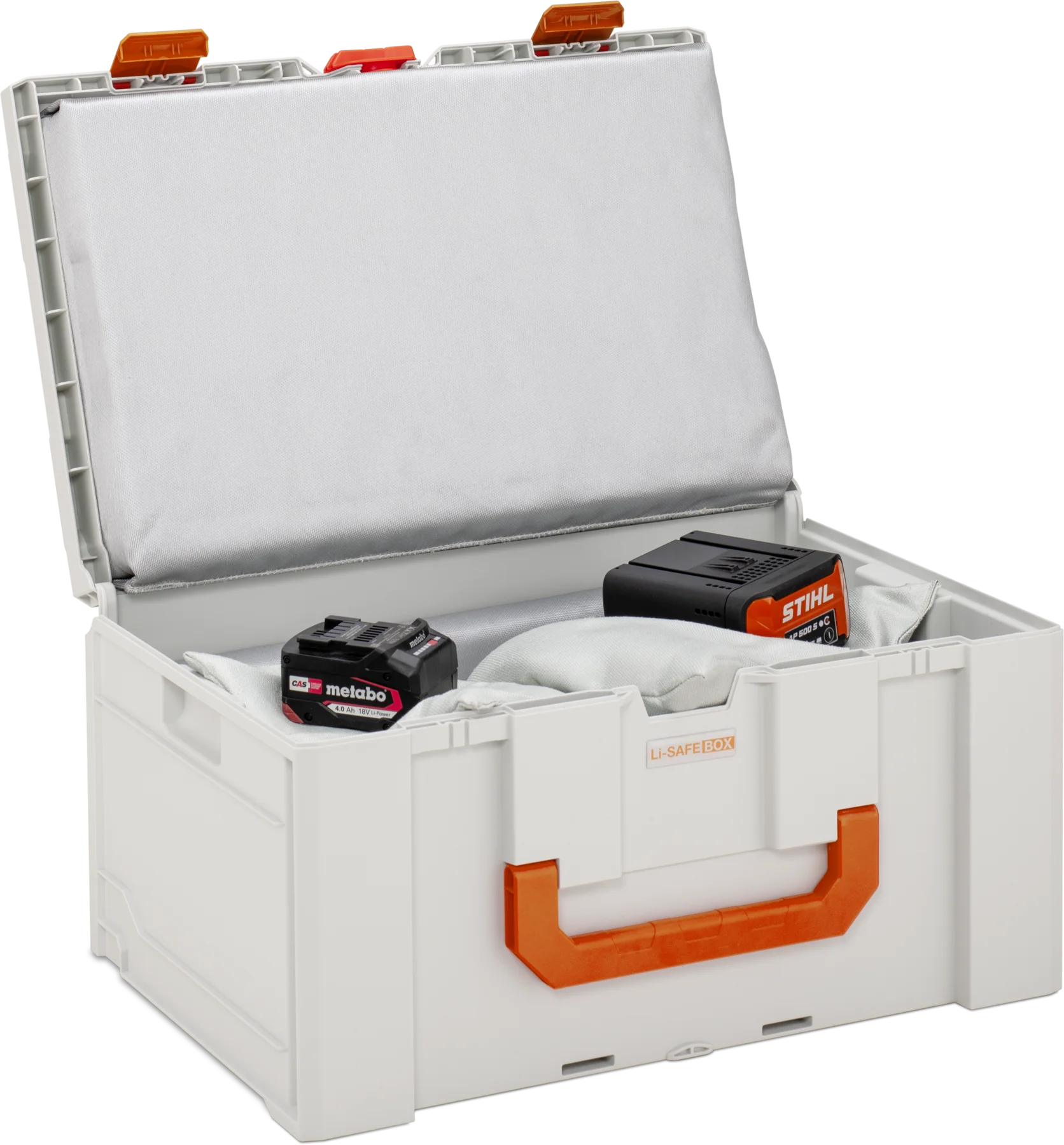
Battery system fire protection box Li-SAFE 3-XL
Art. no. 12191
580.00 €plus VATCEMO Glossary: Terms explained briefly
Term |
Explanation |
| ADR |
European Agreement concerning the International Carriage of Dangerous Goods by Road. Among other things, it sets out requirements for the packaging, labelling and transport of lithium-ion batteries. |
| battery | Rechargeable electrochemical energy storage device. In industrial settings, lithium-ion batteries are used in particular. |
| Battery Fire Resistance Test (BBT) | A term coined by CEMO to assess the resistance of a safety cabinet to a real-life battery fire. The assessment examines, amongst other things, pressure shock, fire, gas generation and thermal insulation. |
| Battery fire | A fire incident triggered by a battery or rechargeable battery. This can result in high temperatures, heat generation and gaseous reaction products. |
| BAM | Federal Institute for Materials Research and Testing. In Germany, it is responsible, amongst other things, for the certification|admission|approval of packaging for dangerous goods. |
| Energy density | The ratio of stored energy to the volume or weight of a battery. High energy density is one of the characteristics of lithium-ion rechargeable batteries. |
| Fire resistance | The ability of a component or cabinet to withstand a fire for a defined period of time or under defined test conditions. |
| Lithium-ion battery | A rechargeable electrochemical energy storage device in which lithium ions are transferred between the anode and the cathode. |
| UN 3480 | UN number for lithium-ion batteries in the transport of dangerous goods. |
| UN 3090 | UN number for lithium metal batteries in the transport of dangerous goods. |
| UN certification|admission|approval | Certification|Admission|Approval of a package or container for the transport of specific dangerous goods. UN certification|admission|approval alone does not automatically mean that every transport operation can be carried out in compliance with ADR. |
| Thermal runaway | An uncontrolled thermal chain reaction within a battery cell. Rising temperatures and chemical reactions can generate further heat and gases, thereby accelerating the process itself. |
| VdS 3103 | Safety regulations issued by the Association of Property Insurers (VdS) for the risk analysis of lithium batteries. These regulations distinguish between low, medium and high power ratings. |
| VDMA 24994 | VDMA standard sheet setting out requirements and criteria for the safe storage and charging of lithium-ion rechargeable batteries in battery charging cabinets. |
Safe charging, storage and transport
Important information regarding lithium-ion batteries
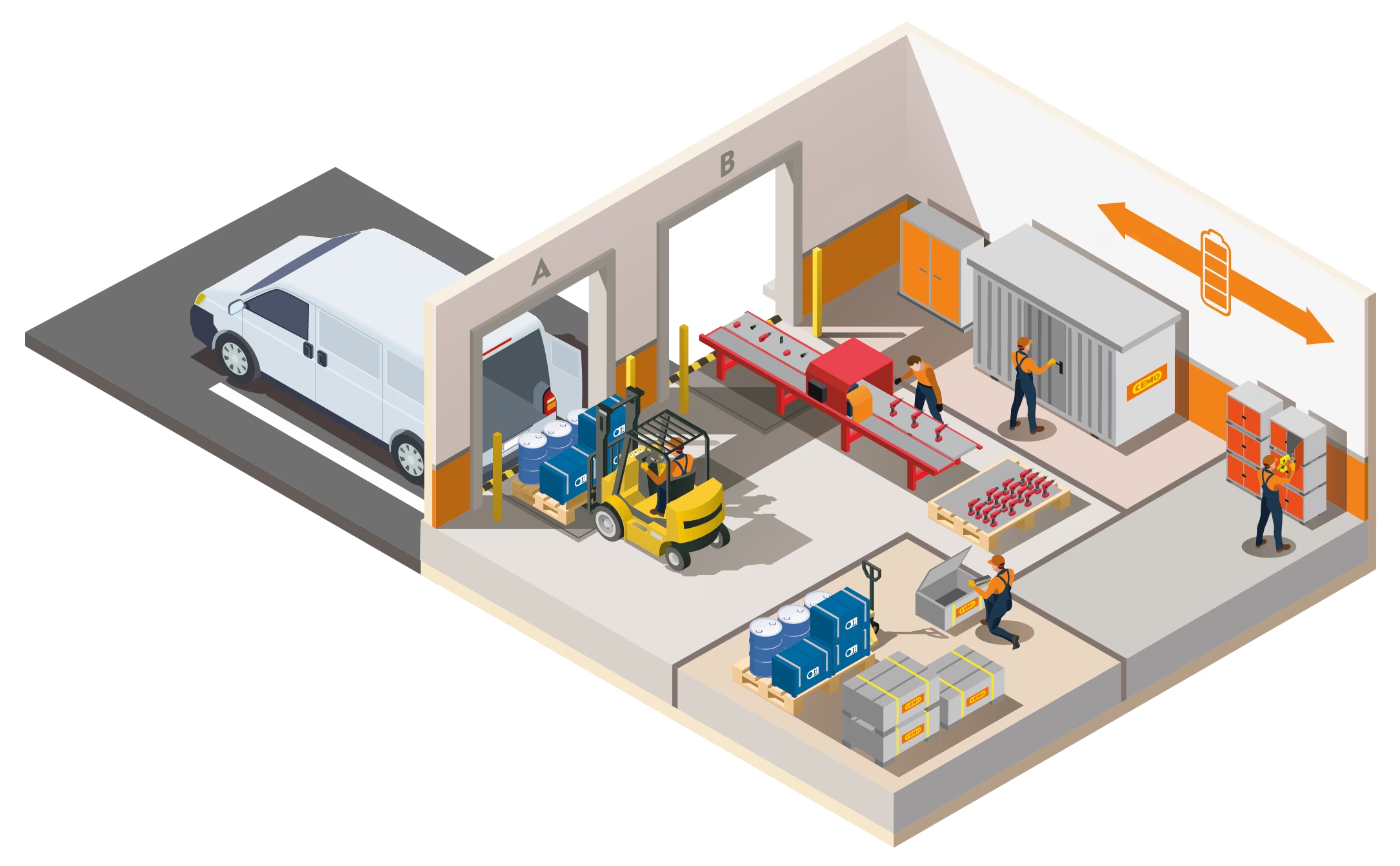
CEMO Battery Safety
Storage and Loading
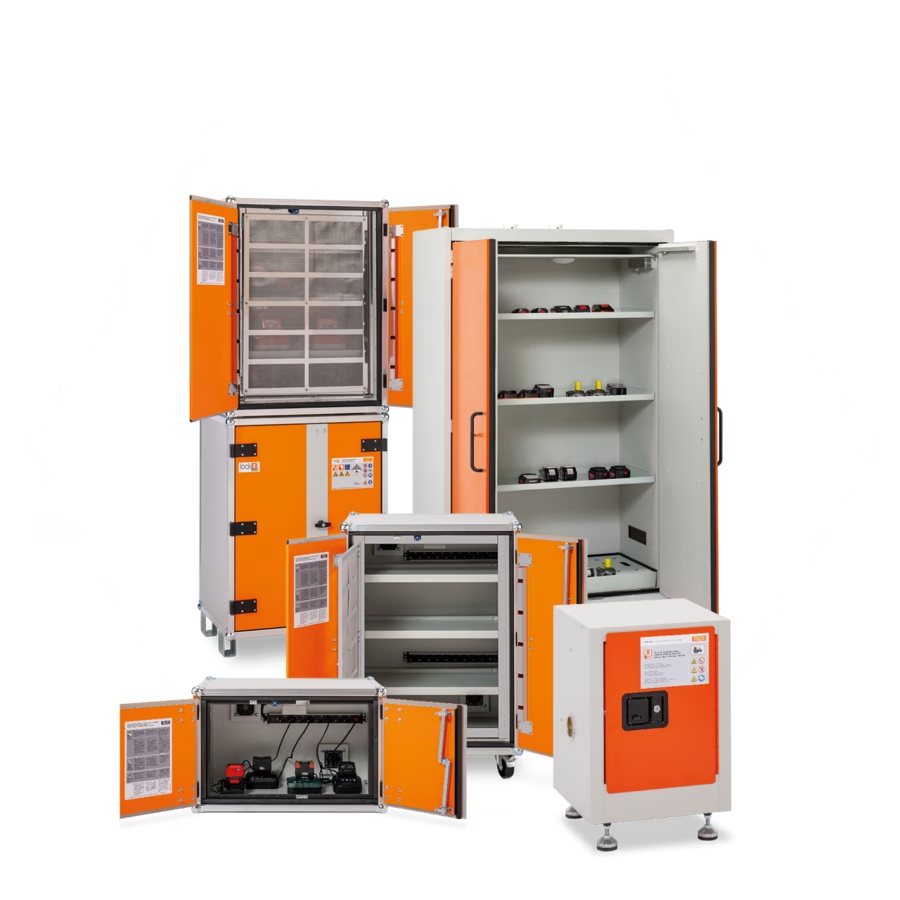
FMplus battery fire-resistant cabinet: The entry-level model for the safe storage of lithium-ion batteries. Available in various sizes. The FMplus US model is available with a charging unit.
lockEX battery charging cabinet: Fire prevention meets explosion protection. lockEX 2.0 represents a new generation of sophisticated safety concepts. Available in various sizes and with a modular design.
PROline battery storage cabinet: A fireproof|fire rating storage cabinet with self-closing doors in the event of a fire, in accordance with DIN EN 14470-1.
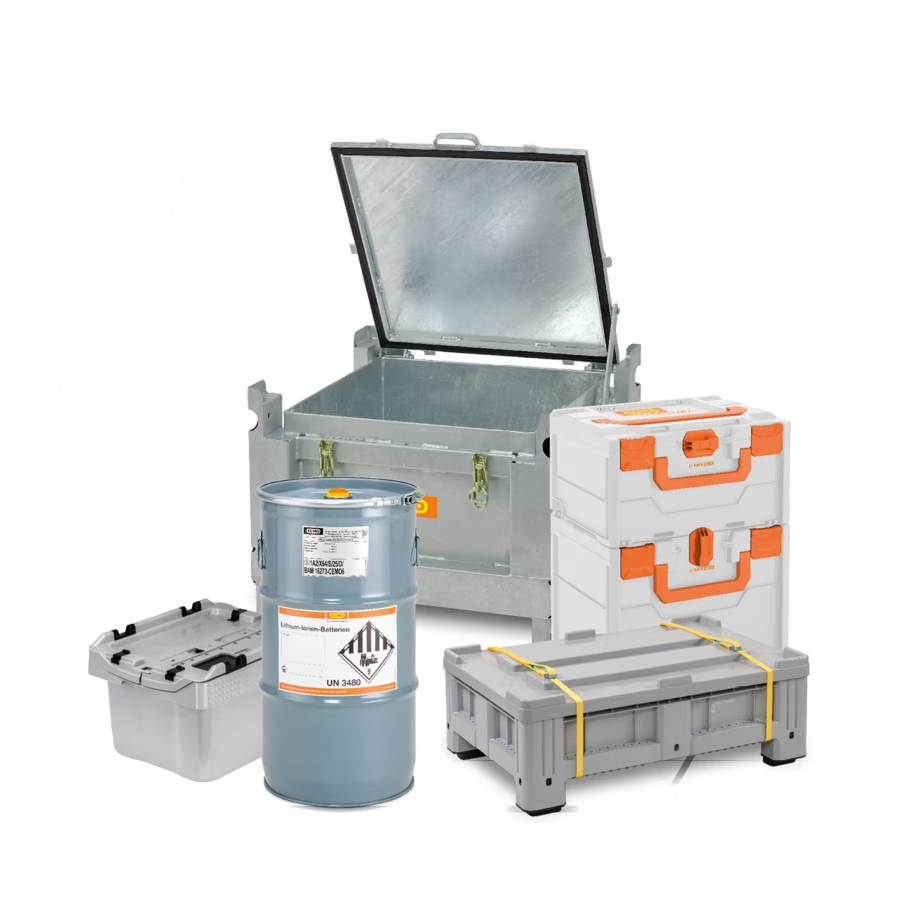
Transport, storage and sorting
Used battery collection box: A handy, stackable battery collection box for the storage and transport of used batteries.
Rechargeable battery safety container: for the safe storage and transport of faulty lithium-ion batteries.
Li-SAFE battery fireproof box: A safe, stackable transport and storage system for lithium-ion batteries. With special fireproof lining.





Frequently Asked Questions

Not sure which solution is right for your application?
Please get in touch; we’d be happy to advise you.