
Refuelling systems for diesel, heating oil, HVO100, AdBlue®, petrol and lubricants from CEMO
Smart refuelling. Refuel with CEMO.
Boost your productivity and reduce your operating costs with your own CEMO refuelling system|refilling system. Whether on your premises or in the field – with CEMO refuelling systems|refilling systems, you can refuel vehicles and machines|devices safely, in compliance with the law and cost-effectively.
Whether it’s ADR-compliant mobile transport or approved stationary on-site refuelling stations in accordance with AwSV and TRwS 781 – CEMO has a thorough understanding of the legal framework and provides the right solution for your needs. Reduce travel times, lower operating costs and ensure a reliable supply.
Compatible with HVO 100.
Liquid, renewable fuel.
Advantages of CEMO’s refuelling systems|refilling systems
CEMO Campus Expertise
Legal framework for mobile and stationary refuelling
Depending on whether fuel and operating materials are mobile or stored stationary, different legal frameworks apply:
Mobile transport (ADR) The transport of diesel, petrol and other fuels in mobile refuelling systems is subject to the ADR (European Agreement concerning the International Carriage of Dangerous Goods by Road). Among other things, it regulates permissible container sizes, labelling and conditions of carriage for transport on public roads.
Stationary storage (AwSV, TRwS 781) For stationary refuelling systems – in particular, on-site refuelling stations – the Ordinance on Installations for the Handling of Substances Hazardous to Water (AwSV) applies in conjunction with TRwS 781 ‘Petrol Stations for Motor Vehicles’ issued by the DWA. TRwS 781 is a generally recognised rule of technology within the meaning of Section 62(2) of the Water Resources Act (WHG) and Section 15 of the AwSV, and sets out technical and operational requirements for the construction and operation of such installations – from containment measures to inspection obligations.
HVO100 / paraffinic diesel TRwS 781 is currently being revised to incorporate requirements for petrol stations handling paraffinic diesel fuel (HVO, XtL) and B10 diesel fuel. Operators wishing to switch to HVO100 would therefore be well advised to check the compatibility of their existing refuelling systems|refilling systems. CEMO’s refuelling systems|refilling systems are certified for the storage of XtL / HVO.
Related products
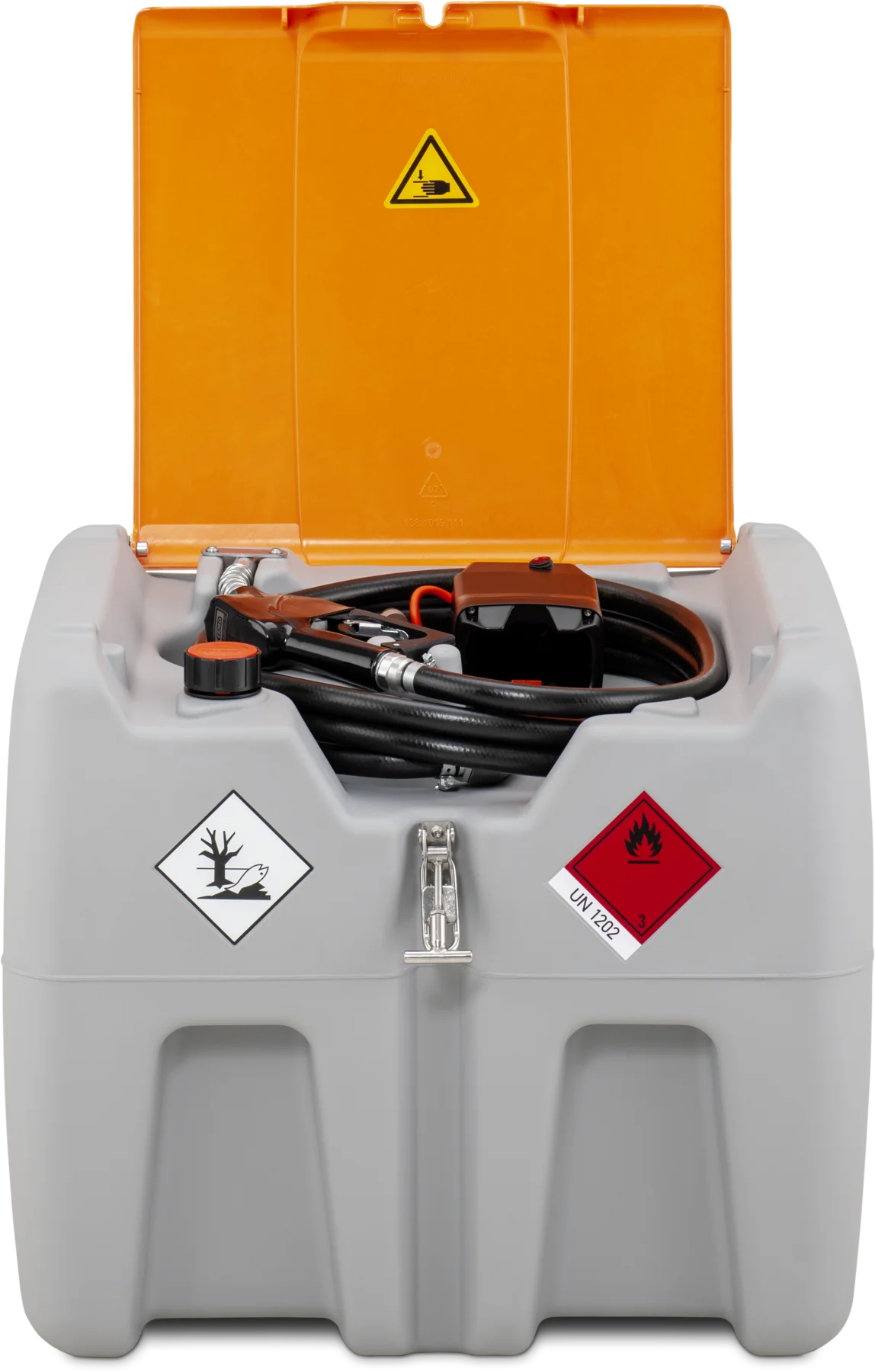
DT-Mobil Easy according to ADR 1.1.3. 1 c), with electrical pump and A, 210 L, Automatic dispensing nozzle diesel, Battery Stihl AP, 30 L/min (max.), with lid, orange
Art. no. 12060
729.75 €plus VAT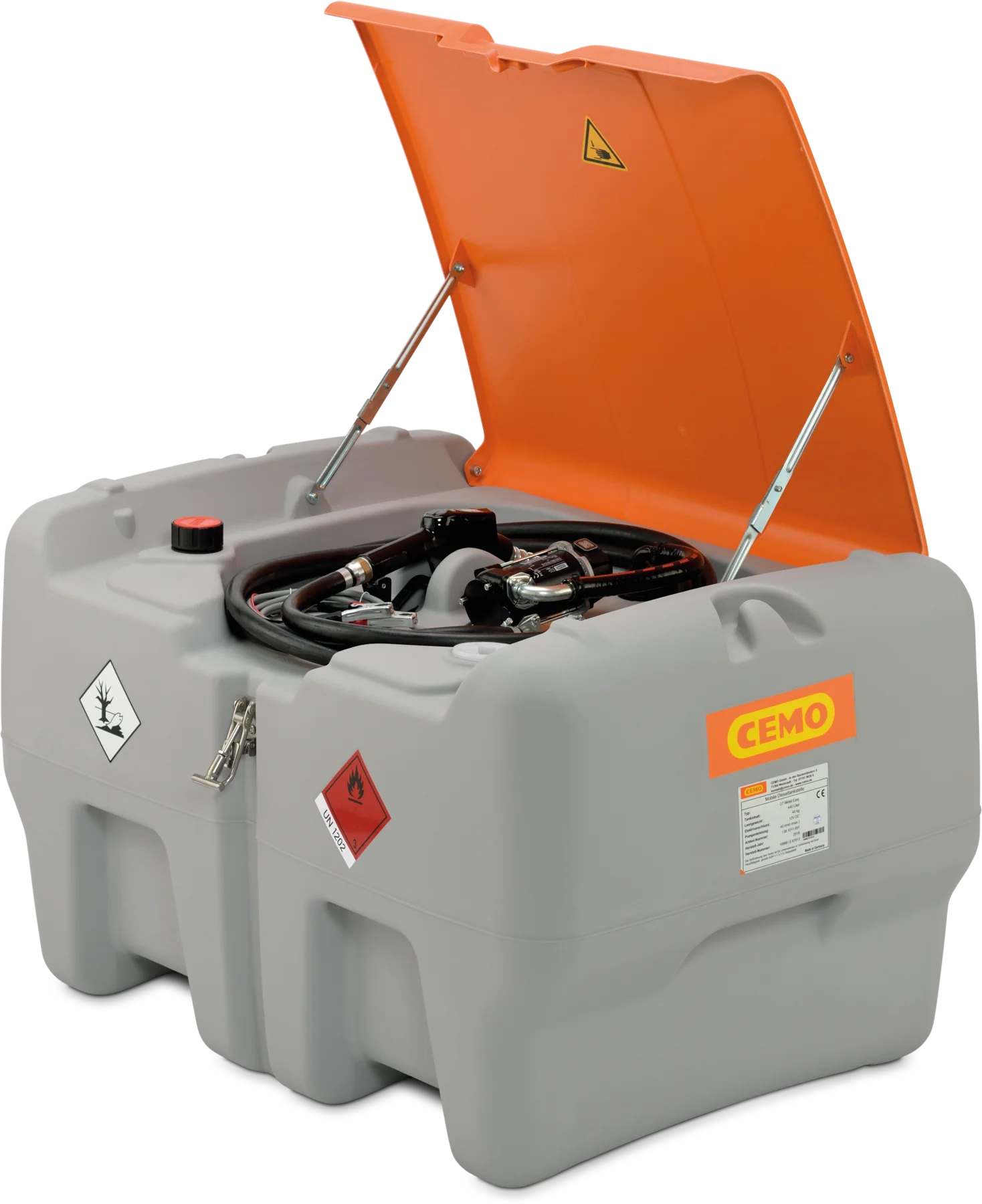
DT-Mobil Easy according to ADR 1.1.3. 1 c), with electrical pump, 440 L, Automatic dispensing nozzle diesel, 12 V DC, 40 L/min (max.), grey, with lid, orange
Art. no. 10988
1,092.00 €plus VAT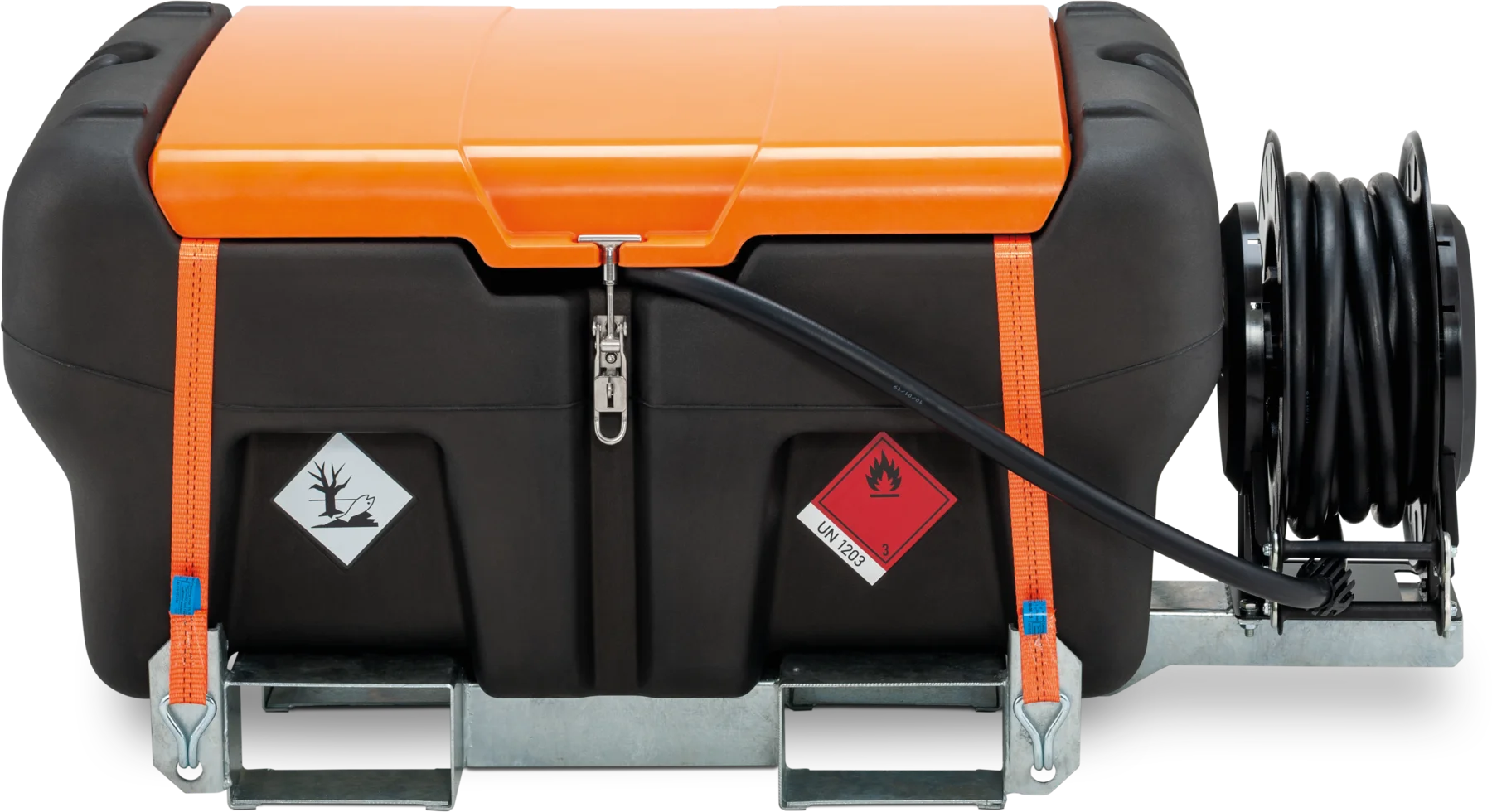
CEMO KS-Mobil Easy Premium with electric pump, 330 L, Automatic dispensing nozzle petrol, 12 V DC, 25 L/min (max.), black, with lid, orange
Art. no. 11361
3,375.75 €plus VAT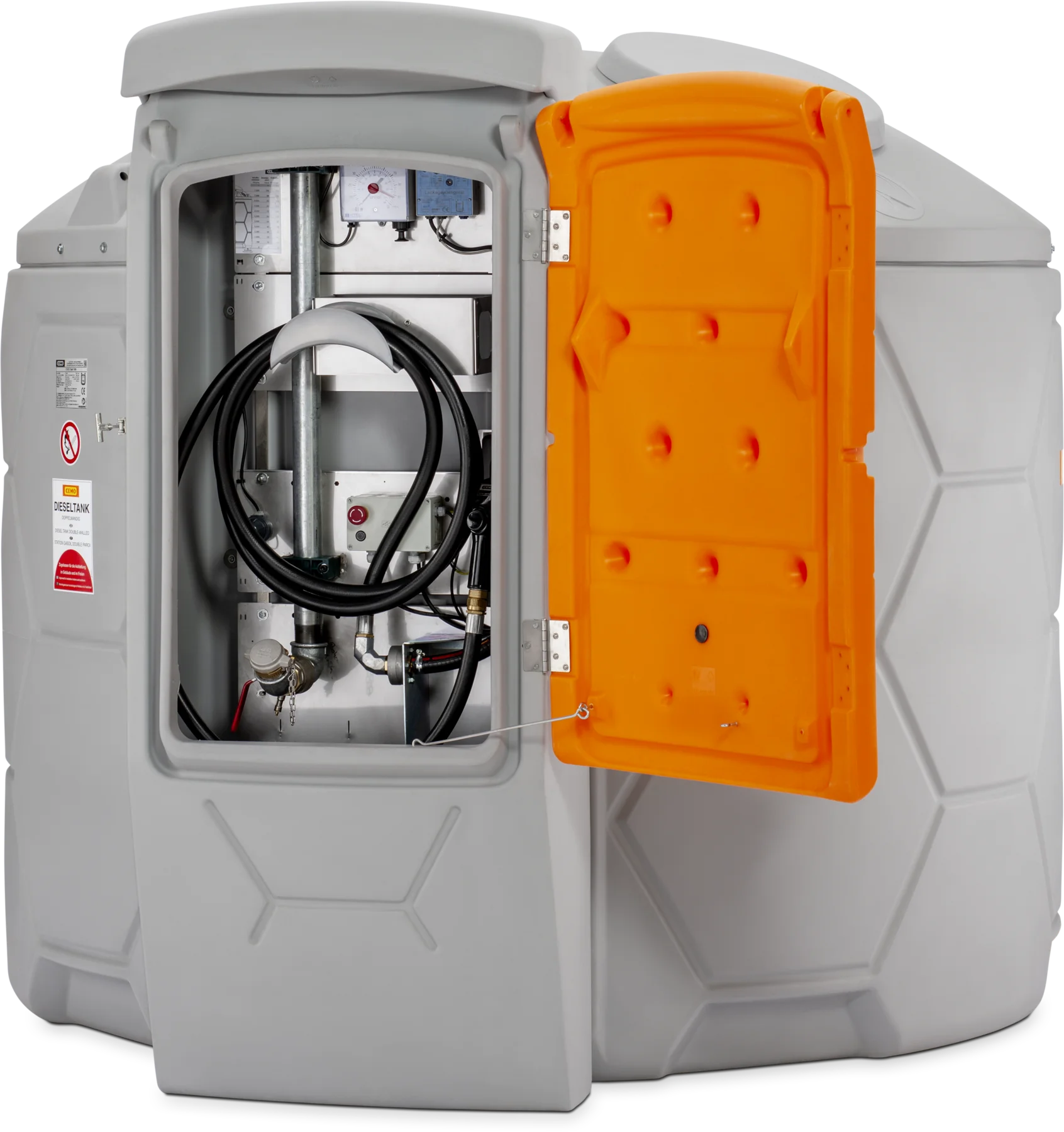
CEMO CUBE Diesel tank system, outdoor Basic, 7500 L, Automatic dispensing nozzle A80 fastfill, 230 V, 85 L/min (max.), grey, with lid, orange
Art. no. 12005
7,560.00 €plus VATCEMO Glossary: Terms explained briefly
Term |
Explanation |
| ADR | European Agreement concerning the International Carriage of Hazardous Materials by Road. Regulates the authorised transport of fuels and other hazardous materials in mobile refuelling systems on public roads. |
| AwSV | The Ordinance on Installations for the Handling of Substances Hazardous to Water regulates, throughout Germany, the technical requirements for storage, filling and transhipment facilities for substances hazardous to water. |
| TRwS | DWA Technical Regulation on Water-Polluting Substances: ‘Petrol Stations for Motor Vehicles’. Specifies the requirements of the AwSV for petrol stations, including on-site refuelling points. |
| On-site refuelling station / yard refuelling station | A storage and refuelling facility not open to the public, used exclusively for refilling the company’s own vehicles and equipment (Section 2(12) AwSV). |
| HVO100 (paraffinic diesel fuel) | A renewable, paraffinic diesel fuel that can be used as a drop-in alternative to fossil diesel in compatible refuelling systems|refilling systems. |
| AdBlue® | An aqueous urea solution used in modern diesel vehicles fitted with an SCR catalytic converter for exhaust after-treatment. A registered trade mark of the VDA (German Association of the Automotive Industry) – always written with ®. |
| DIBt certification|admission|approval | General construction inspection approval from the German Institute for Building Technology (DIBt) – proof that a stationary refuelling system|refilling system complies with building regulations. |
| Double walled construction | A design principle in which an inner tank is enclosed by a second, outer tank, ensuring that, in the event of a leak from the inner tank, no substance escapes into the environment. |
Choosing the right fuel. That’s what matters.
1. Where should we fill up at the tank?
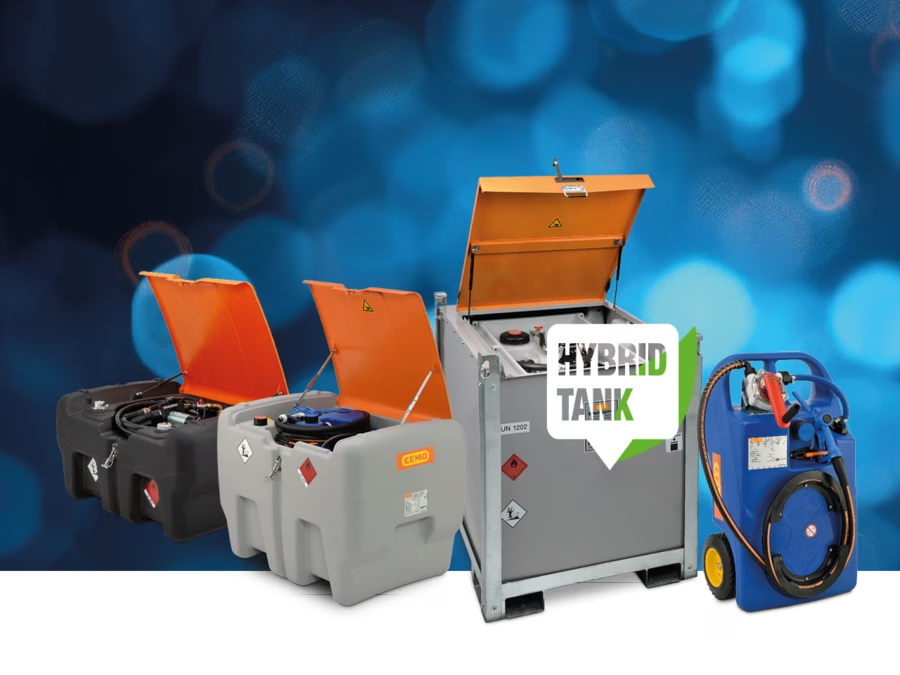
Mobile refuelling systems for diesel, AdBlue® and petrol
Mobile refuelling systems are versatile and can be used in a variety of locations. They are particularly suitable for building sites, temporary projects or outdoor operations where the tank needs to be positioned directly next to the machine|device or vehicle. Their lightweight design, castors and carrying handles allow for quick relocation.
ADVANTAGES
- Flexible and mobile
- Refilling in compliance with ADR regulations
- Rapid deployment at different locations
- Lower fixed costs compared to stationary systems
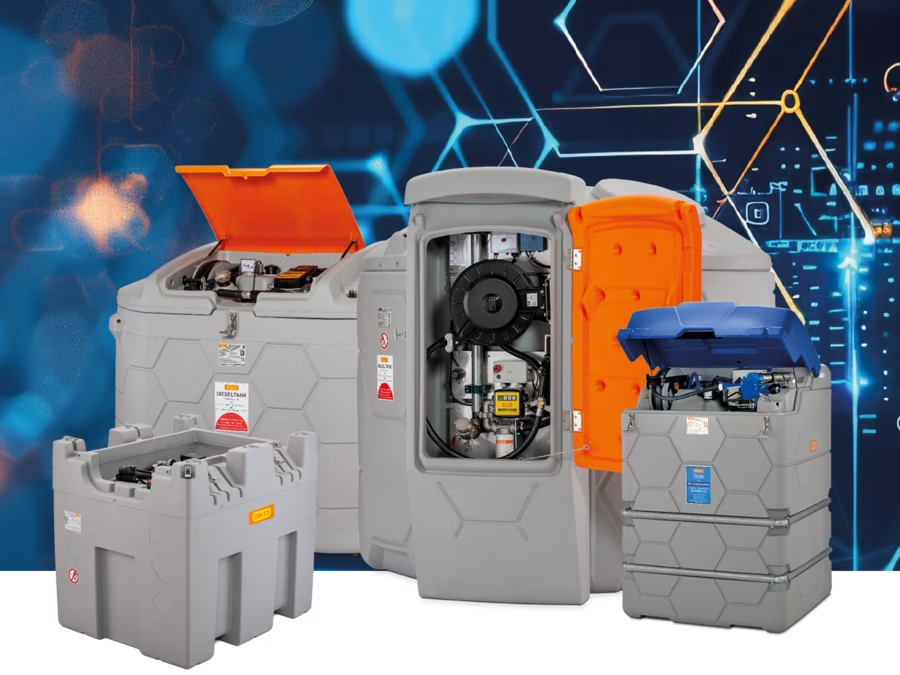
Stationary refuelling systems for diesel, AdBlue® and lubricants
Our stationary refuelling systems|refilling systems are designed for long-term use at fixed locations. They offer high storage capacity and maximum safety thanks to their double walled design, integral spill containment systems and robust construction. Ideal for businesses with regular fuel requirements and a need for a continuous supply.
ADVANTAGES
- High storage capacity
- DIBt- and EN-certified for maximum legal certainty – including regional variants
- Long-term operation with low maintenance requirements
- Fully equipped for regular refilling
2. Which fuel should be used to tank the vehicle?

Diesel, biodiesel, HVO100

AdBlue®

petrol

Lubricants and oils
3. Which material is best for the tank?
PE tank systems
Polyethylene (PE) is ideal for robust and flexible container solutions with complex shapes and low weight.
ADVANTAGES
- high impact resistance
- low weight
- Flexible shaping
- moisture-resistant
- Easy to clean
- ideal for mobile applications
Hybrid refuelling systems
Refuelling system|refilling system with an external steel tank and an internal tank made of high-quality polyethylene (PE).
ADVANTAGES
- Robust steel outer tank for high stability
- Corrosion-free PE inner tank
- Easy to clean
- Combines the advantages of both materials
- Up to 10 years’ ADR certification|admission|approval
- A long-lasting solution for demanding, mobile tank applications
Steel refuelling systems
Particularly durable and robust tank solutions for industrial use.
ADVANTAGES
- Exceptionally robust under high mechanical loads
- High dimensional stability
- UV- and weather-resistant
- Durable
- Low maintenance
- specifically designed for the most demanding stationary applications
4. Which tank innovation is right for your application?


Frequently Asked Questions

Not sure which solution is right for your application?
Please get in touch; we’d be happy to advise you.